Identification
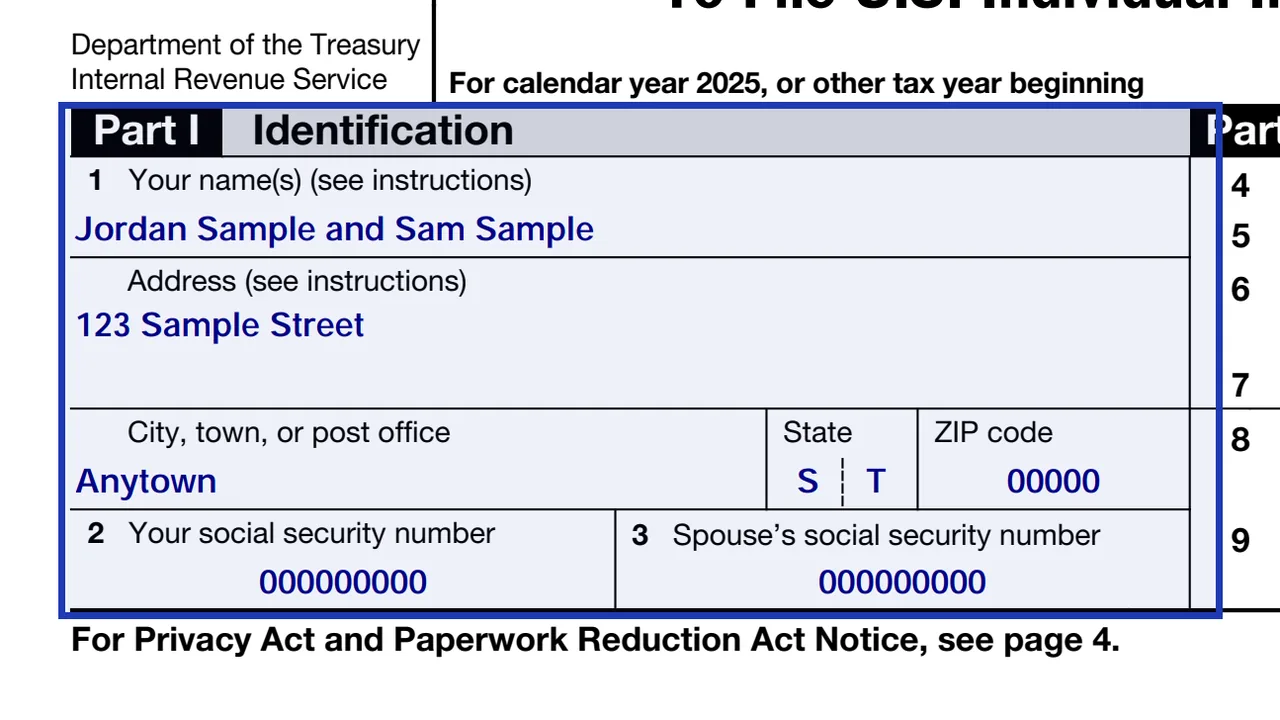
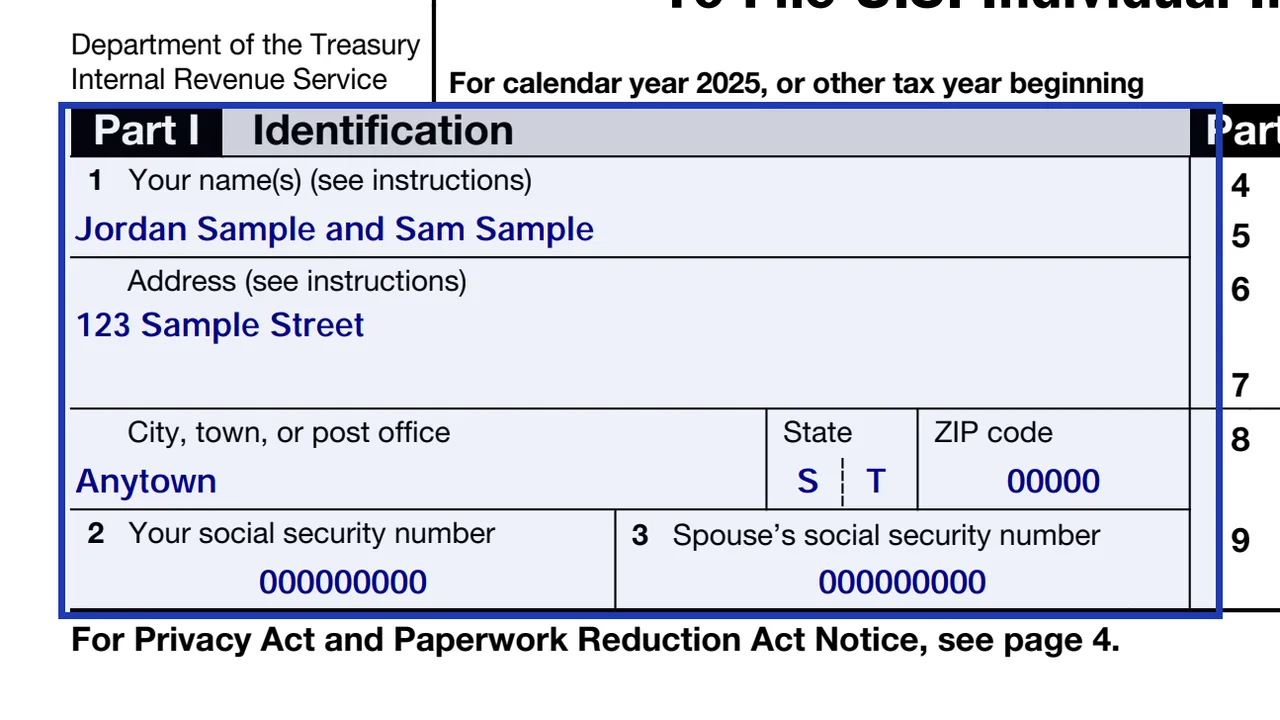
Part I asks for your name, address and Social Security number on lines 1 and 2, plus your spouse's on line 3 if you file jointly.
4868
Application for Automatic Extension of Time To File U.S. Individual Income Tax Return
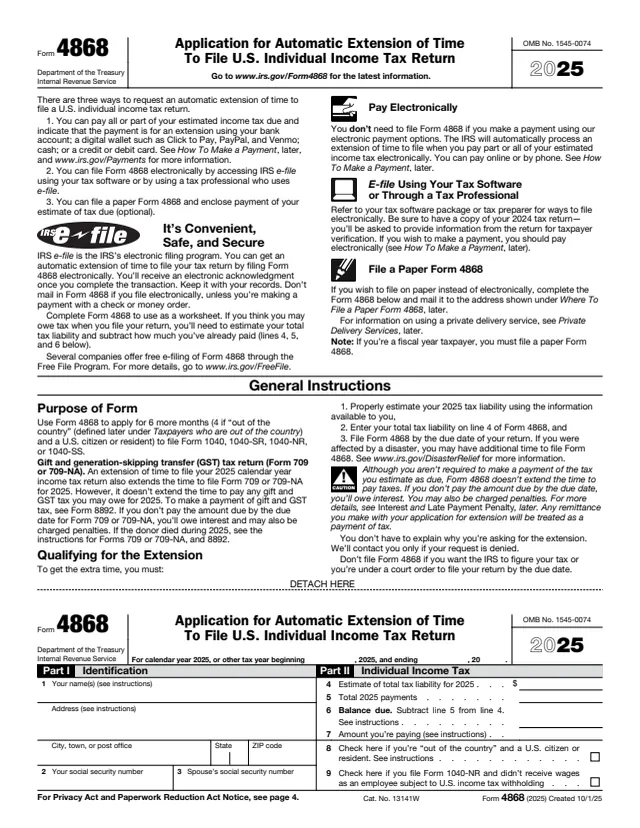
Form 4868 asks the IRS for more time to file your individual income tax return. The IRS calls it an automatic extension.
The extension is only for filing. The IRS states plainly that an extension of time to file is not an extension of time to pay. Any tax you owe is still due by the original April deadline, and interest runs on unpaid tax from that date.
The form is short. Its main job is to give your identifying details and an estimate of your total tax, payments and balance due so you can pay what you owe before you file the return.
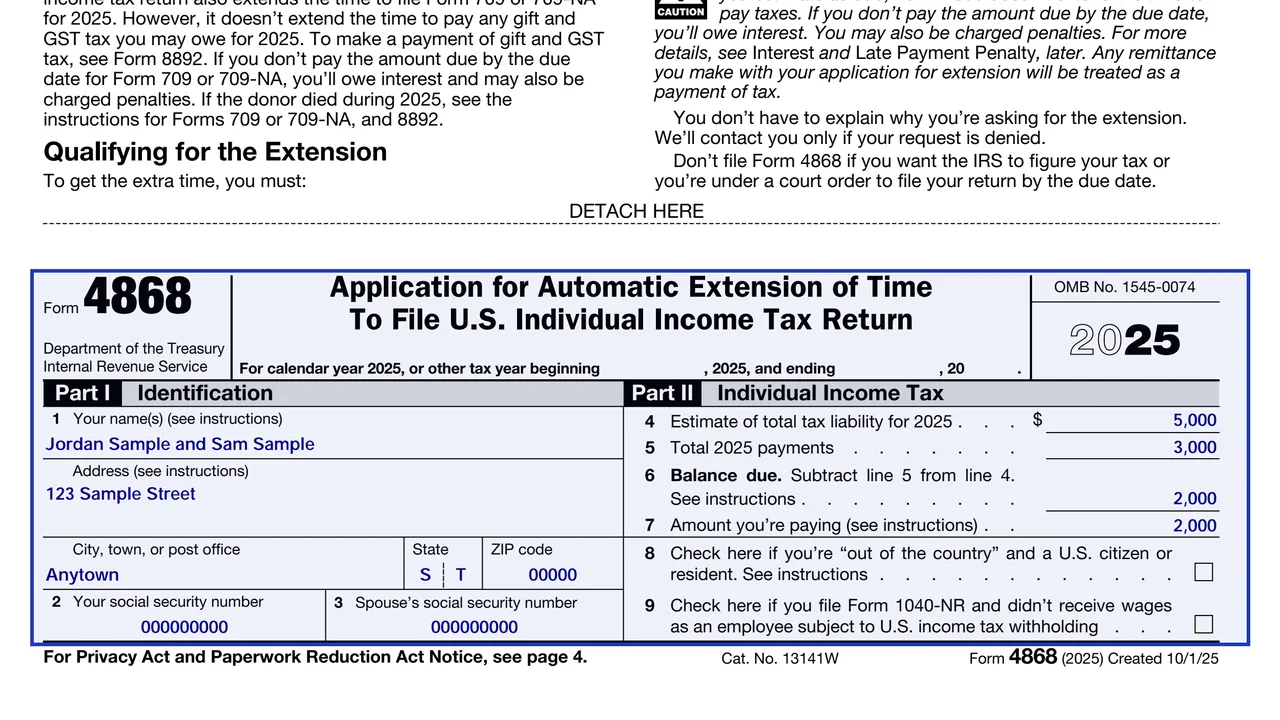
Part I asks for your name, address and Social Security number on lines 1 and 2, plus your spouse's on line 3 if you file jointly.
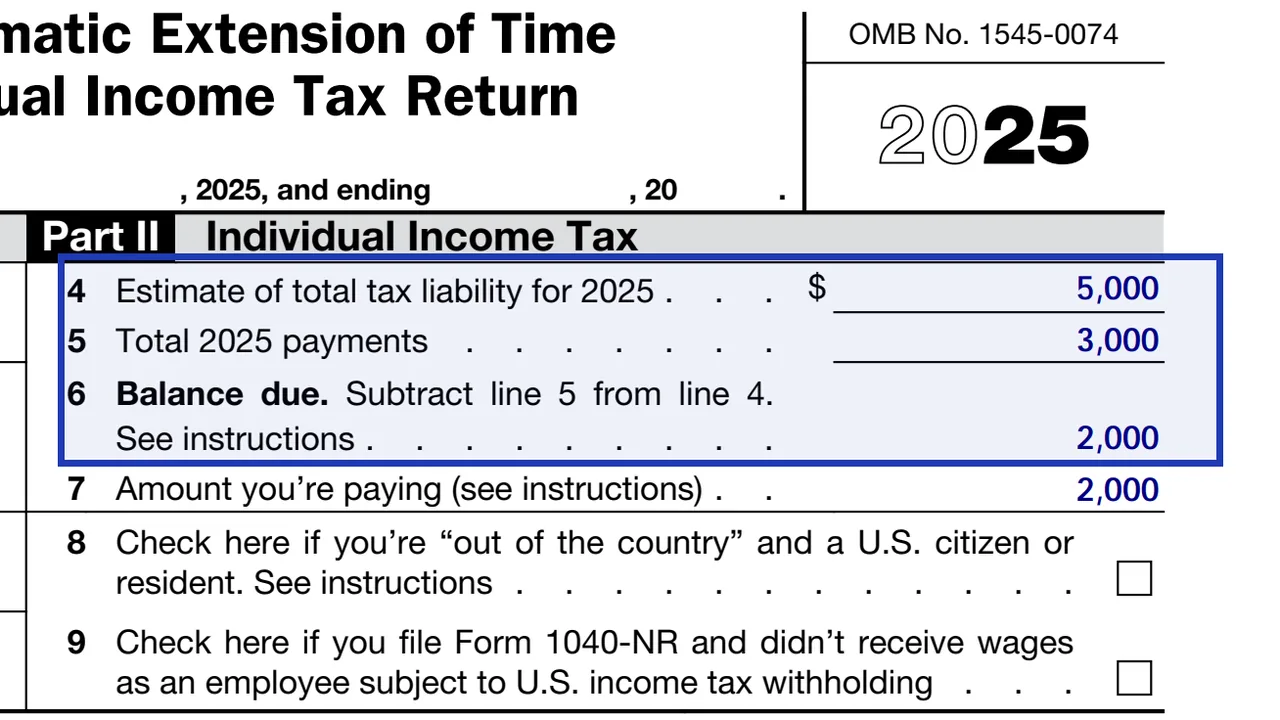
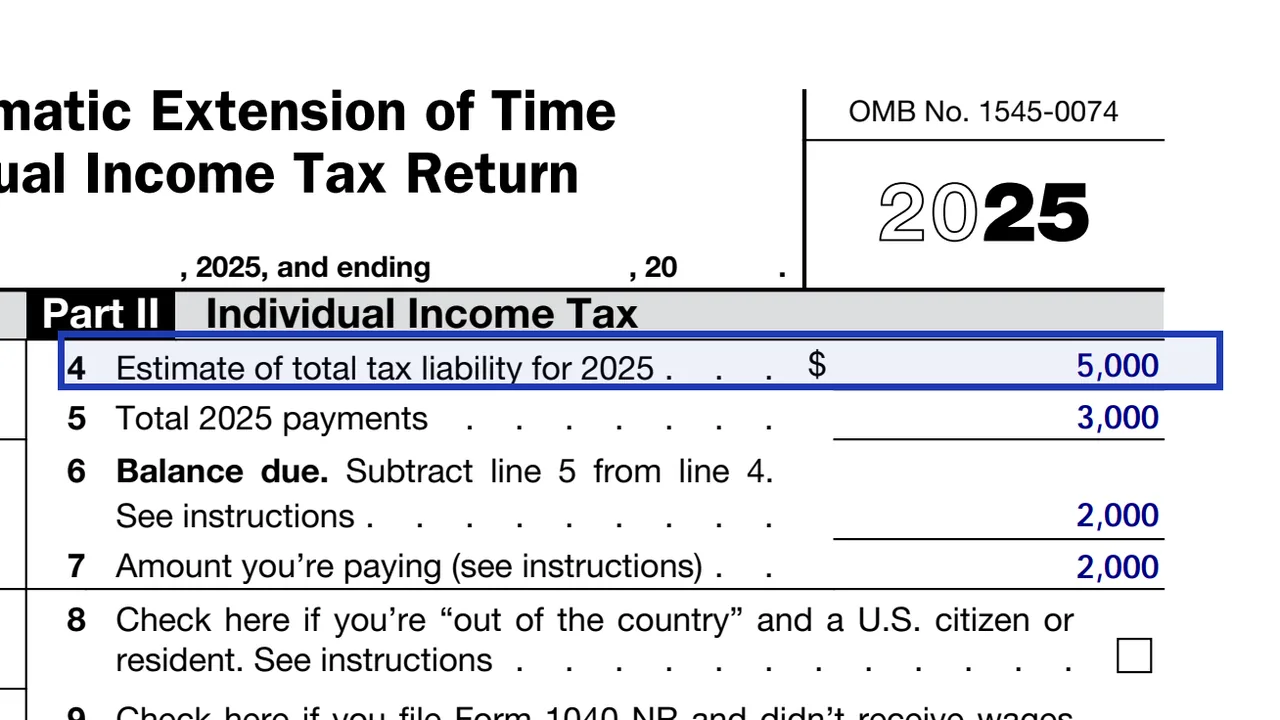
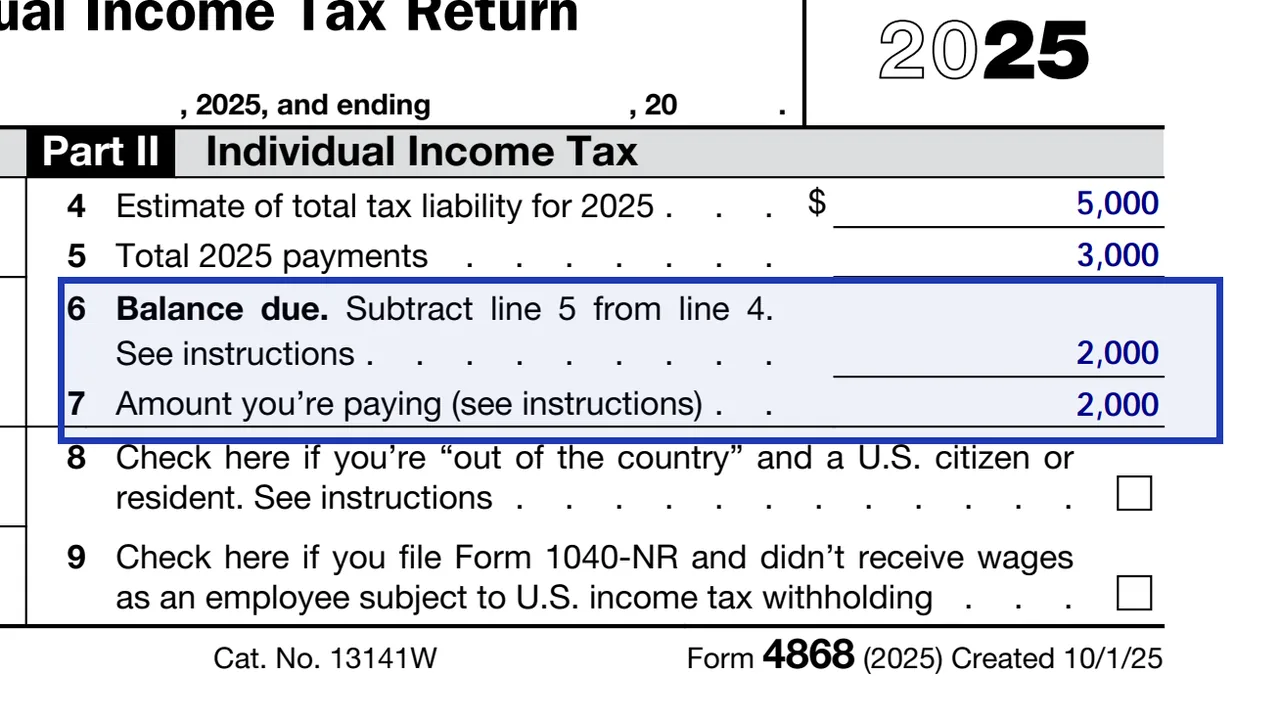
Line 4 is your estimate of total tax liability for 2025, line 5 is your total payments, and line 6 is the balance due, line 4 minus line 5.
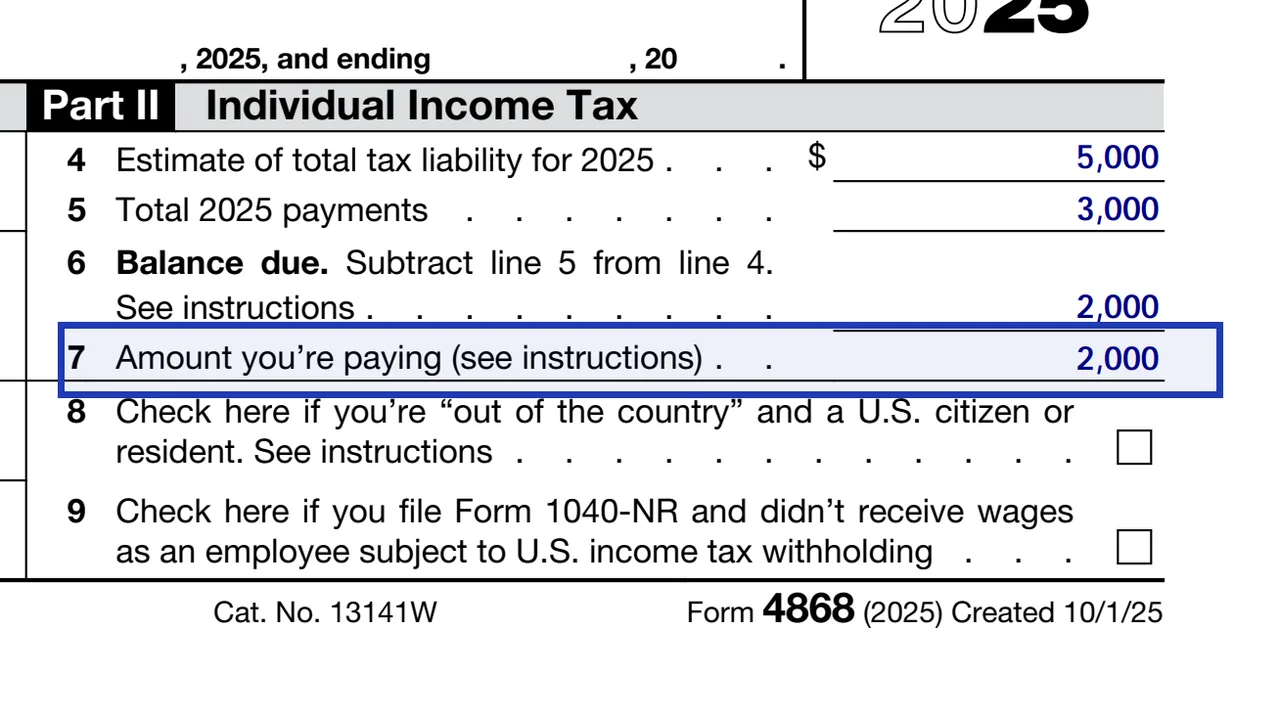
The amount you send with the form. Do not include it on line 5.
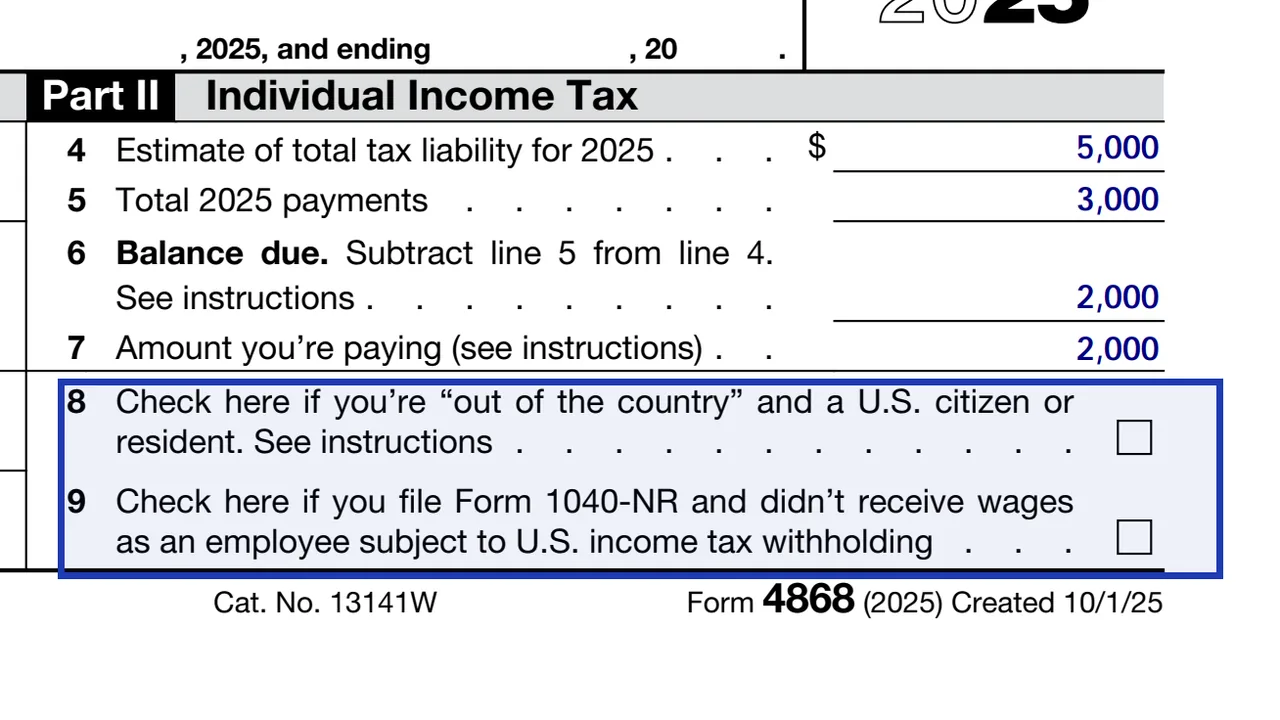
Check line 8 if you are out of the country and a U.S. citizen or resident. Line 9 is for Form 1040-NR filers who did not receive wages subject to U.S. income tax withholding.
Make the estimate as accurate as you can. The instructions warn that if the IRS later finds the estimate was not reasonable, the extension is null and void. Enter -0- on line 4 if you expect zero tax.
Use the same name and Social Security number you will use on the return.
If you cannot pay the balance on line 6, you can still get the extension. The instructions say to pay as much as you can to limit interest, and a late payment penalty may apply to unpaid tax.
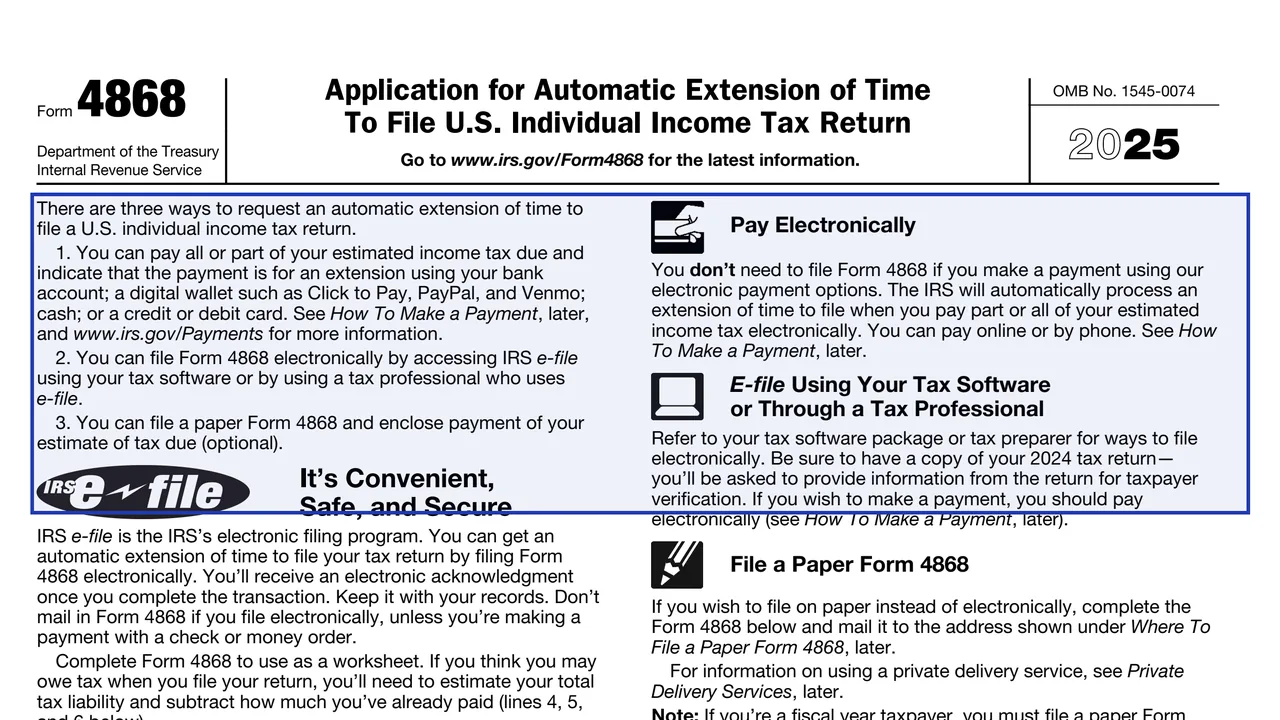
The IRS lists three ways: pay online and mark the payment as an extension request, use IRS Free File, or send Form 4868 by mail, through an IRS e-file partner or through a tax professional. This page lets you fill the paper form online for free.
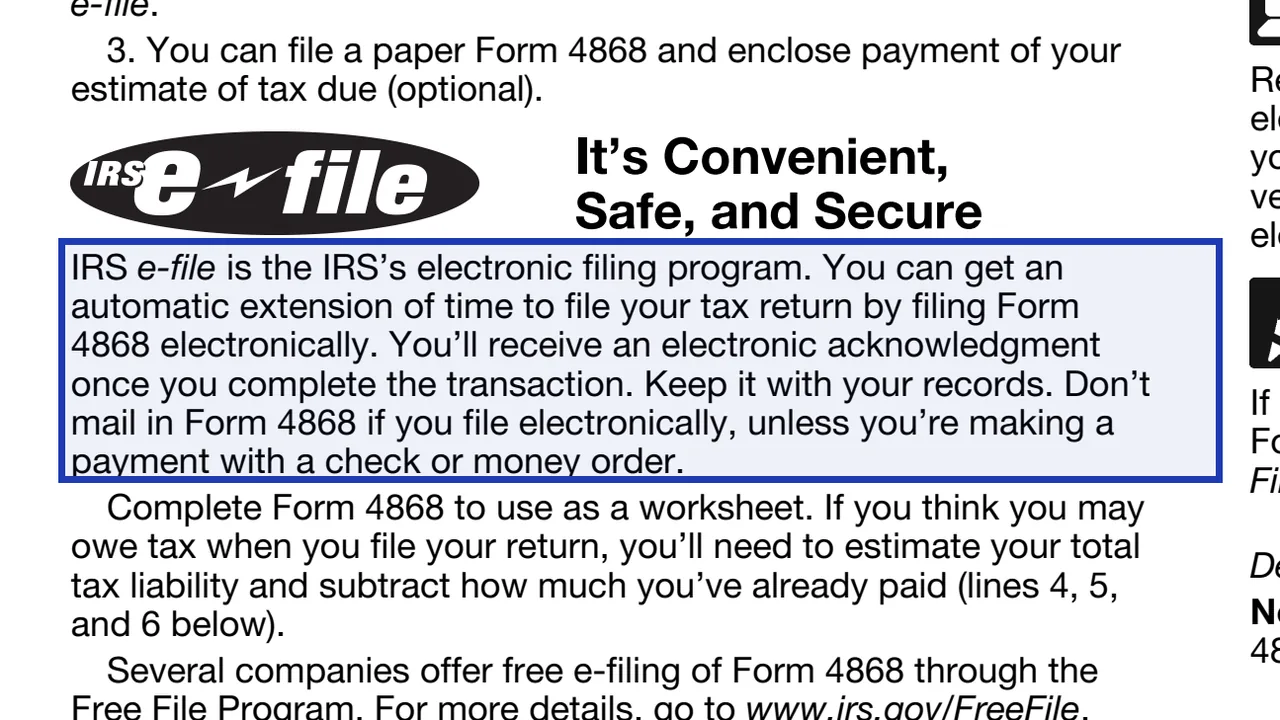
E-filers receive an acknowledgment. The IRS asks you to keep it, and e-filing requires your prior-year adjusted gross income.
You get the real form, filled in a browser tab, with nothing standing between you and the finished PDF.
File or pay by the April due date. The new filing deadline is October 15.
The IRS says you do not need a separate form if you pay online and mark the payment as for a filing extension. You get a confirmation number.
The IRS page says Free File has no income limit for extensions.
The IRS says fiscal-year filers must use paper.
The instructions describe the late payment penalty as usually one half of 1% of unpaid tax per month, up to a maximum of 25%. A late filing penalty may apply if you file after the extension expires. The penalty is not charged if you can show reasonable cause.
Treating the extension as more time to pay, underestimating the tax, missing the April date and forgetting that the extension covers only your federal return are the usual problems.
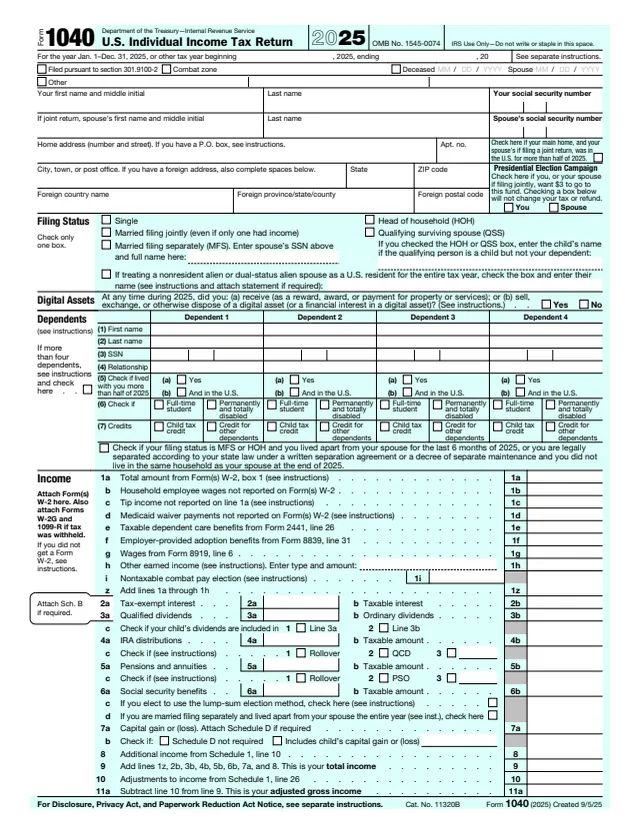
1040
199 fields, 2 pages
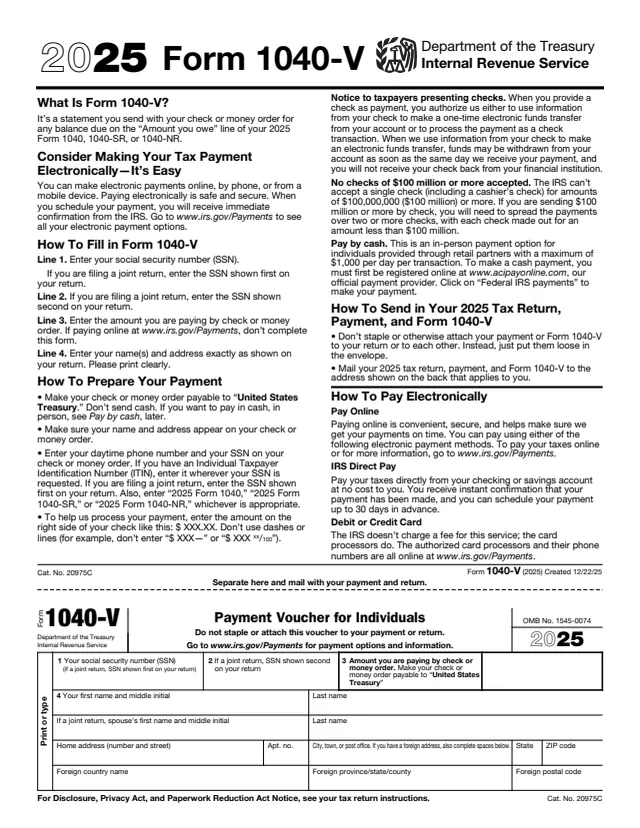
1040-V
15 fields, 2 pages
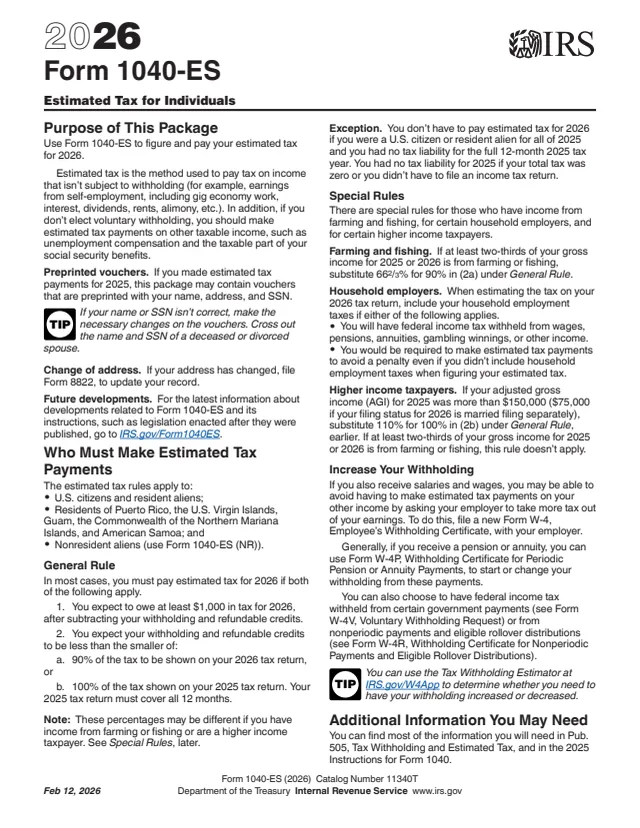
1040-ES
118 fields, 16 pages
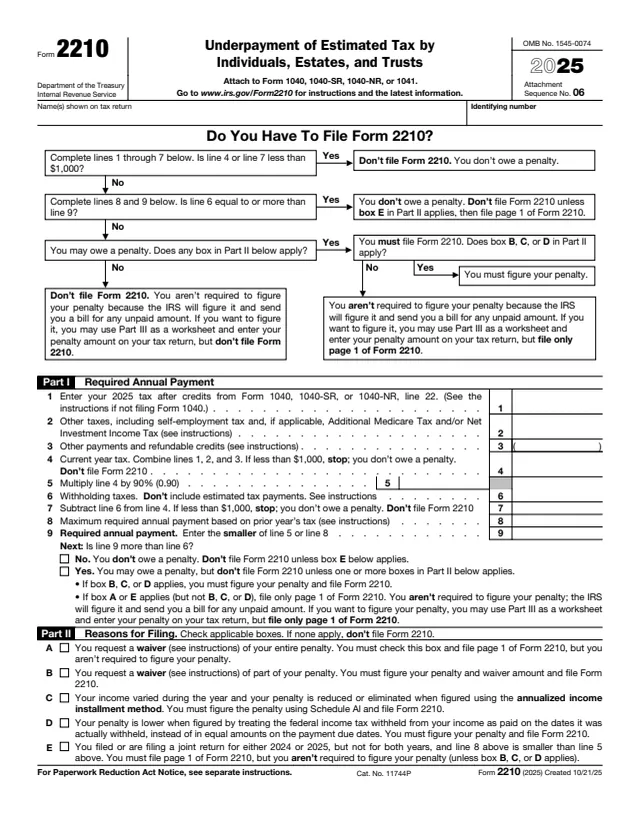
2210
199 fields, 3 pages
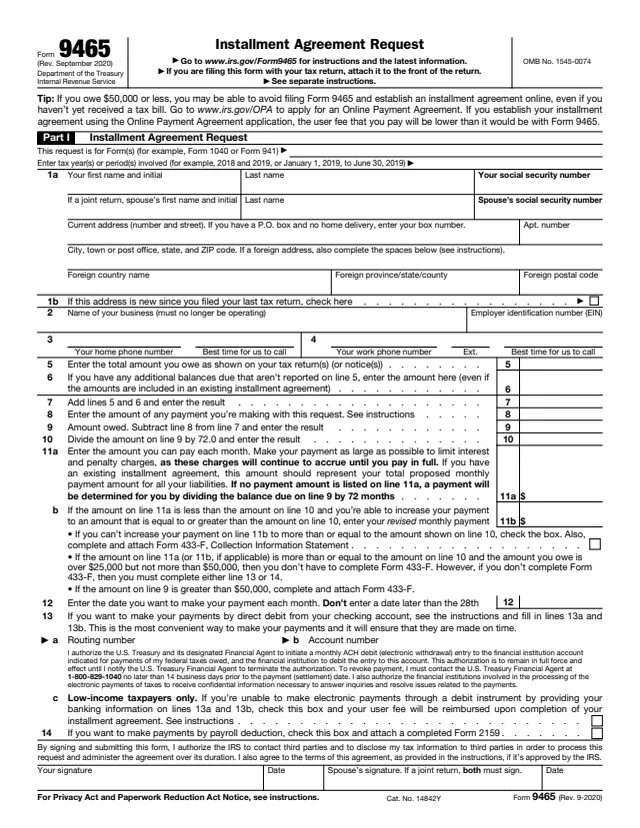
9465
66 fields, 2 pages
No tool matches that search.
No. The IRS says an extension of time to file is not an extension of time to pay. Interest applies to unpaid tax from the original due date.
Up to six months to file, which makes October 15 the new deadline for the usual April due date.
Yes. Pay online through an IRS payment option and mark that the payment is for a filing extension. You will get a confirmation number.
The IRS page says Free File has no income limit for extensions.
Qualifying U.S. citizens and resident aliens get an automatic two-month extension, generally to June 15, and attach a statement to the return.
File the return on time and ask for a payment plan with Form 9465 or the online payment agreement.