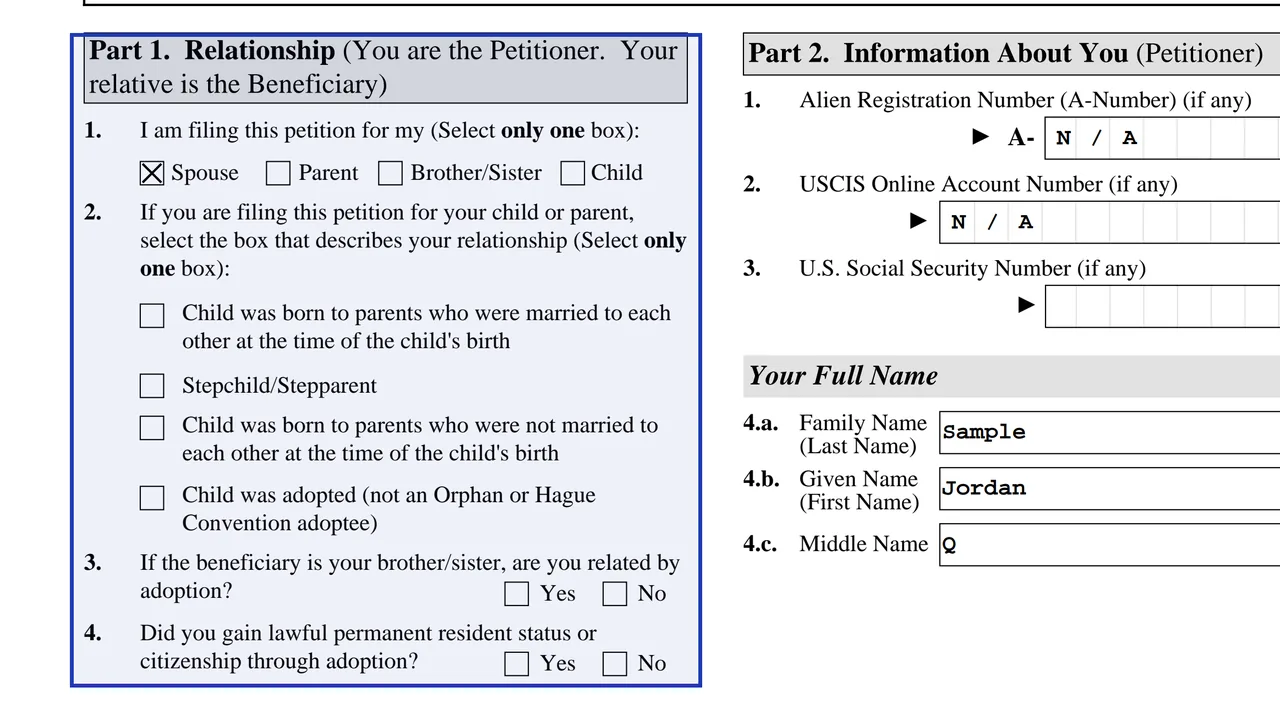
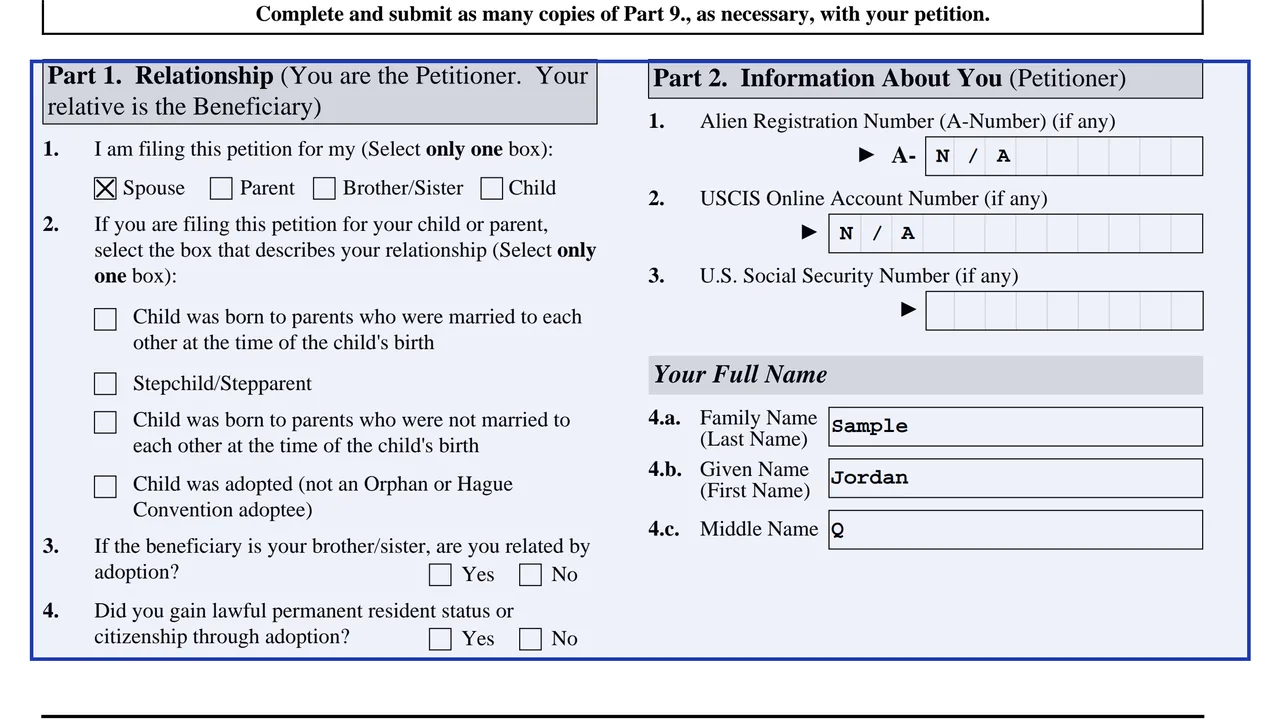
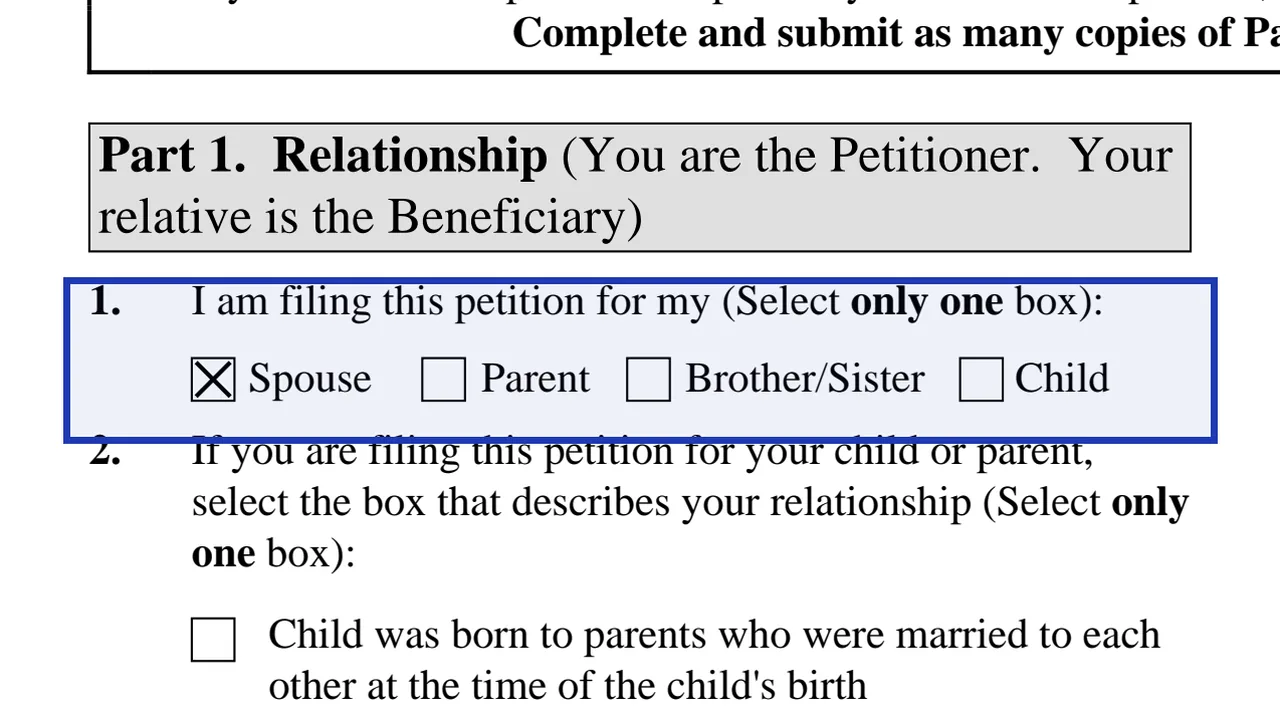
Part 1: Relationship
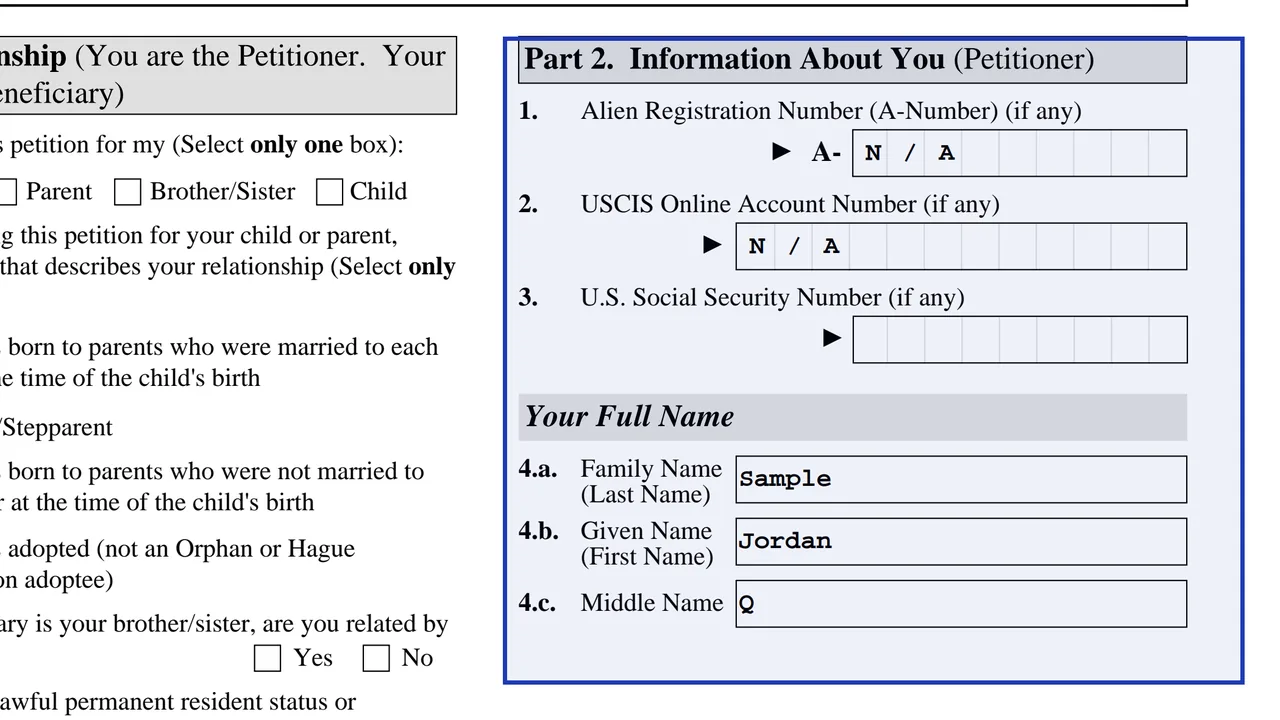
You say how the beneficiary is related to you.
I-130
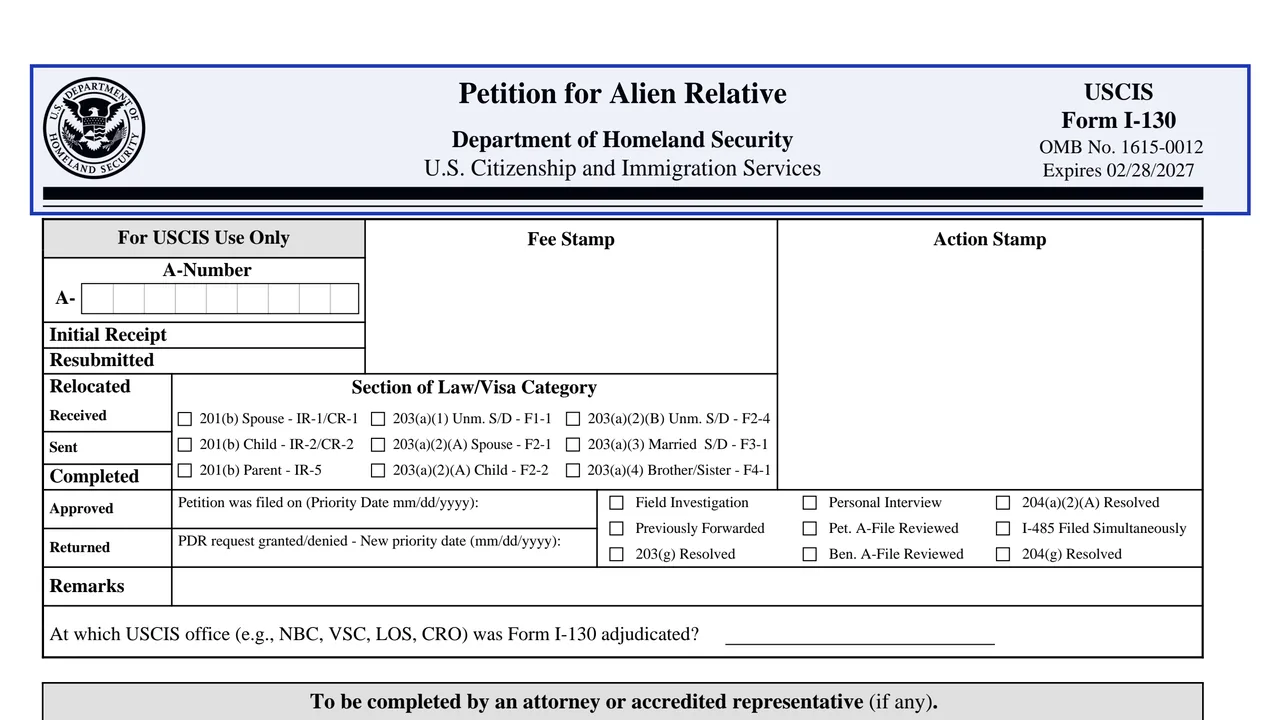
Petition for Alien Relative
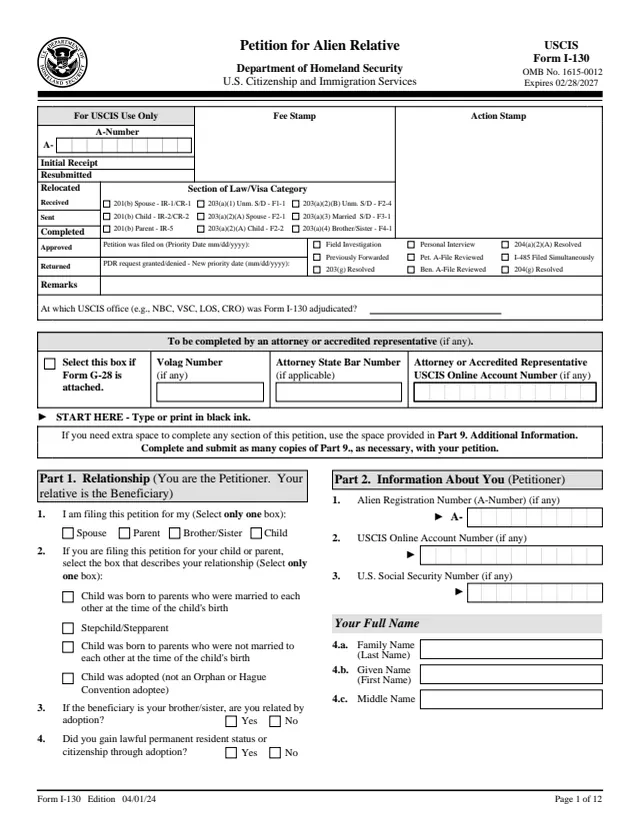
Form I-130 is the first step in helping a family member immigrate. A U.S. citizen, lawful permanent resident or U.S. national files it to prove a qualifying relationship with a relative, called the beneficiary, who wants to come to or stay in the United States permanently.
Filing or approving the petition does not give your relative any status. USCIS says that after approval your relative may be able to apply for a Green Card, for example with Form I-485 if they are in the United States and a visa is available, or through consular processing abroad. Immediate relatives of U.S. citizens always have a visa available, while other categories wait their turn.
A separate petition is needed for each eligible relative unless the person is a derivative beneficiary listed on someone else's petition.
You say how the beneficiary is related to you.
Your name, A-Number if any, USCIS online account number if you have one, citizenship or residence basis, marital history and address.
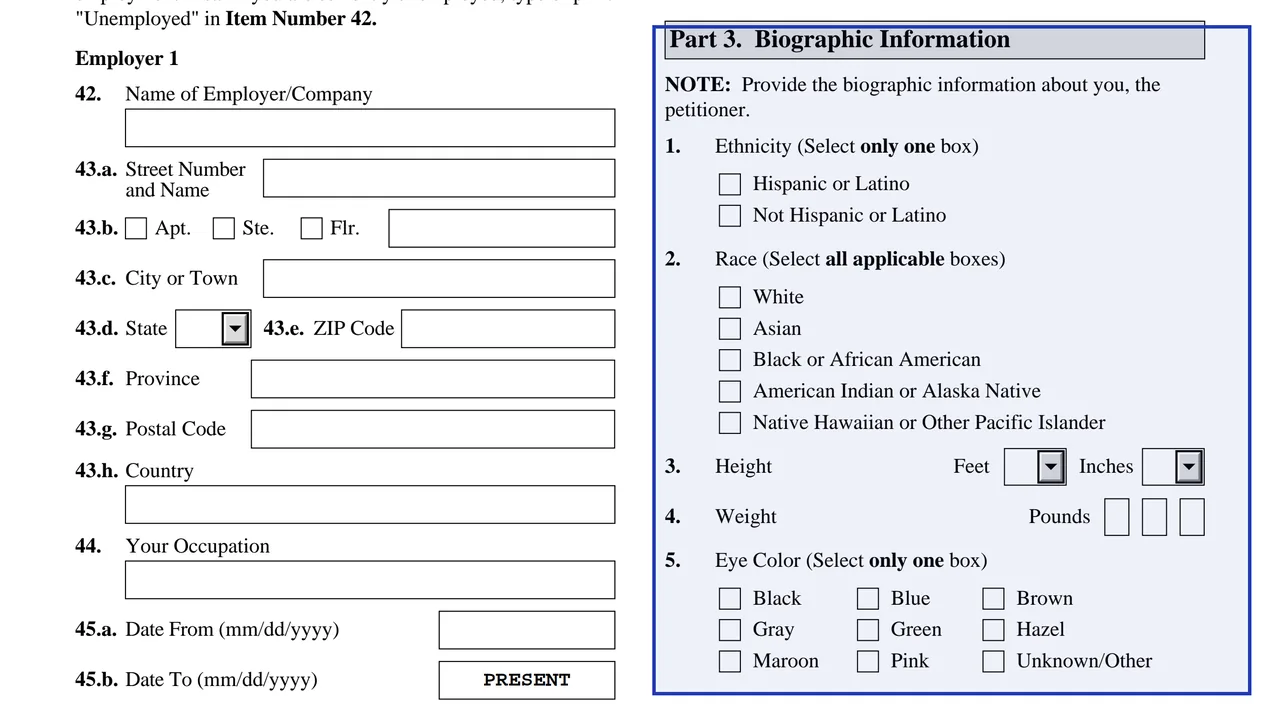
Ethnicity, race, height, weight, eye and hair color. Filling it in can shorten a biometrics appointment.
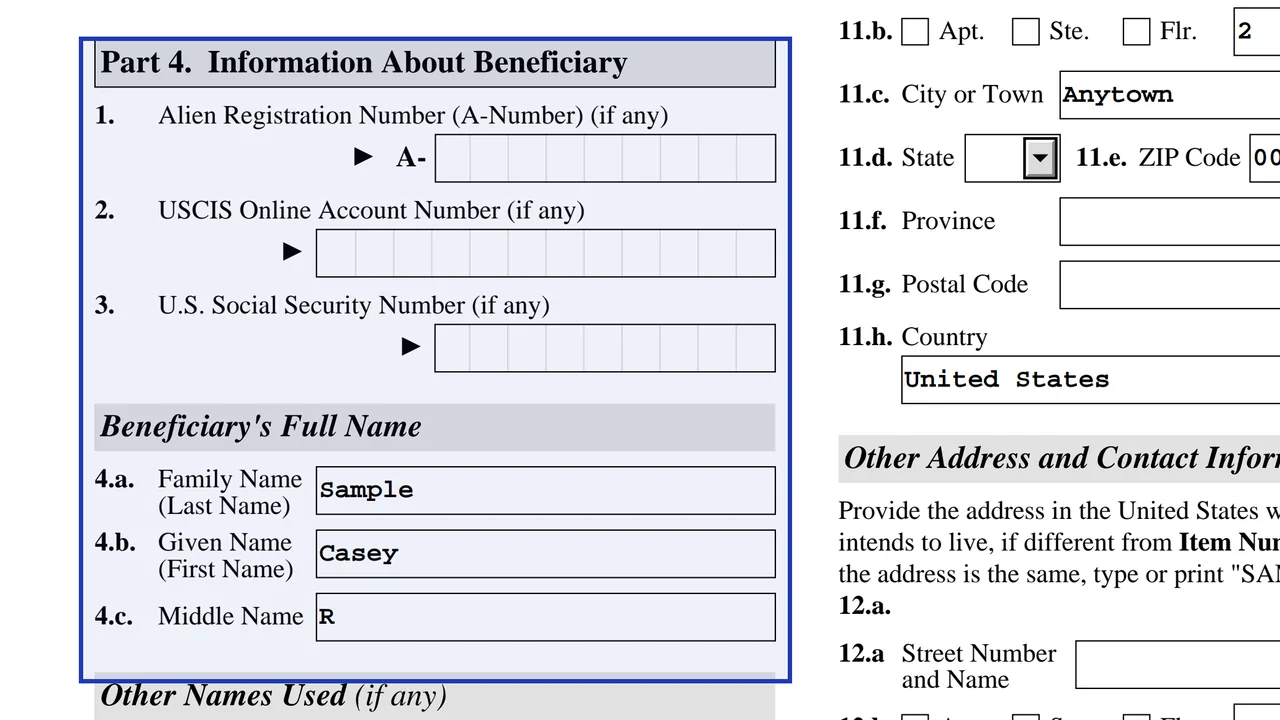
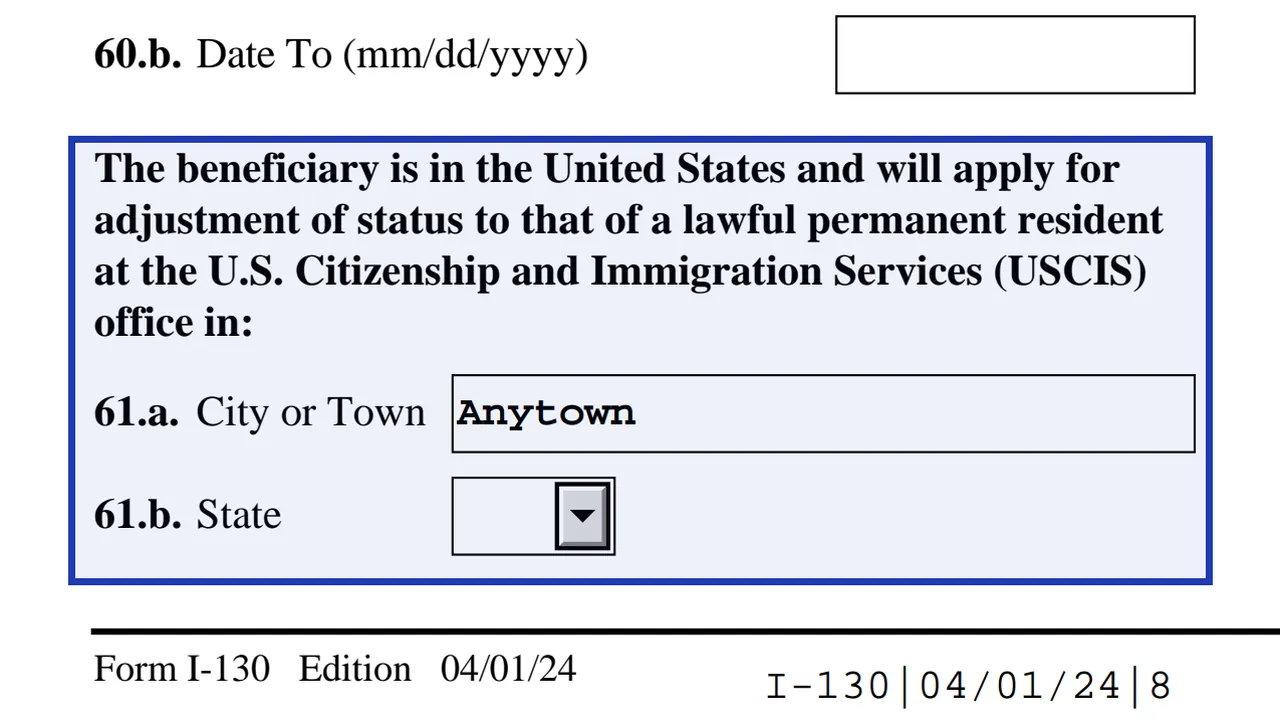
Name, birth details, address, marital history, passport, I-94 and entry details, and Questions 61 and 62, which state whether the beneficiary will seek adjustment of status inside the United States or consular processing abroad.
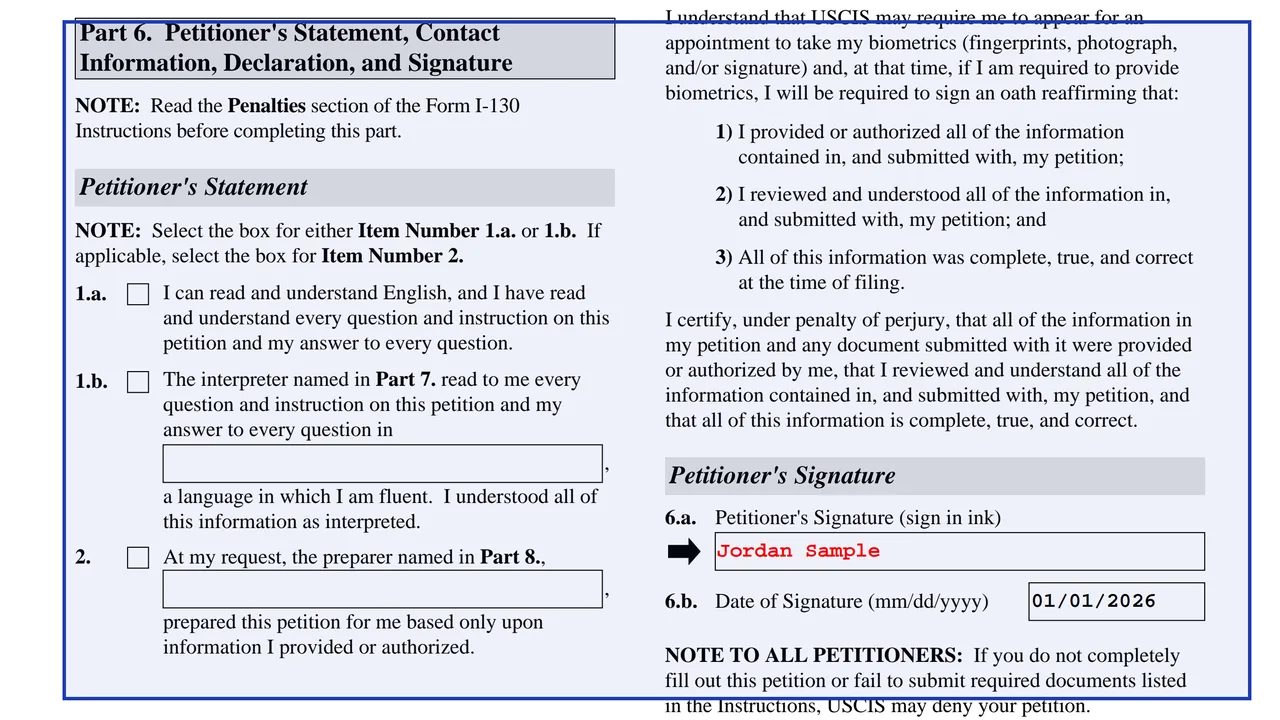
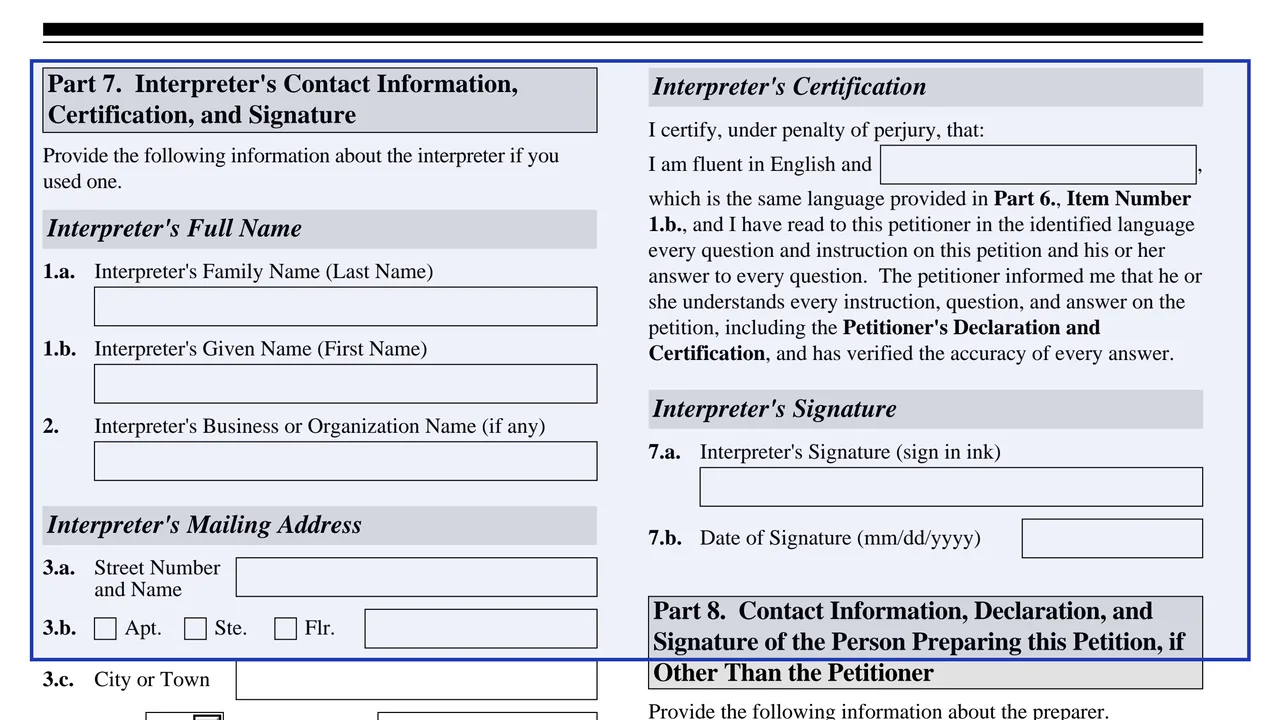
Contact details, whether an interpreter helped, and your signature.
Certifications for anyone who helped you read or complete the petition, plus extra space for longer answers.
Type or print in black ink, and keep the edition date and page numbers visible on every page of a printed copy. Answer every question. Write N/A where a question does not apply and None for a zero.
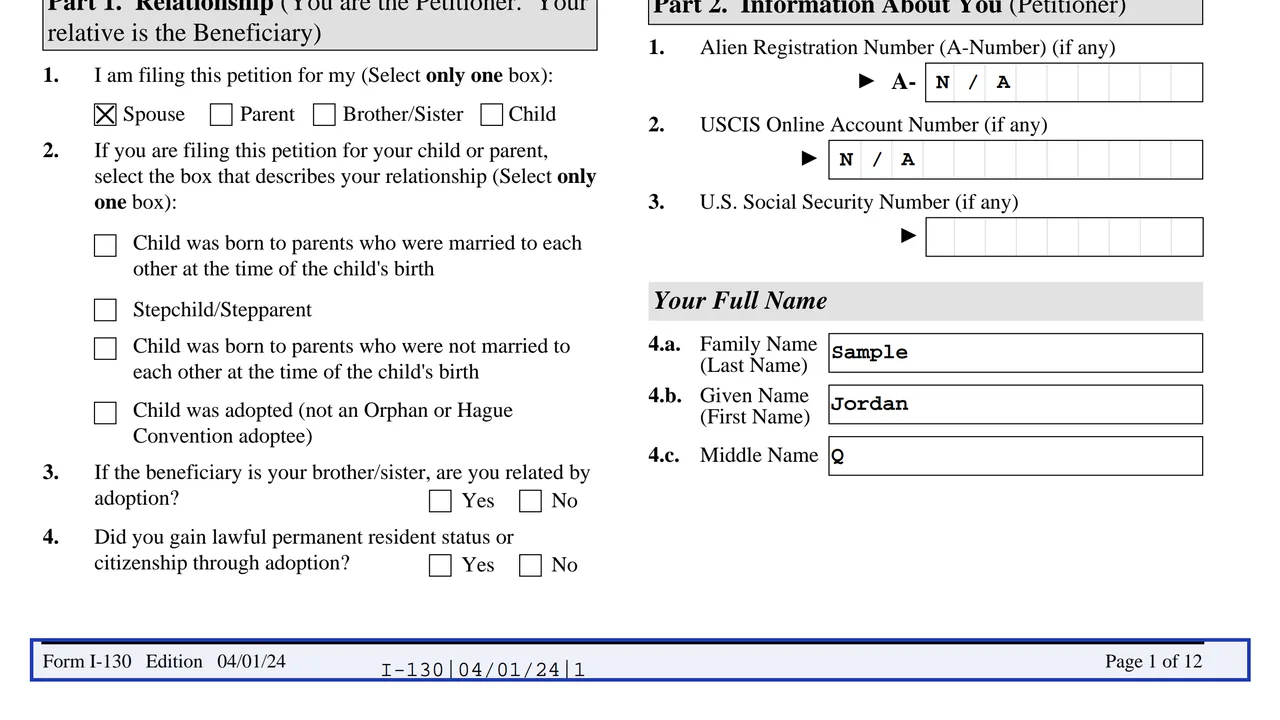
Name the relationship, then give your own details. A USCIS online account number only exists if you previously filed something with a receipt number starting IOE.
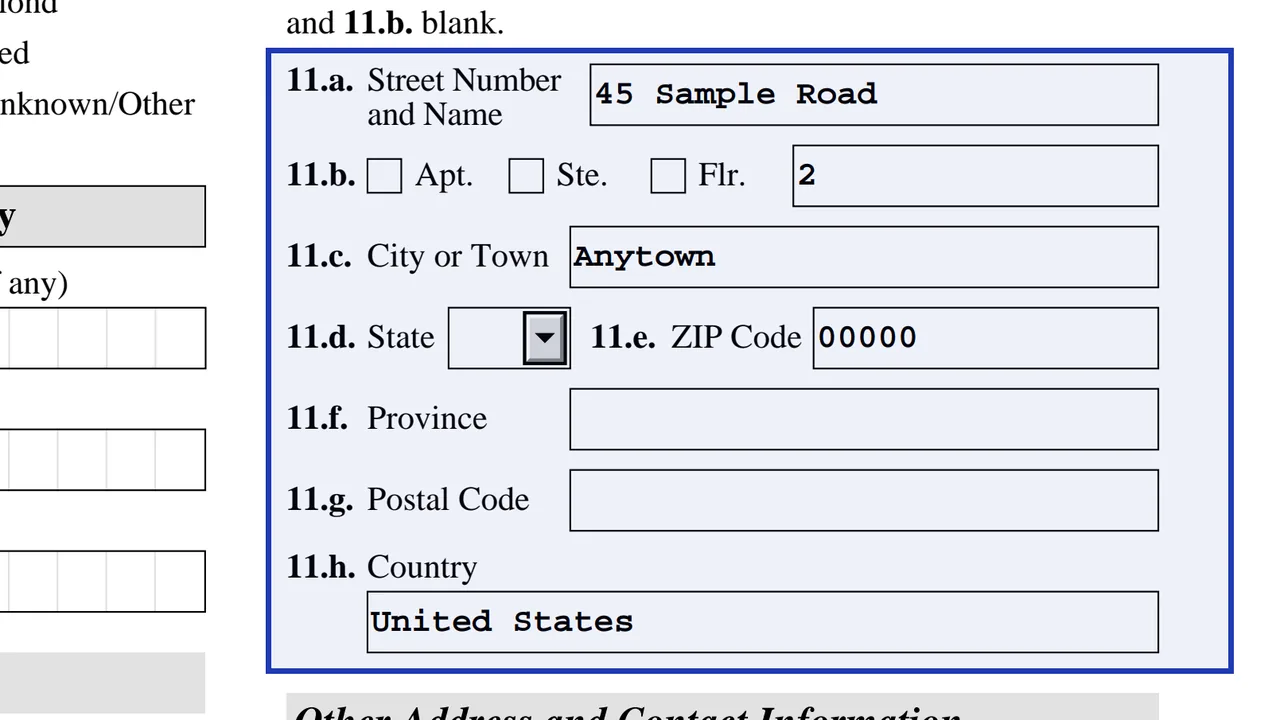
Use dates in mm/dd/yyyy form. Enter the beneficiary's physical address, since USCIS uses it when deciding where an approved petition goes.
Choose adjustment of status in the United States or consular processing abroad. Do not complete both and do not leave the section blank.
A petition for a spouse must include Form I-130A, Supplemental Information for Spouse Beneficiary. This page lets you fill the form online free, then print it for your signature.
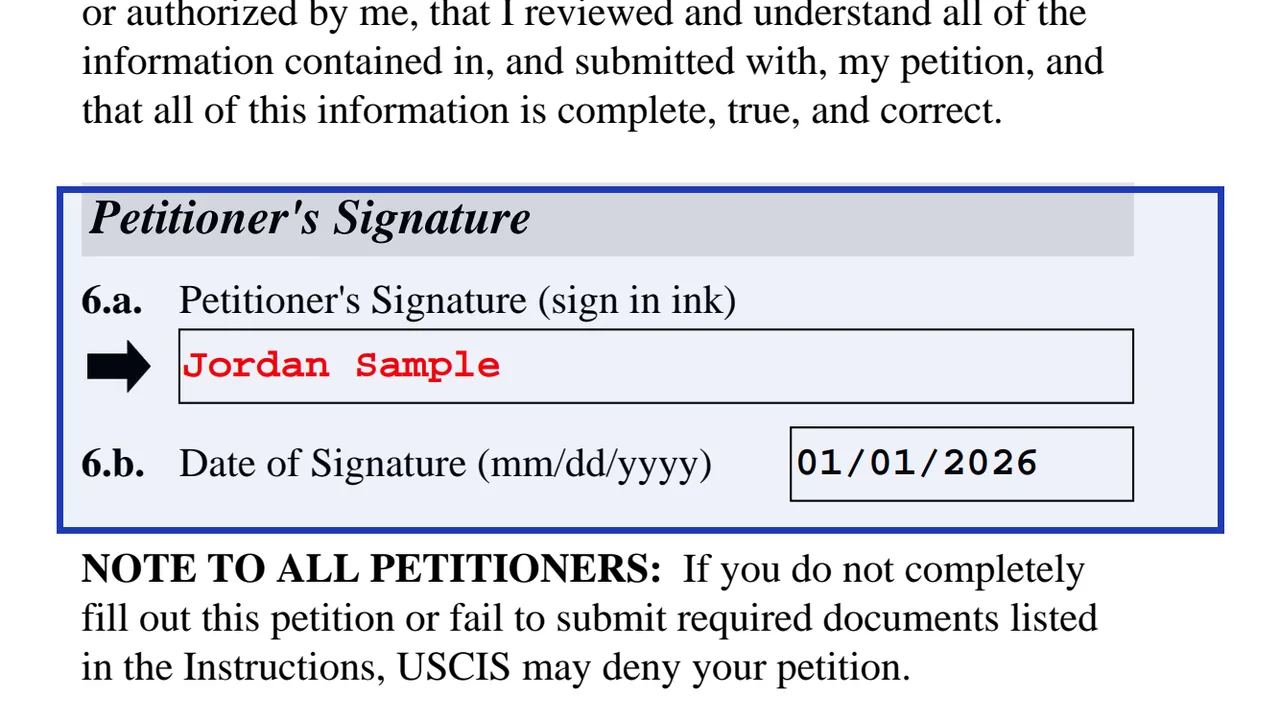
A stamped or typed name is not accepted. A parent or legal guardian may sign for a petitioner under 14.
You get the real form, filled in a browser tab, with nothing standing between you and the finished PDF.
File online through a USCIS account or on paper. The mailing location depends on where you live and whether your relative is filing Form I-485 at the same time. USCIS changed the filing location on Oct. 7, 2026, with a grace period to Nov. 9, 2026, so check its direct filing addresses page.
The fee is on the USCIS Fee Schedule page, which can change. Check it on the day you file.
A U.S. birth certificate, naturalization or citizenship certificate, Form FS-240, an unexpired U.S. passport, or a consular statement. Permanent residents send both sides of the Green Card.
A spouse petition needs the marriage certificate, proof that prior marriages ended, two passport-style photos of you and your spouse, and evidence the marriage is real, such as joint property, a shared lease or children's birth certificates. Child and parent petitions need birth certificates.
Send photocopies unless told to send originals, and include a full English translation with the translator's certification for any foreign-language document.
Missing required fields in Parts 1, 2 and 4 leads to rejection, as does a missing signature. Another mistake is leaving both Question 61 and 62 blank or filling in both.
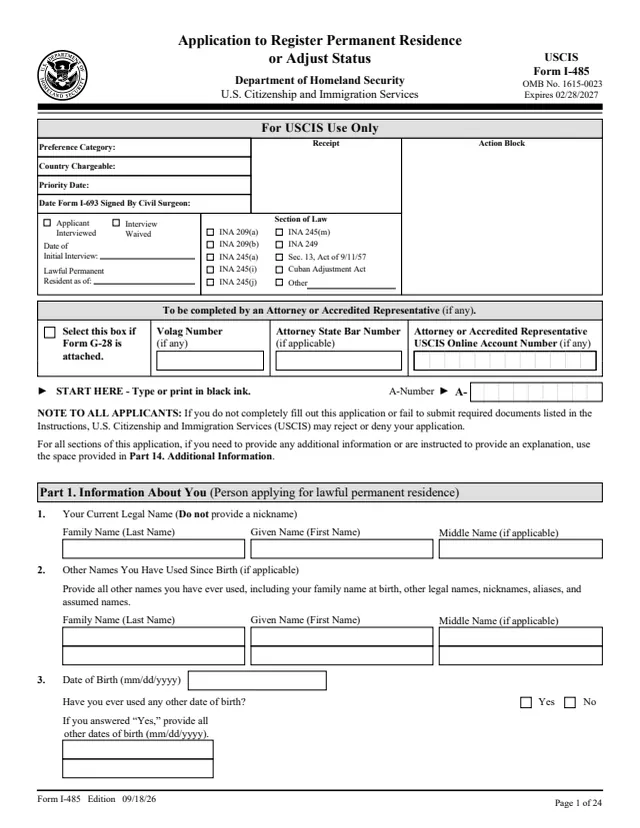
I-485
730 fields, 24 pages
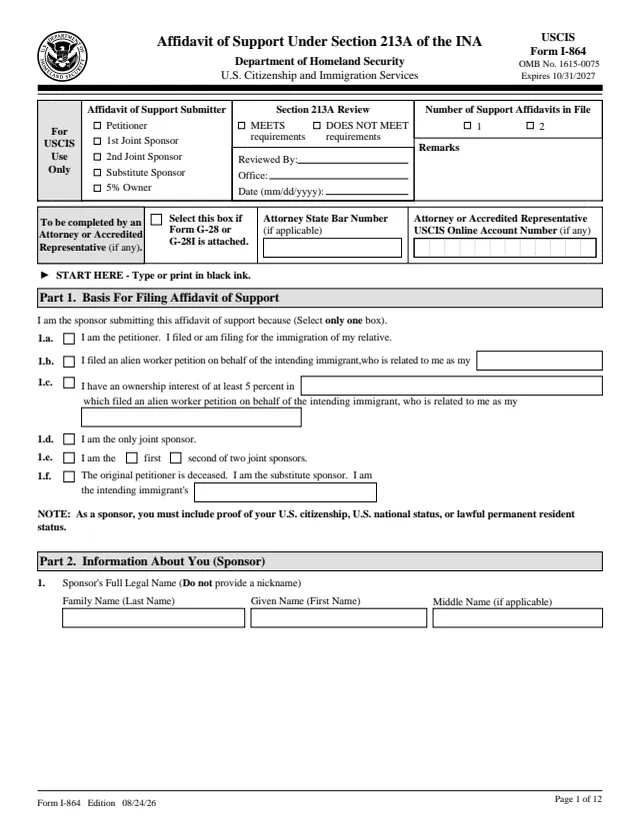
I-864
219 fields, 12 pages
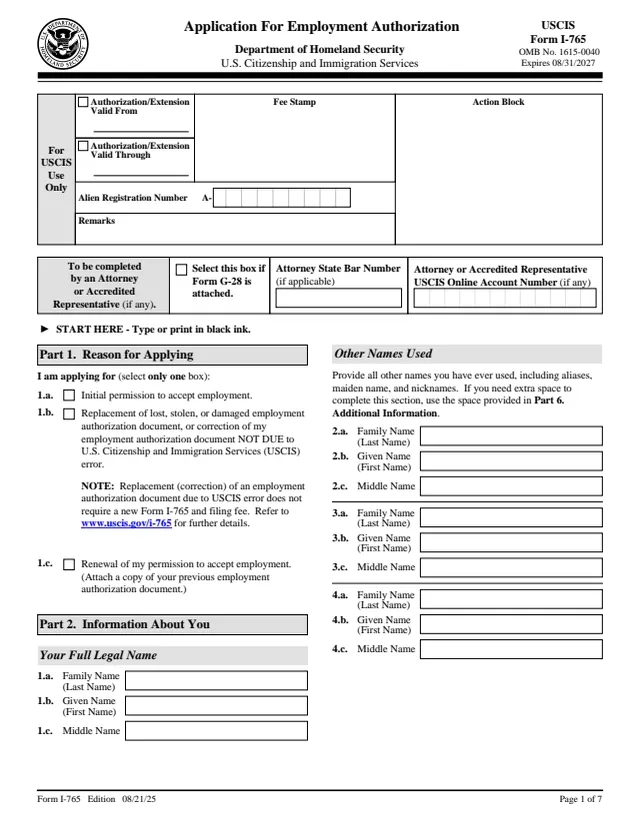
I-765
161 fields, 7 pages
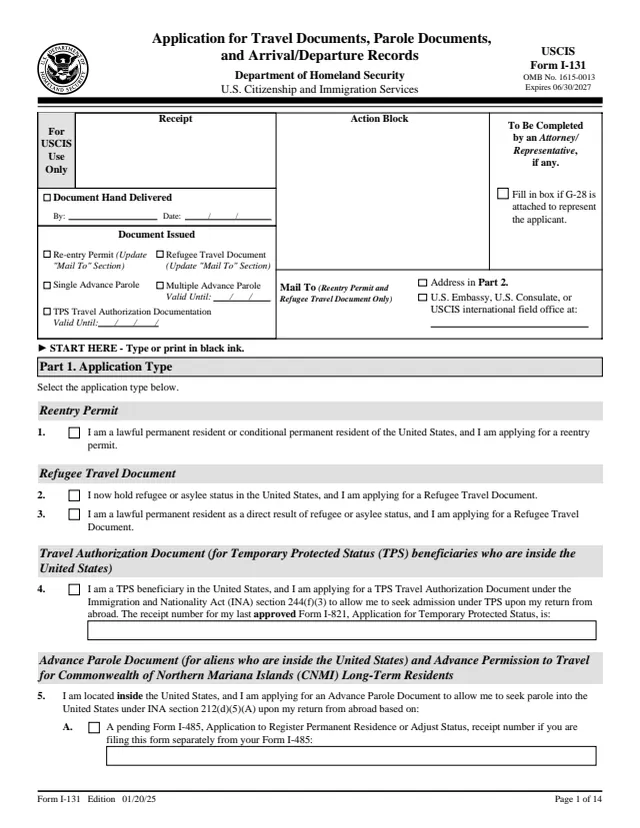
I-131
339 fields, 14 pages
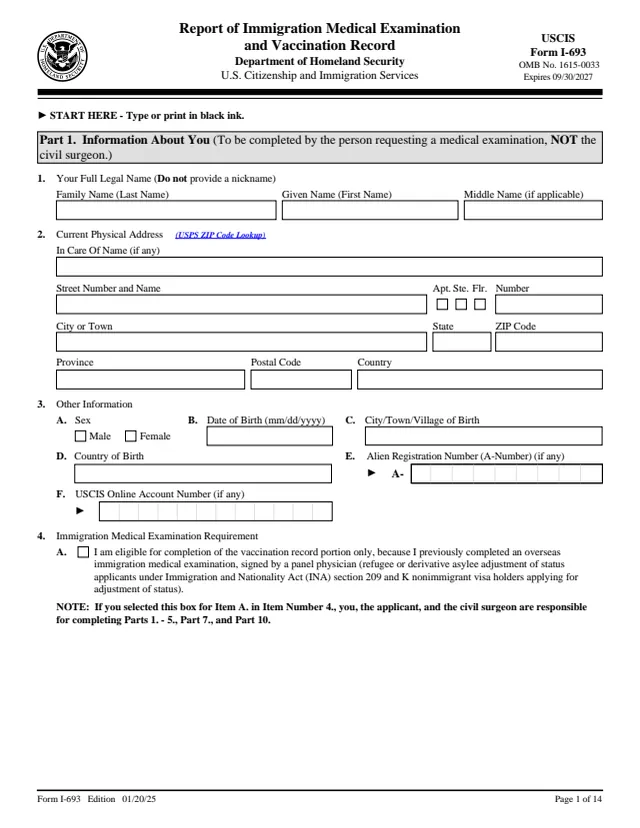
I-693
446 fields, 14 pages
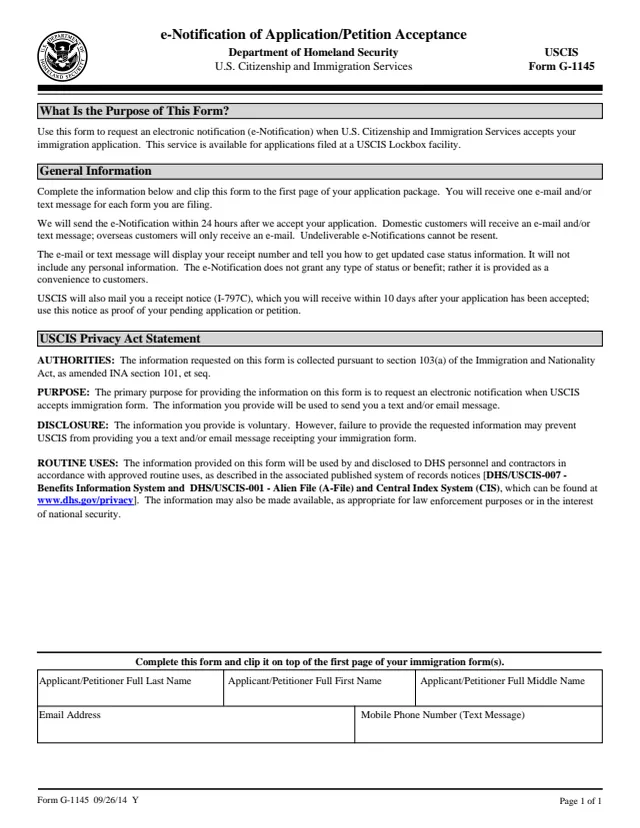
G-1145
6 fields, 1 page
No tool matches that search.
No. USCIS says approval does not give your relative any status or the right to immigrate immediately. They still need a visa to be available and then apply for a Green Card.
No. A separate petition is needed for each relative, unless a person qualifies as a derivative beneficiary listed in Part 4 of a petition for a married child, adult child or sibling.
Yes, USCIS offers online filing through a USCIS account. Check the forms-available-online page to confirm your situation is covered.
If the petition is pending, contact USCIS. After approval, the right step depends on where the petition currently is, and the USCIS page has a chart.
Yes, if you are petitioning for a spouse. Your spouse completes and signs it, though a spouse who is overseas does not have to sign.