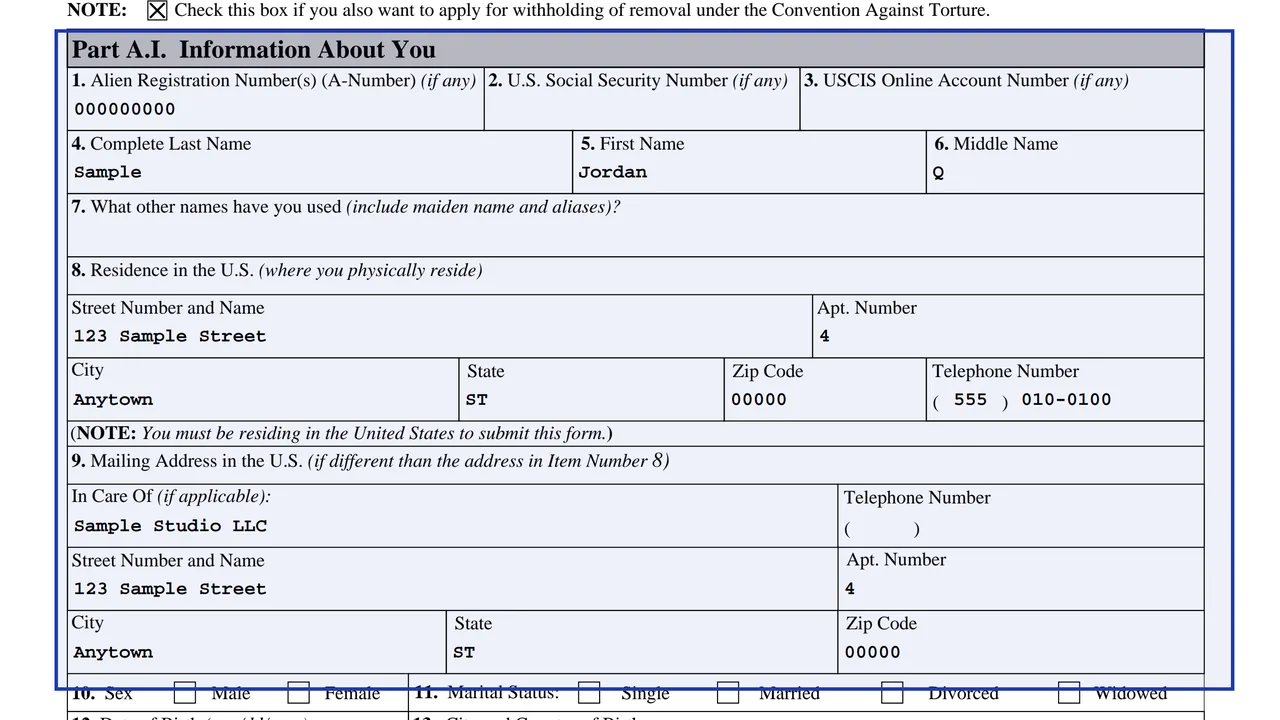
Part A.I. Information about you
Name, A-Number, address where you live and mailing address, birth details, nationality, race, ethnic or tribal group, religion, entry and I-94 information, passport details, languages, and immigration court history.
I-589
Application for Asylum and for Withholding of Removal
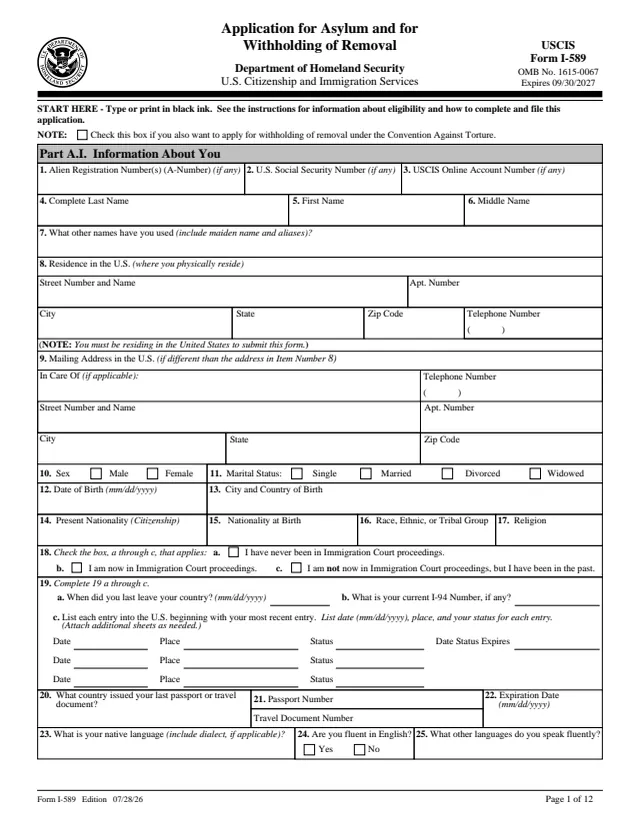
Form I-589 is used to apply for asylum in the United States and for withholding of removal. It can also be used to ask for protection under the Convention Against Torture. You may file if you are physically in the United States and are not a U.S. citizen.
The form is long, and USCIS says your application and supporting evidence may be your only chance to make your case before USCIS, since it can decide without an interview. The instructions also warn that anything you write can be used in removal proceedings, even if you later withdraw the application. Asylum law is complex, and the instructions say you have the right to your own lawyer at no cost to the government and point to lists of free legal providers.
You can fill the form online on this page for free and without an account, then print it and sign it. Complete it in English, because USCIS only accepts the English version.
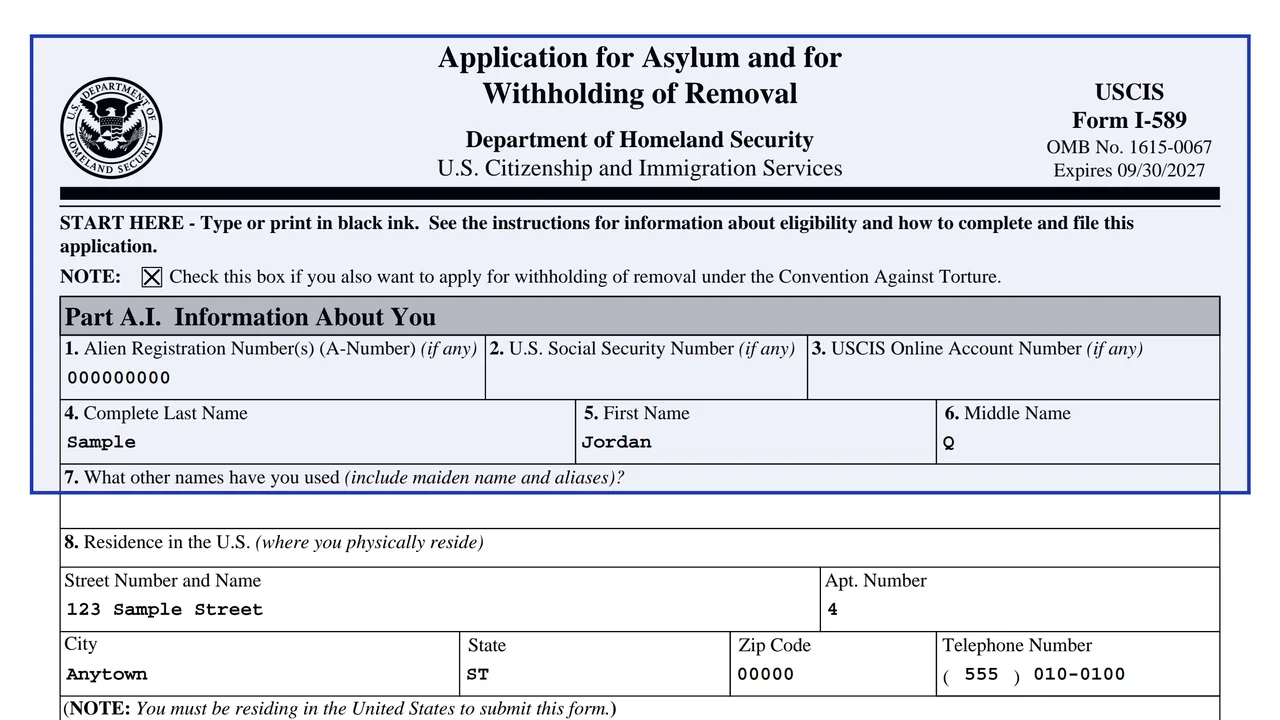
Name, A-Number, address where you live and mailing address, birth details, nationality, race, ethnic or tribal group, religion, entry and I-94 information, passport details, languages, and immigration court history.
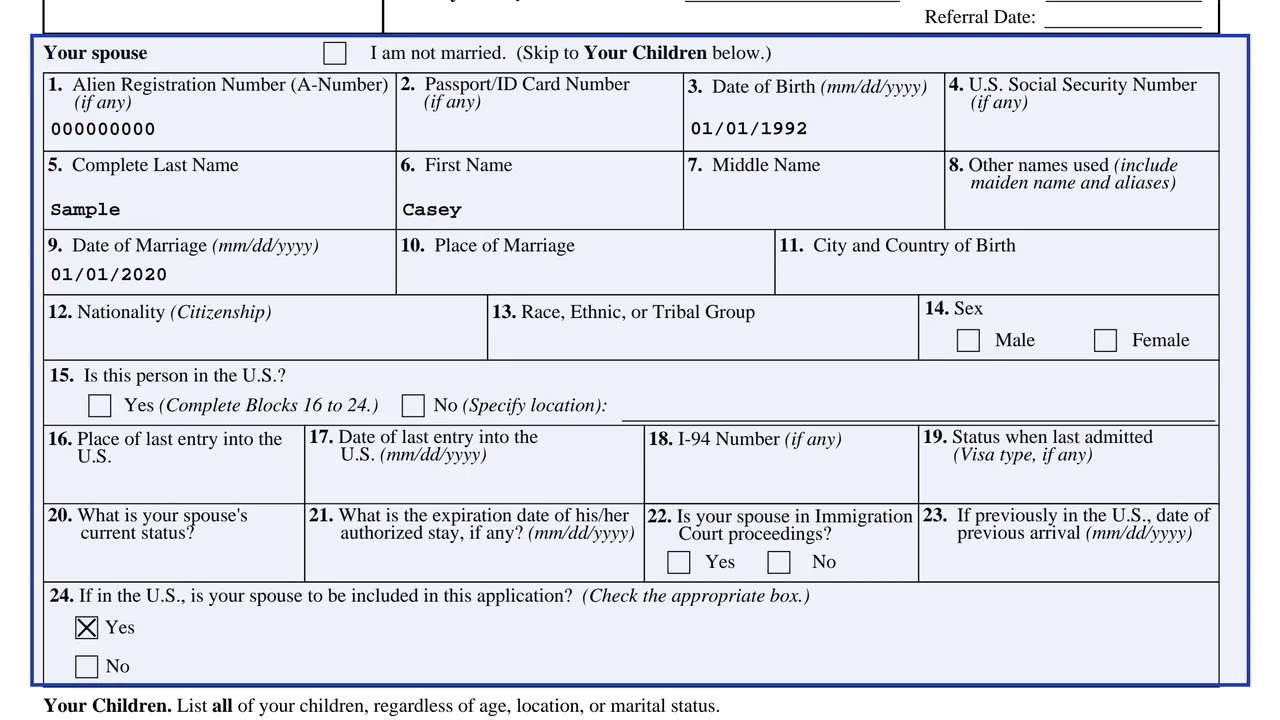
Your spouse and all your children, including stepchildren, adopted, deceased and adult children, whether or not they are included. Use Supplement A for more than four children.
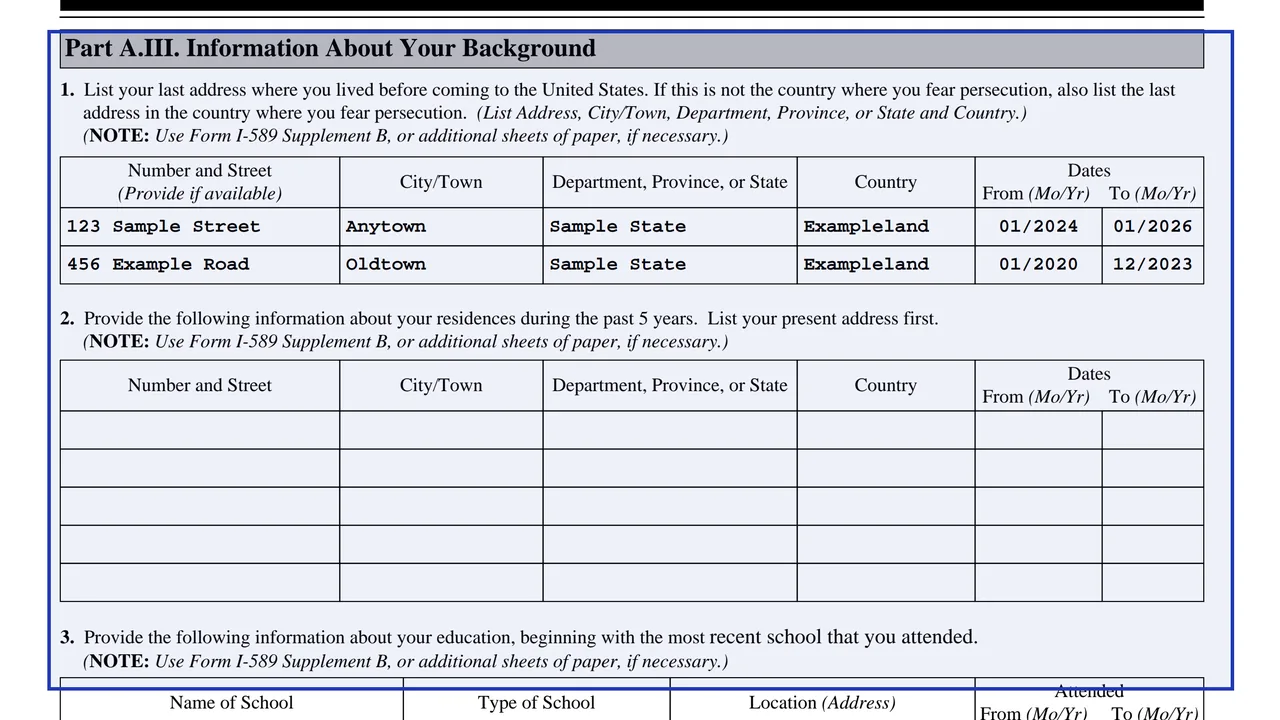
Your last address before coming to the United States, residences and employment for the past 5 years, your schools, and your parents and siblings, most recent first.
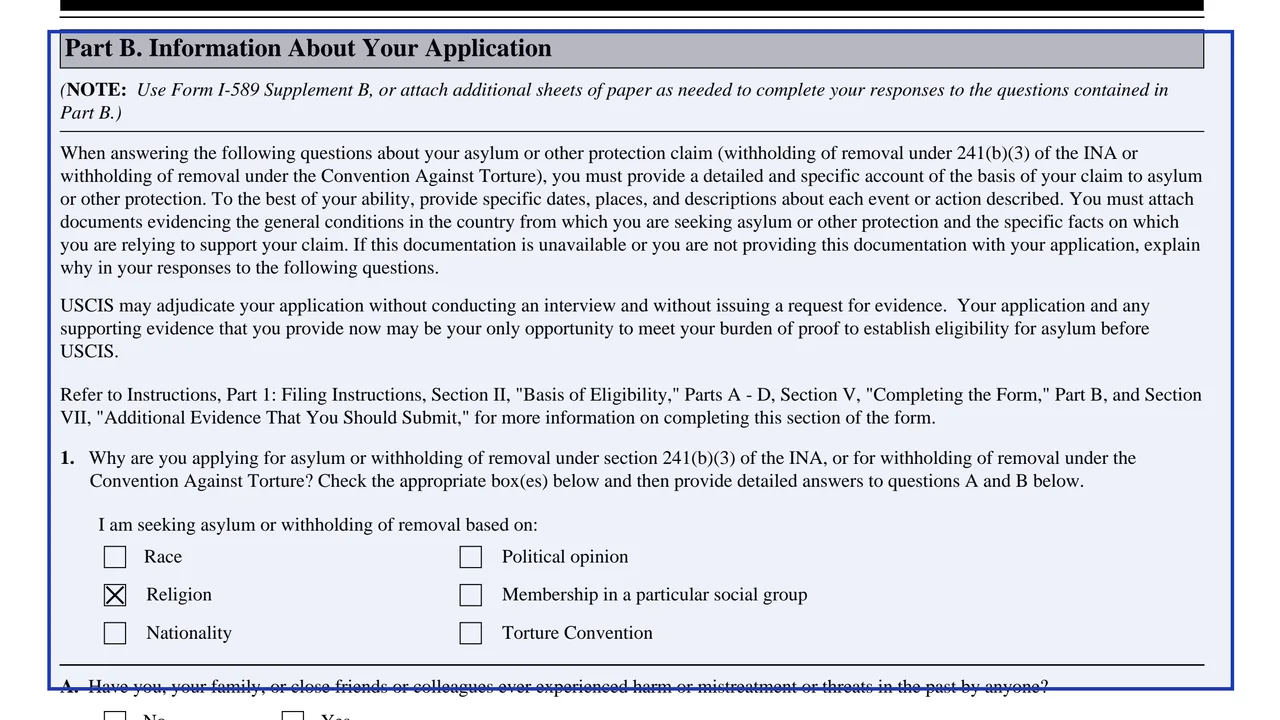
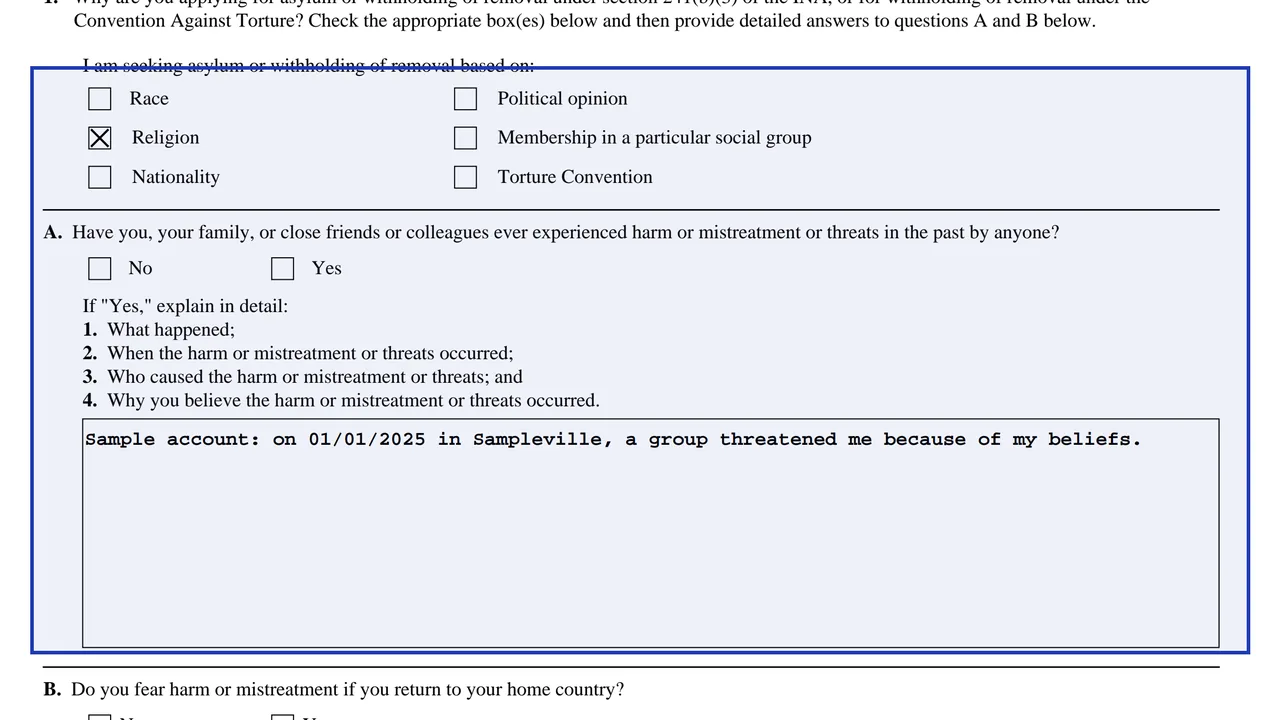
Why you are applying, with questions about past harm, fear of future harm and fear of torture. Explain any Yes answer.
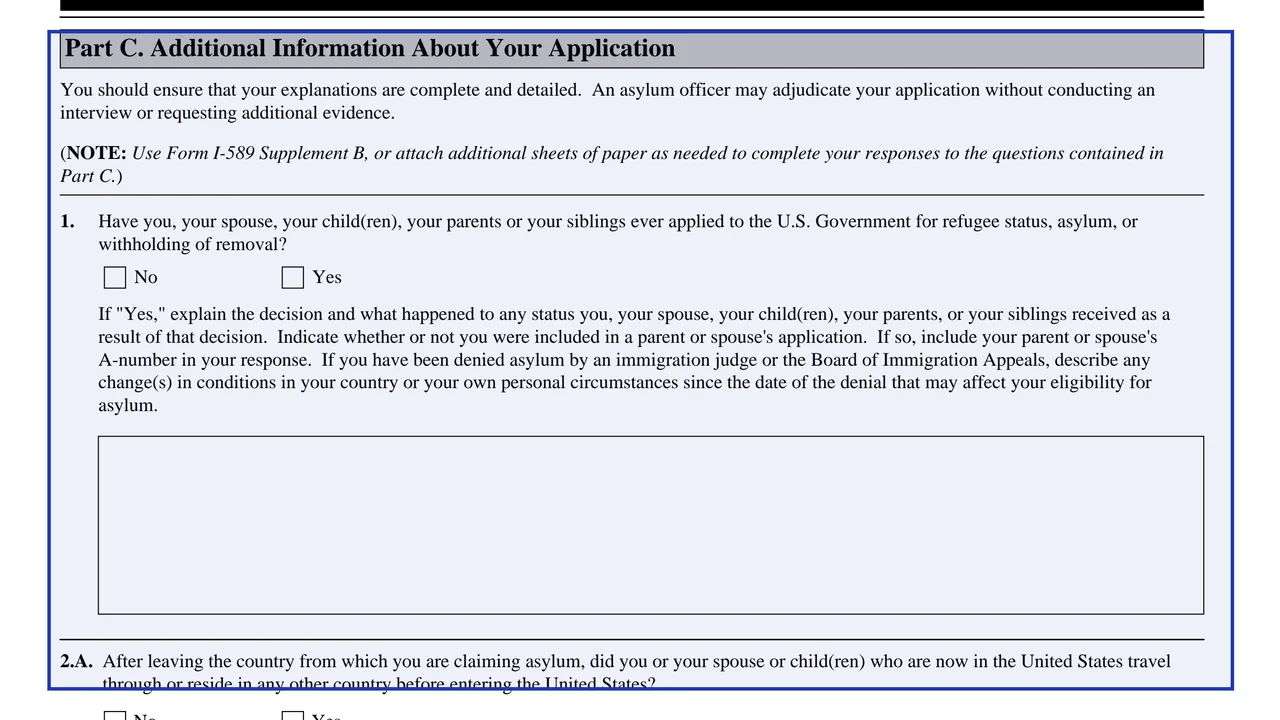
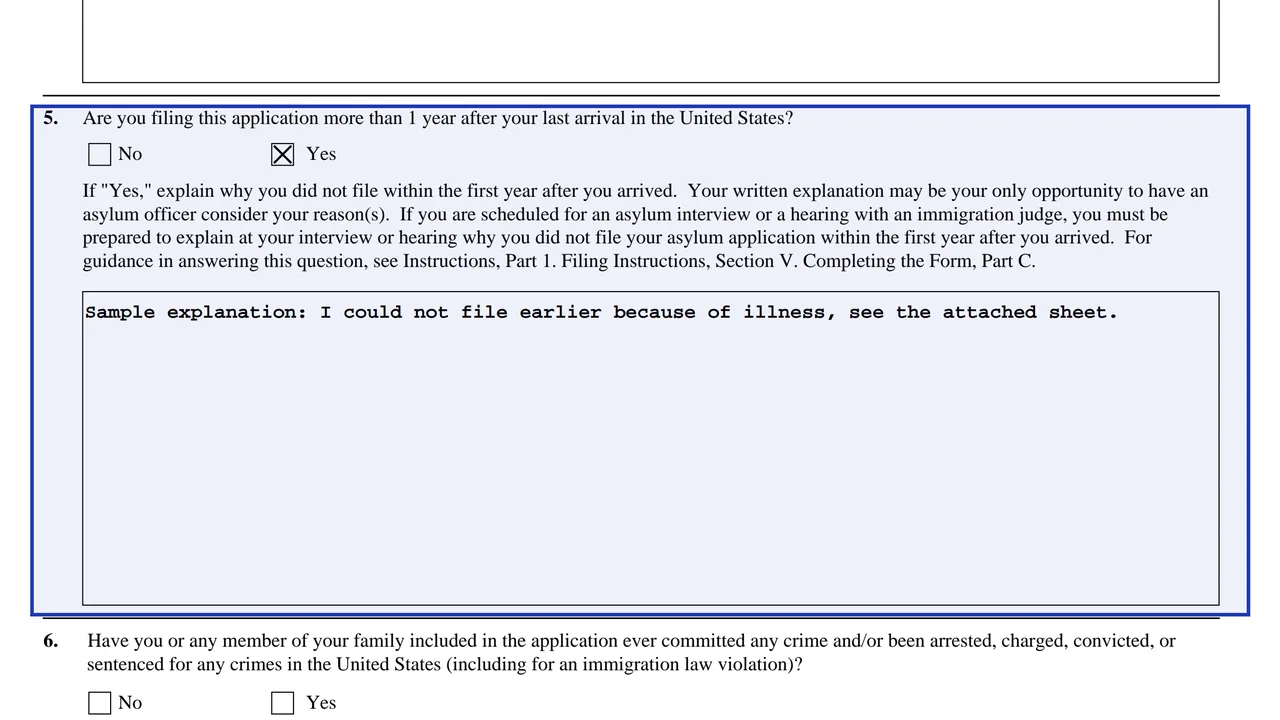
Questions about prior applications, travel, other countries, crimes, organizations, and why you did not apply within one year.
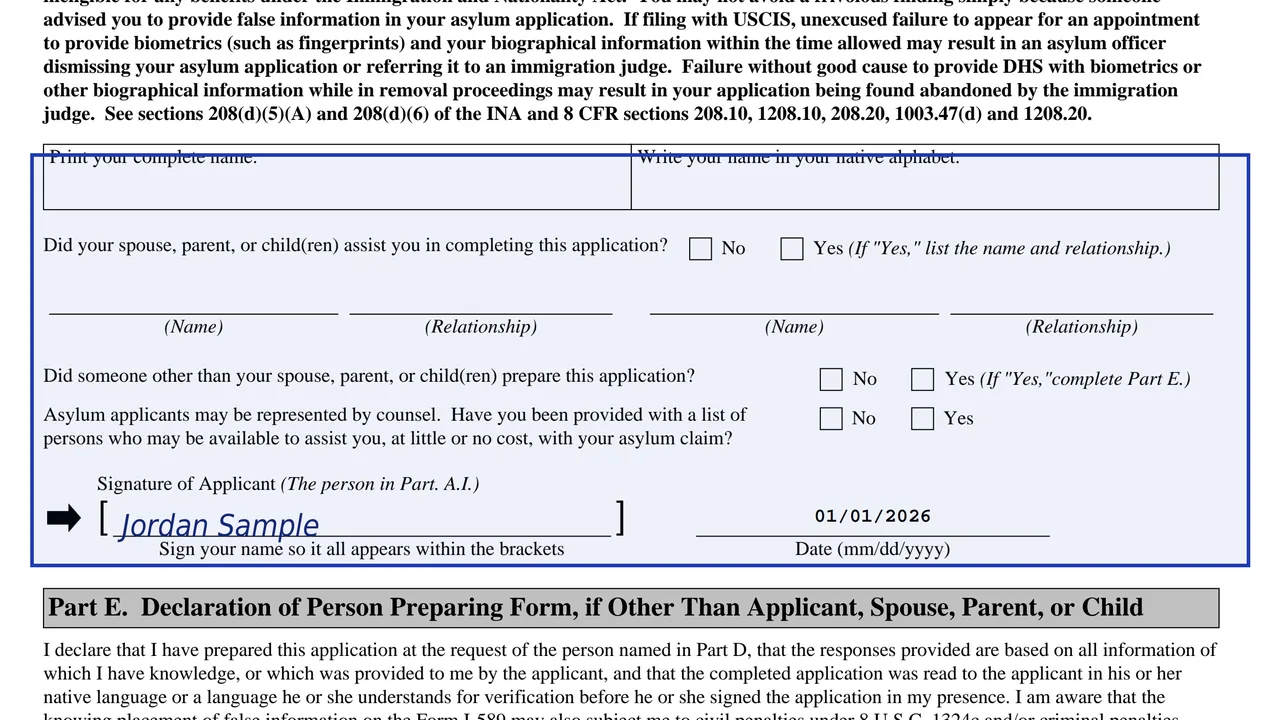
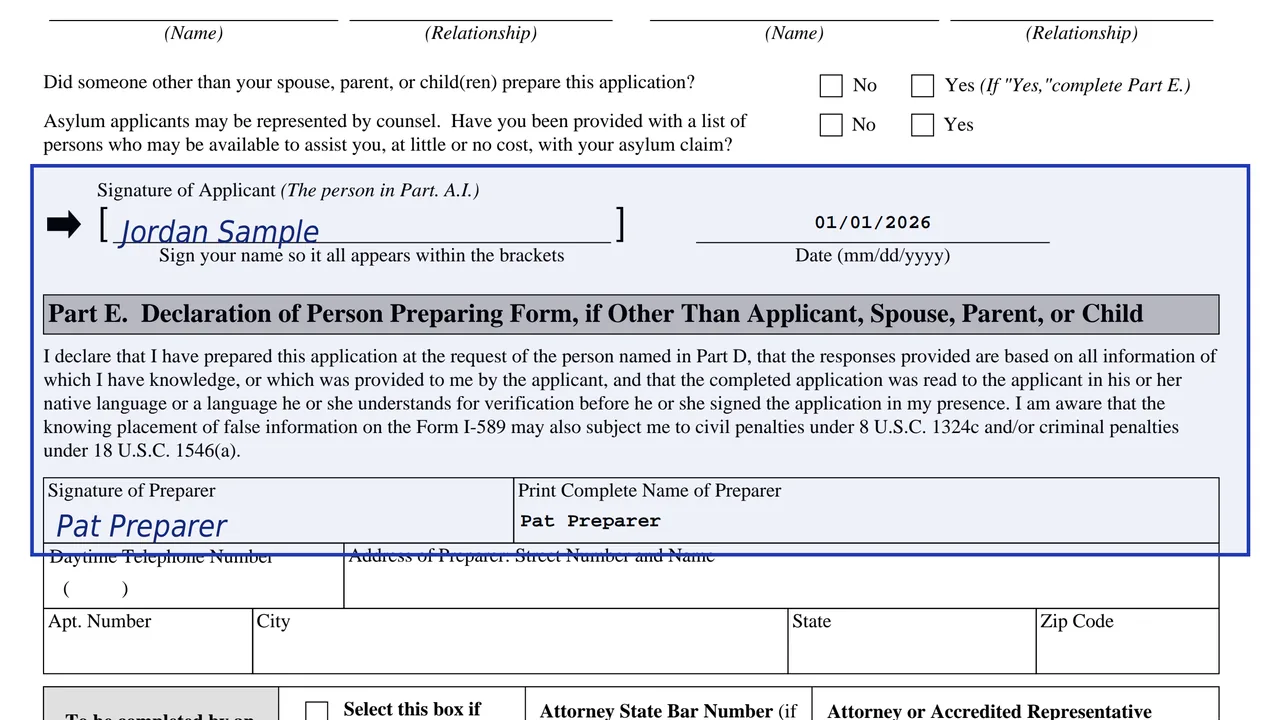
You sign after reviewing the application and answer questions about any help you received.
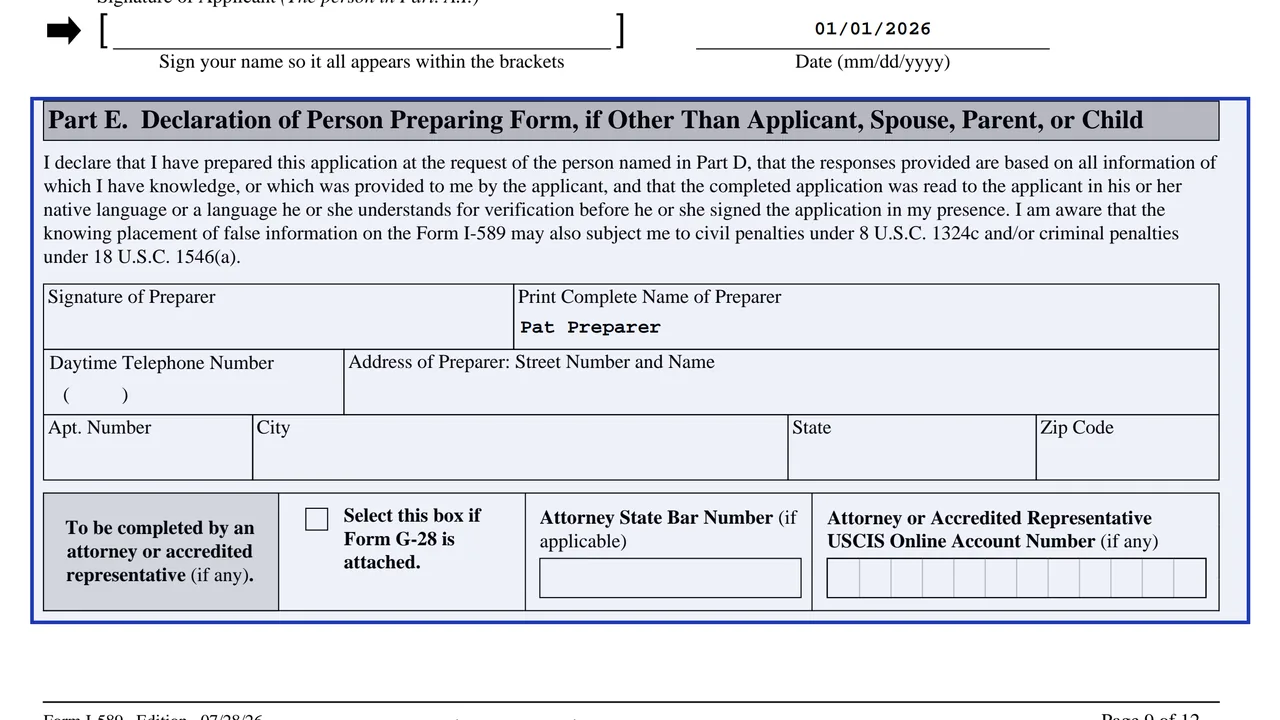
Anyone other than a spouse, parent or child who helped you prepare it must sign here.
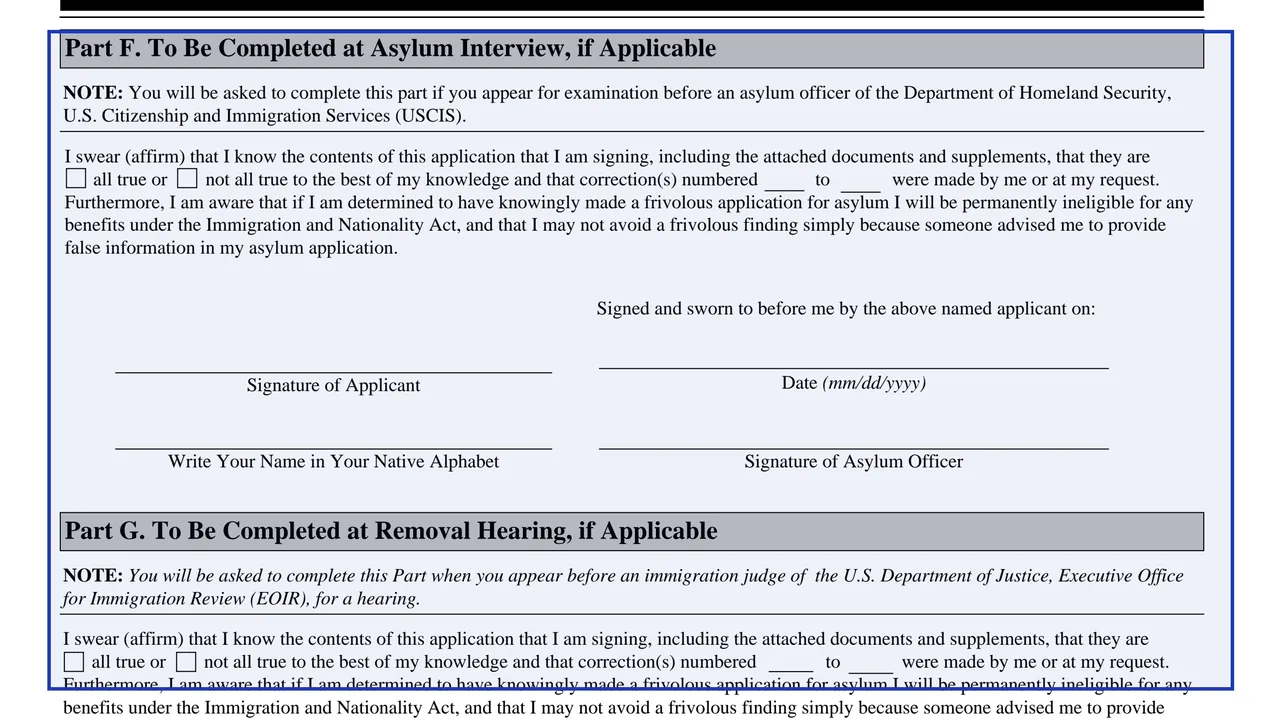
Signed later, at an asylum interview or a removal hearing. Do not sign them when you file.
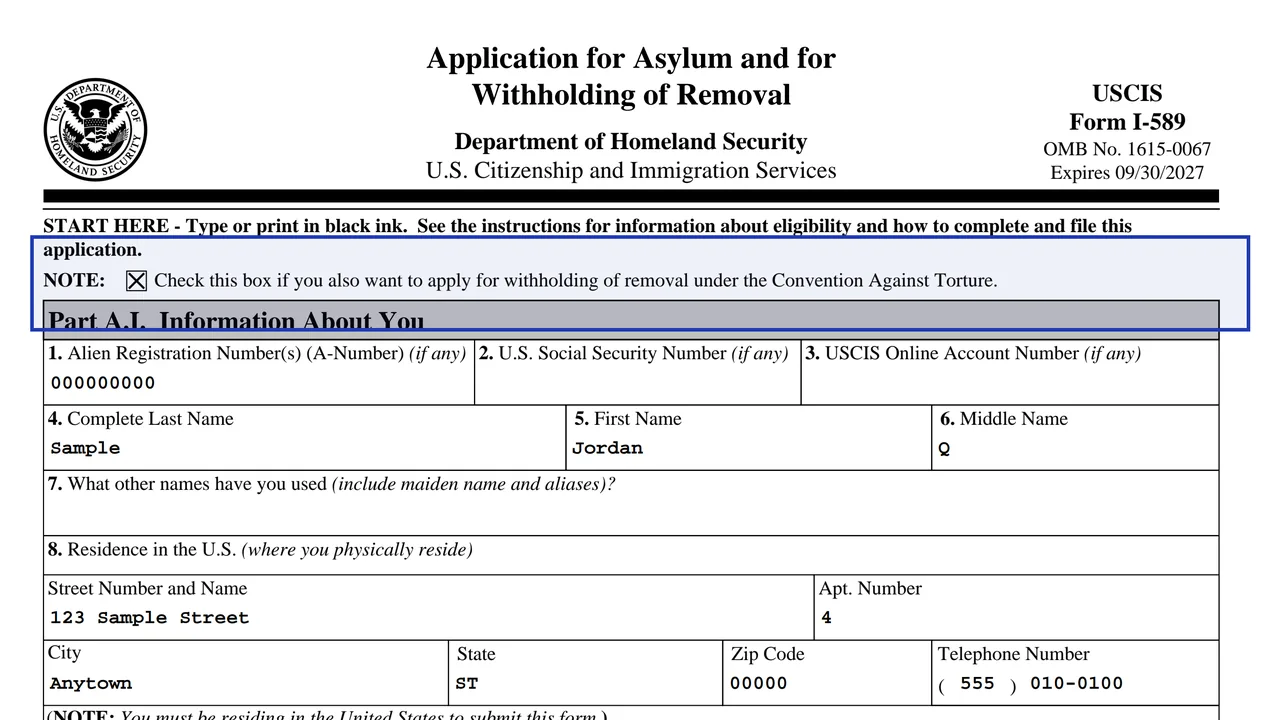
Check the box at the top of page 1 if you also want to be considered for withholding of removal under the Convention Against Torture, and explain the fear of torture in Part B, Question 4.
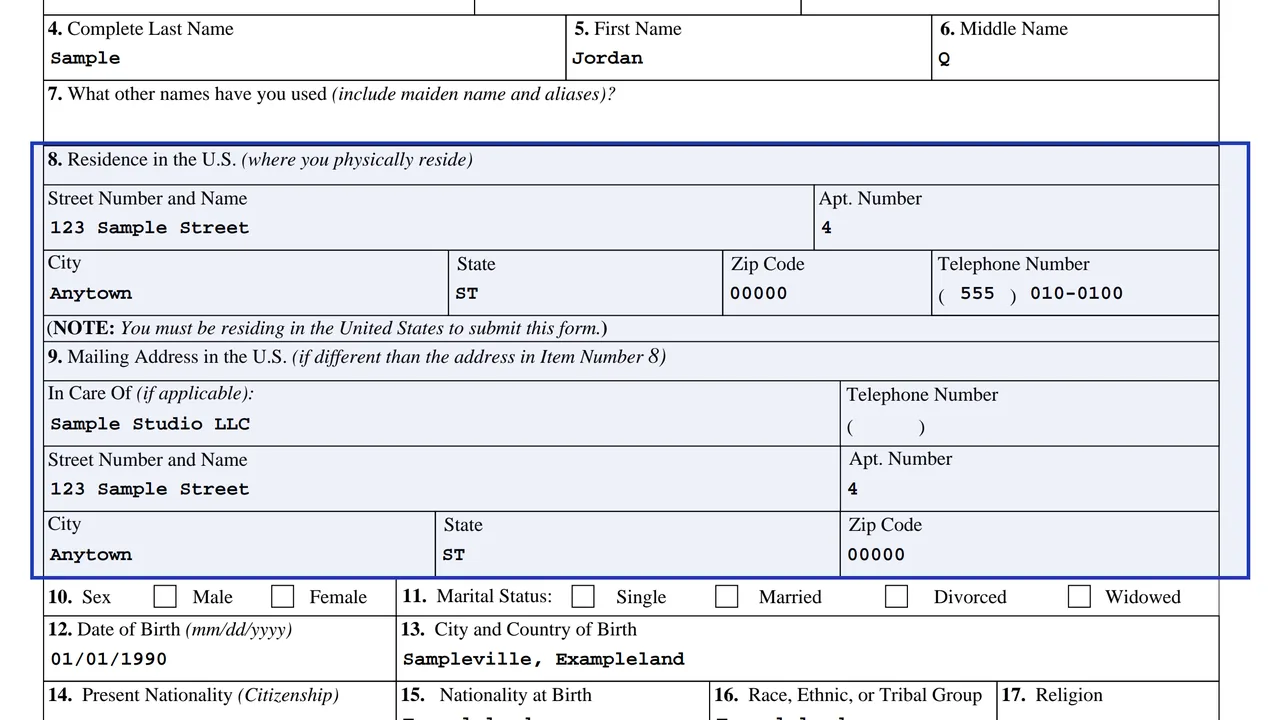
Question 8 is the street address where you physically live. Question 9 is a mailing address if different, with an In Care Of name if someone collects your mail. A P.O. box goes in Question 9 and a residence in Question 8.
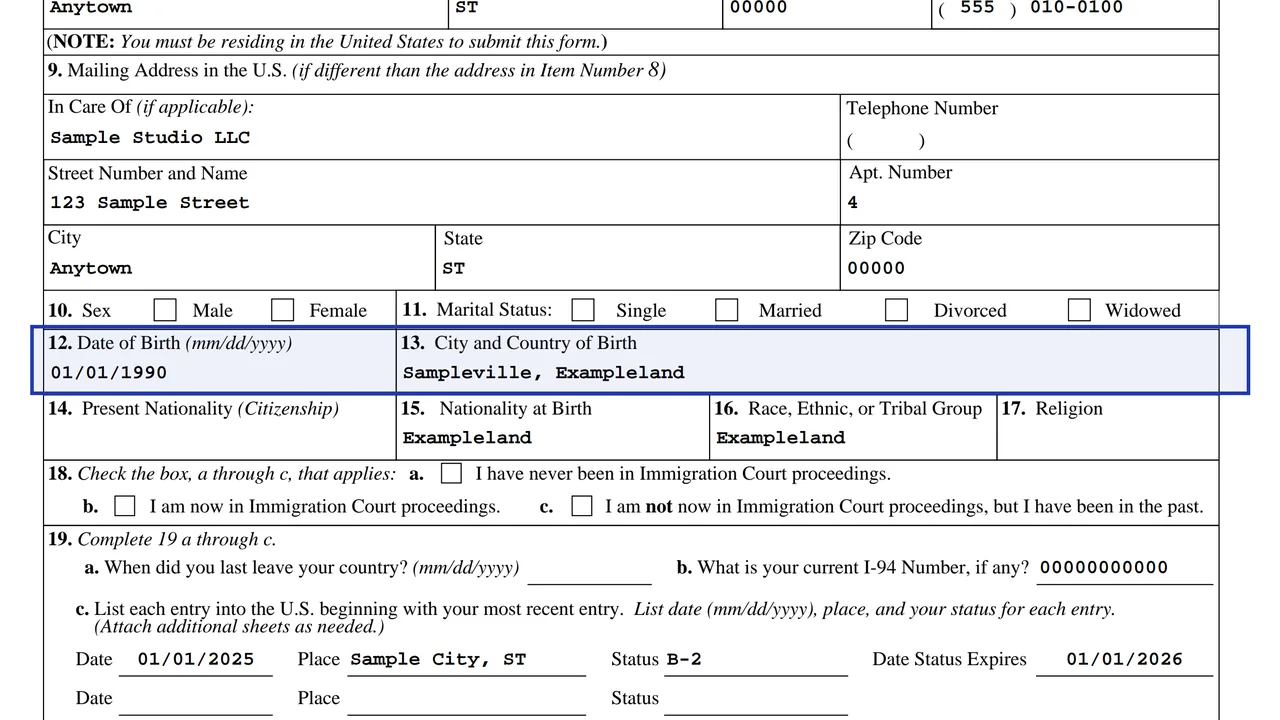
Use the current name of the country, not historical, ethnic or provincial names.
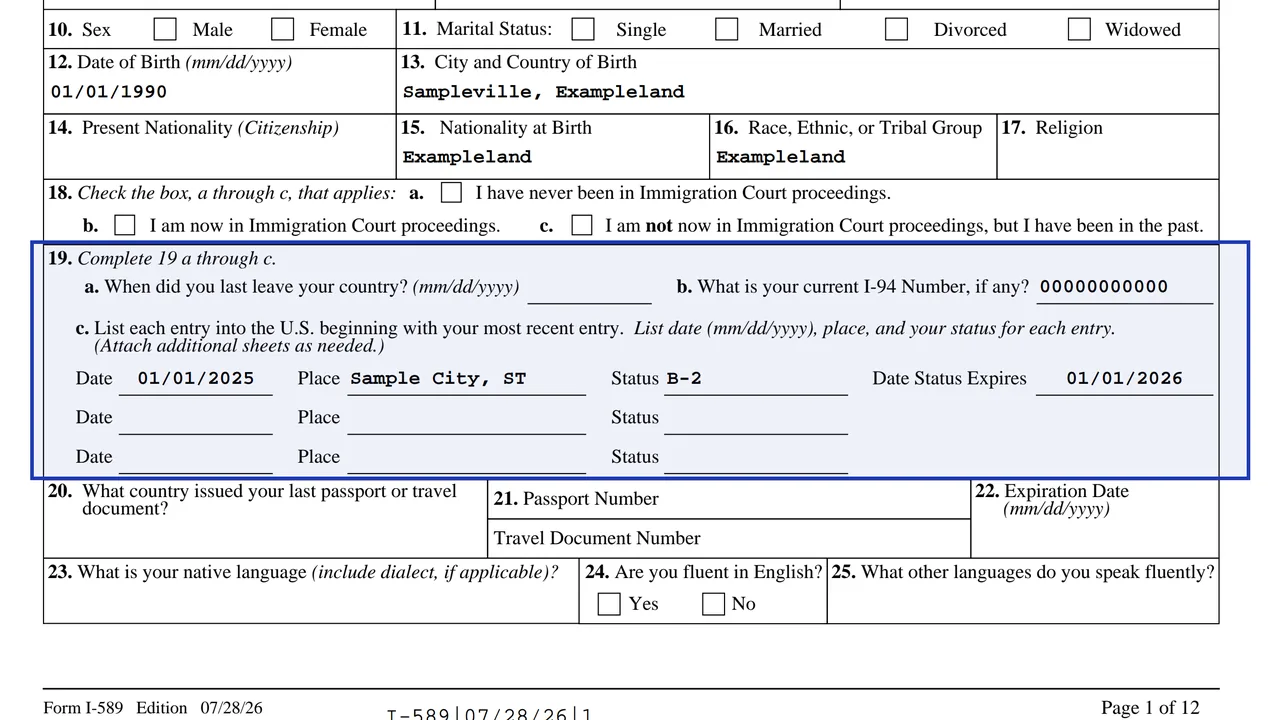
Enter the I-94 number and the date and status as on the I-94. If you did not receive an I-94, write None. If you entered without inspection, write No Inspection in Question 19c.
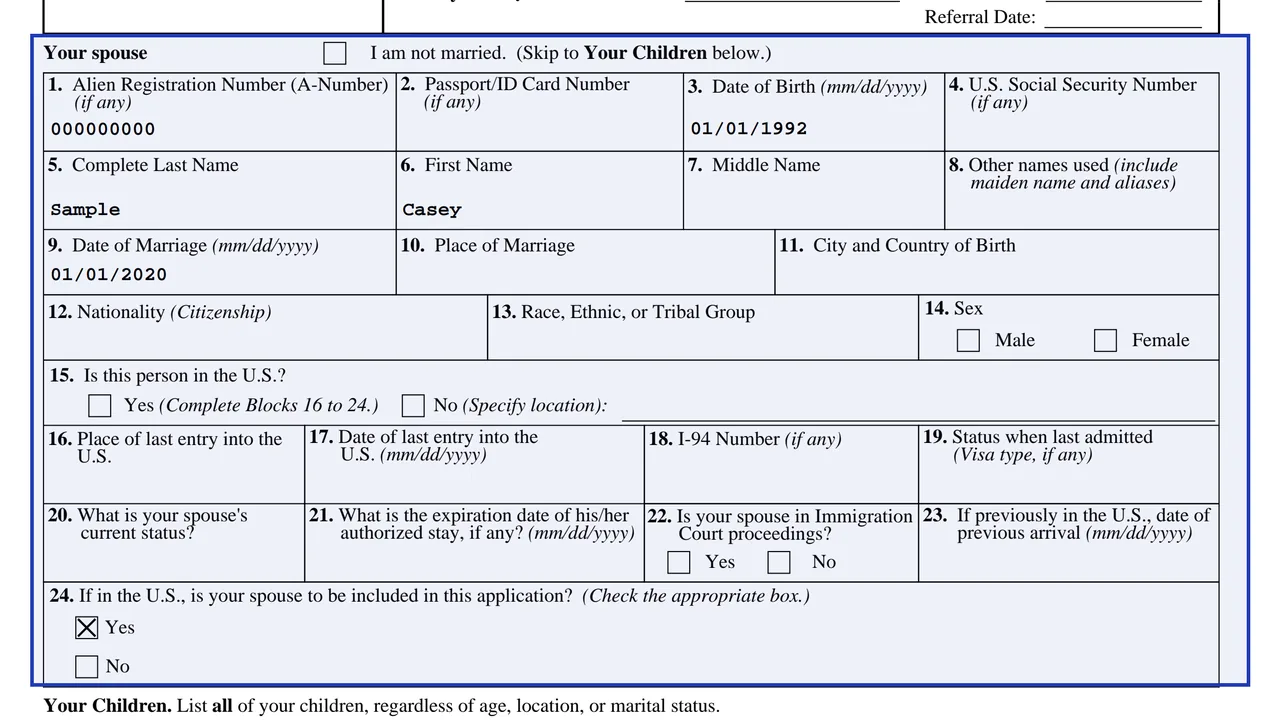
List your spouse and every child. If you include a spouse or child in the application, send proof of the relationship, such as a marriage certificate and each child's birth certificate.
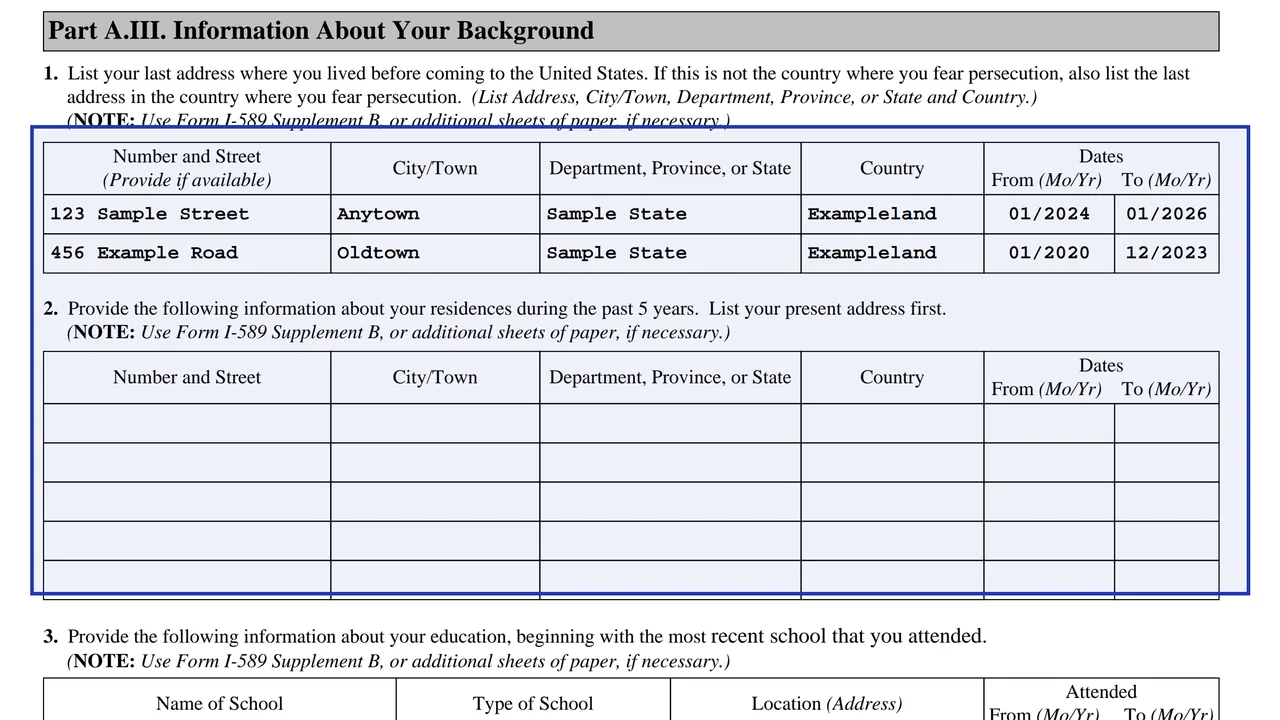
Answer Questions 1 to 5 starting with your current residence, school and job and working back in time. Use Supplement B if the table runs out of rows.
Check the reason or reasons in Question 1 and Yes or No for the rest. Explain in detail what happened, including dates and details, and use Supplement B when the space runs out.
If you answer Yes about not applying within one year, explain why. USCIS lists examples such as worsened country conditions or health, but says the list is not all-inclusive.
Sign Part D after you have reviewed the form. A preparer outside your immediate family must also sign Part E, or the application is returned as incomplete. Leave Parts F and G unsigned.
Type or print in black ink, in English. Answer none, not applicable or unknown if a question does not apply. Attach Supplement A or B or extra sheets if you need room, with your A-Number, name, signature and date.
You get the real form, filled in a browser tab, with nothing standing between you and the finished PDF.
File within one year of arriving in the United States, subject to the exceptions in the instructions.
Use the USCIS Filing Instructions Tool on the I-589 page to learn whether you file online or by mail. By mail, people who live in Florida, Georgia, Maryland, New Jersey, Pennsylvania or Texas use the Dallas lockbox. Others use the Chicago lockbox. Some filings must go to the USCIS Asylum Intake Unit in Minneapolis, as the page explains.
If you are in proceedings before EOIR, file with the court that EOIR's hotline or online system identifies. A filing sent to the wrong place can be rejected.
Fees change, so check the USCIS fee schedule page and the annual asylum fee information on the I-589 page. USCIS says the annual asylum fee applies to the principal applicant while the application is pending and cannot be waived.
Send a copy of passports and travel documents, relationship documents for family members, and reasonably available evidence of country conditions and your own facts. Photocopies are fine, and translations need a certification.
Leaving key Part A and Part B answers blank, omitting the explanation of why you are applying, referencing an addendum you did not attach, sending the form unsigned, and sending a second I-589 when one is already pending.
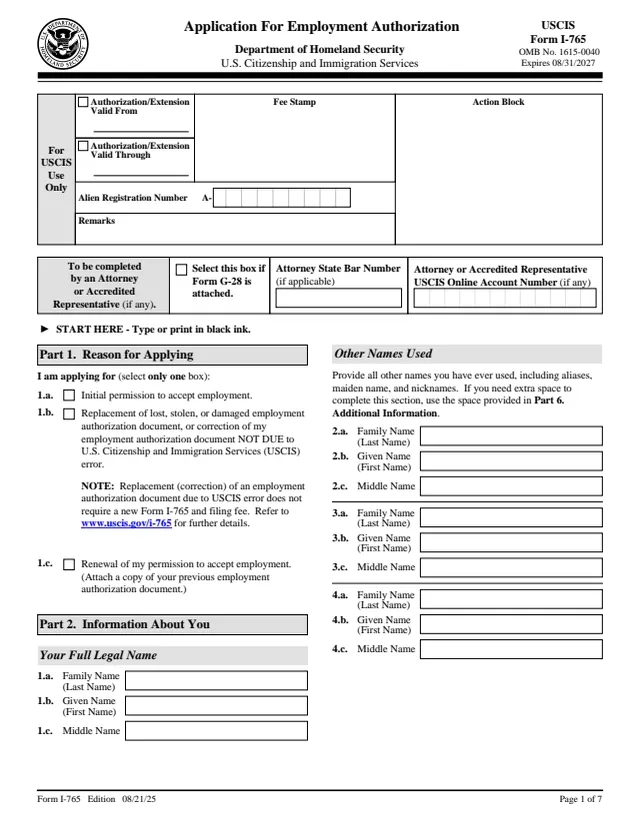
I-765
161 fields, 7 pages
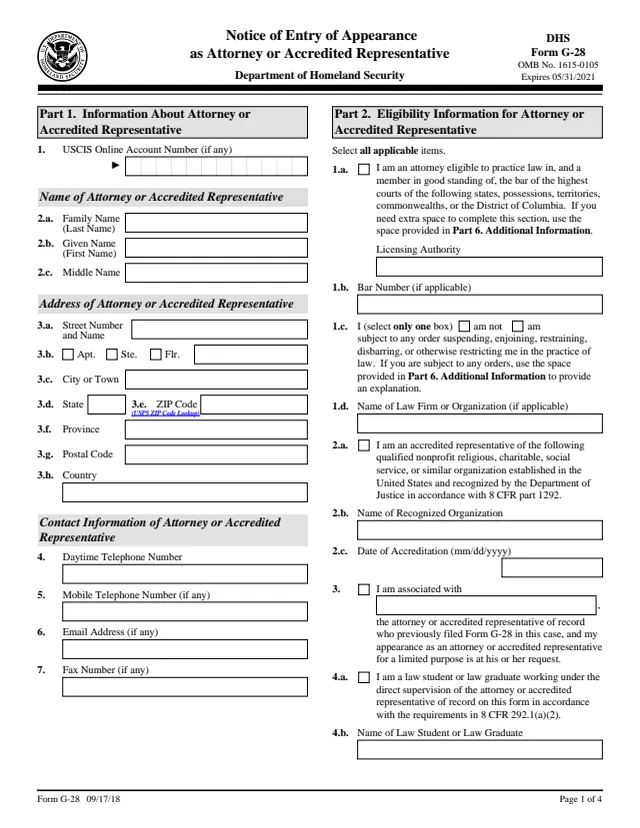
G-28
101 fields, 4 pages
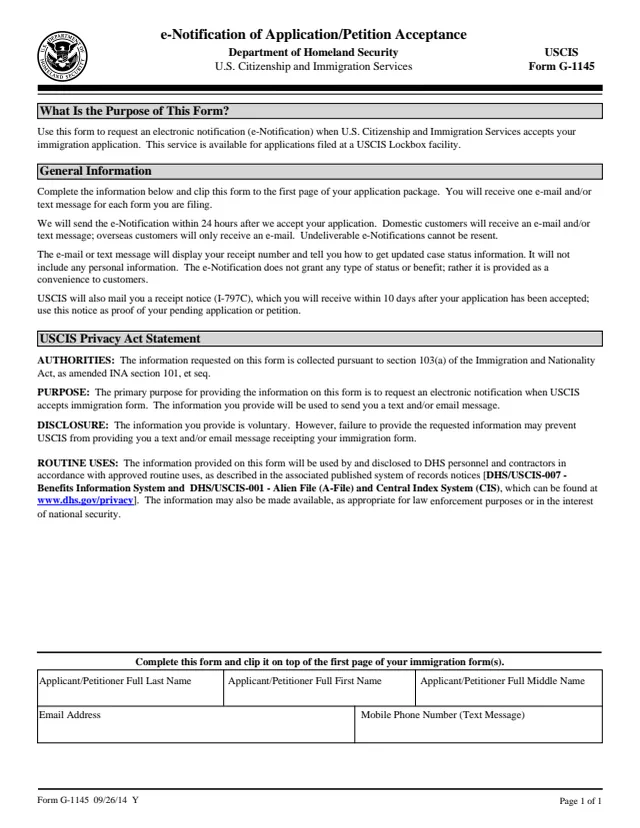
G-1145
6 fields, 1 page
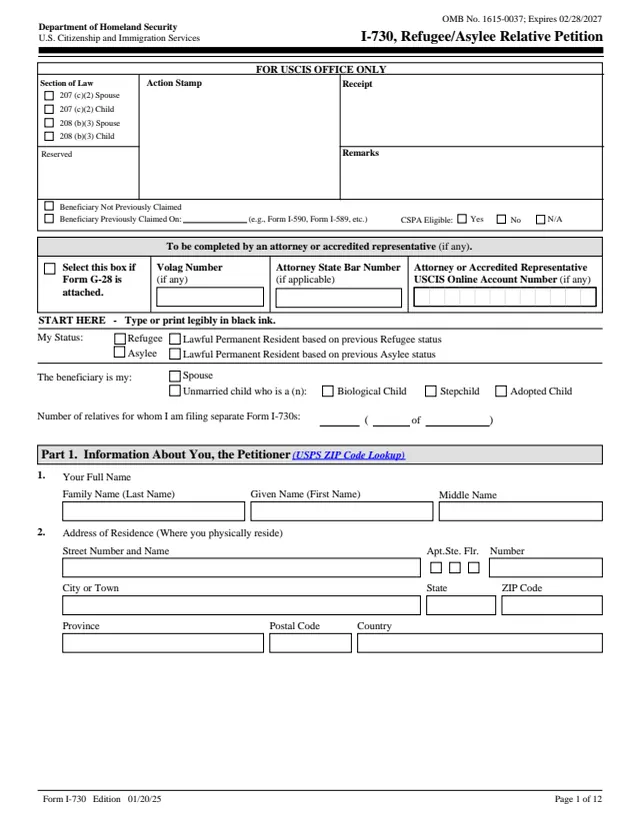
I-730
292 fields, 12 pages
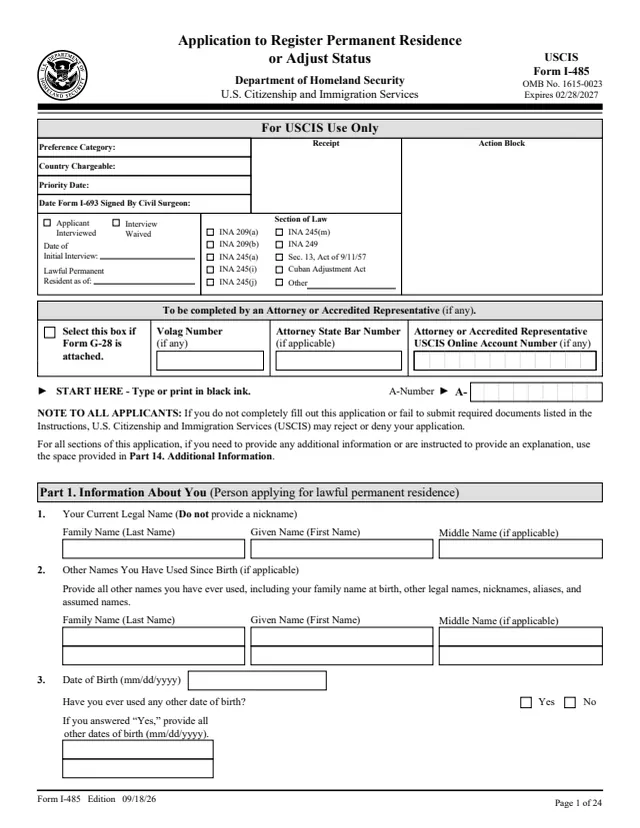
I-485
730 fields, 24 pages
The USCIS page and instructions describe who files and where.
No tool matches that search.
Yes. You must apply within 1 year of arriving in the United States unless you show changed circumstances or extraordinary circumstances. See the instructions for what counts.
You can include your spouse and unmarried children under 21 who are in the United States. List every child in Part A.II even if they are not included.
The form does not require one, but the instructions note that the law is complex and that you may have your own representation at no cost to the government. They point to free legal provider lists.
It depends on your situation. Use the USCIS Filing Instructions Tool, or file with the immigration court if you are in proceedings before EOIR.
No. You sign those at an asylum interview or removal hearing. You do sign Part D.
In some situations. USCIS says some filers cannot file online, including unaccompanied children and people whose proceedings were dismissed or terminated.