Part 1. Basis for your request
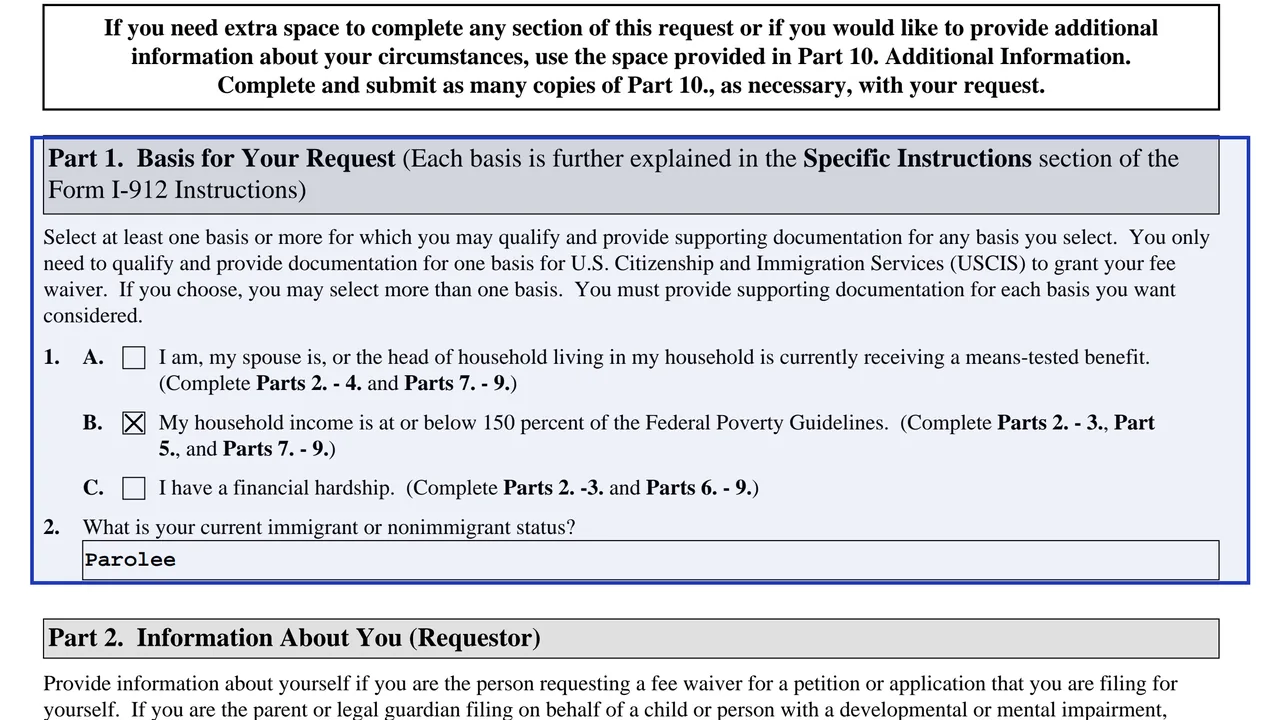
You pick one or more bases (means-tested benefit, income, or financial hardship) and give your current status. You complete only the parts for the bases you choose.
I-912
Request for Fee Waiver
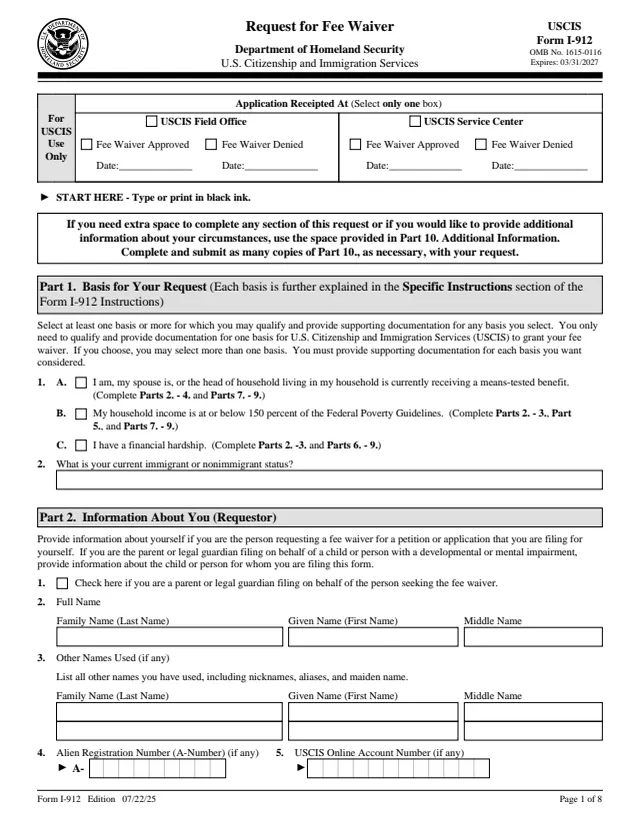
Form I-912 is how you ask USCIS to waive the filing fee, and the biometric services fee where it applies, for an eligible application or petition. You have to show clearly that you cannot pay. You qualify through one of three routes: a means-tested benefit, household income at or below 150 percent of the federal poverty guidelines, or financial hardship.
The waiver is not available for every form. USCIS can only approve waivers for forms and types of filing on a list, and it cannot waive the fees created by H.R.-1, Pub. L. 119-21. The request must be filed together with the application or petition it supports, and not after USCIS has received that application.
You can fill the form online on this page for free and without an account. Then print it, sign it and put it with your application or petition. Attach the proof for the route you chose.
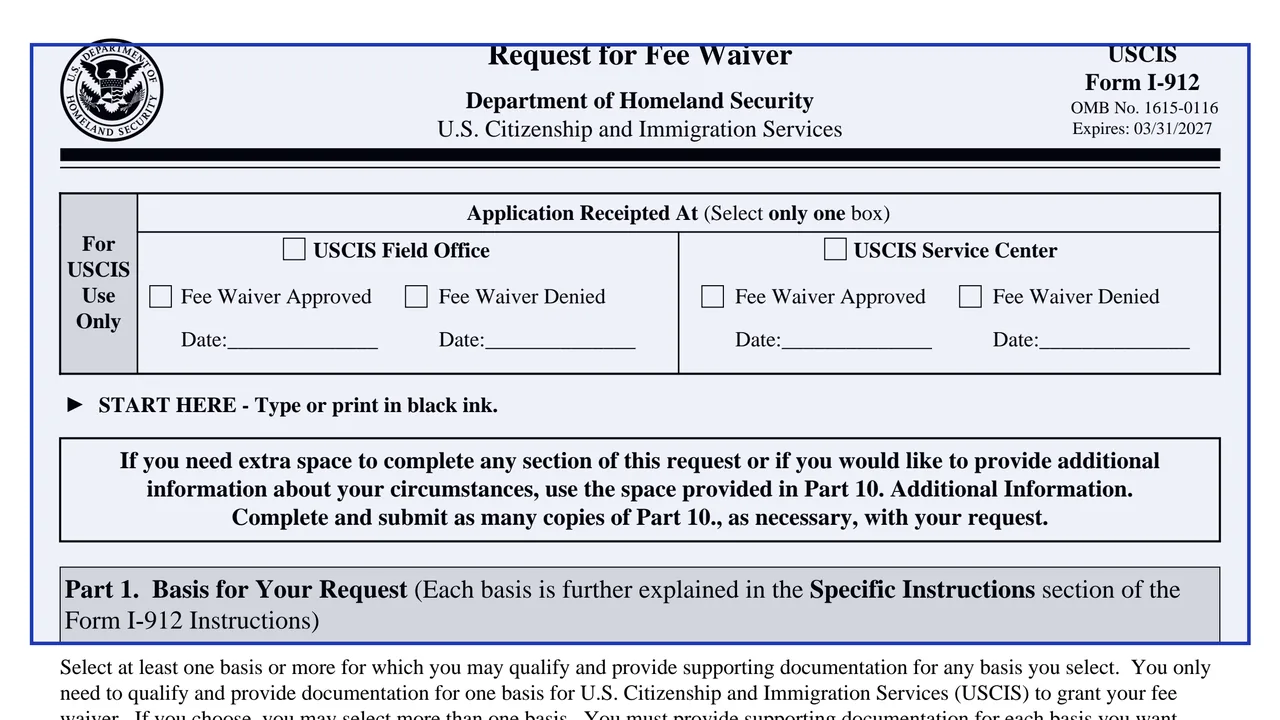
You pick one or more bases (means-tested benefit, income, or financial hardship) and give your current status. You complete only the parts for the bases you choose.
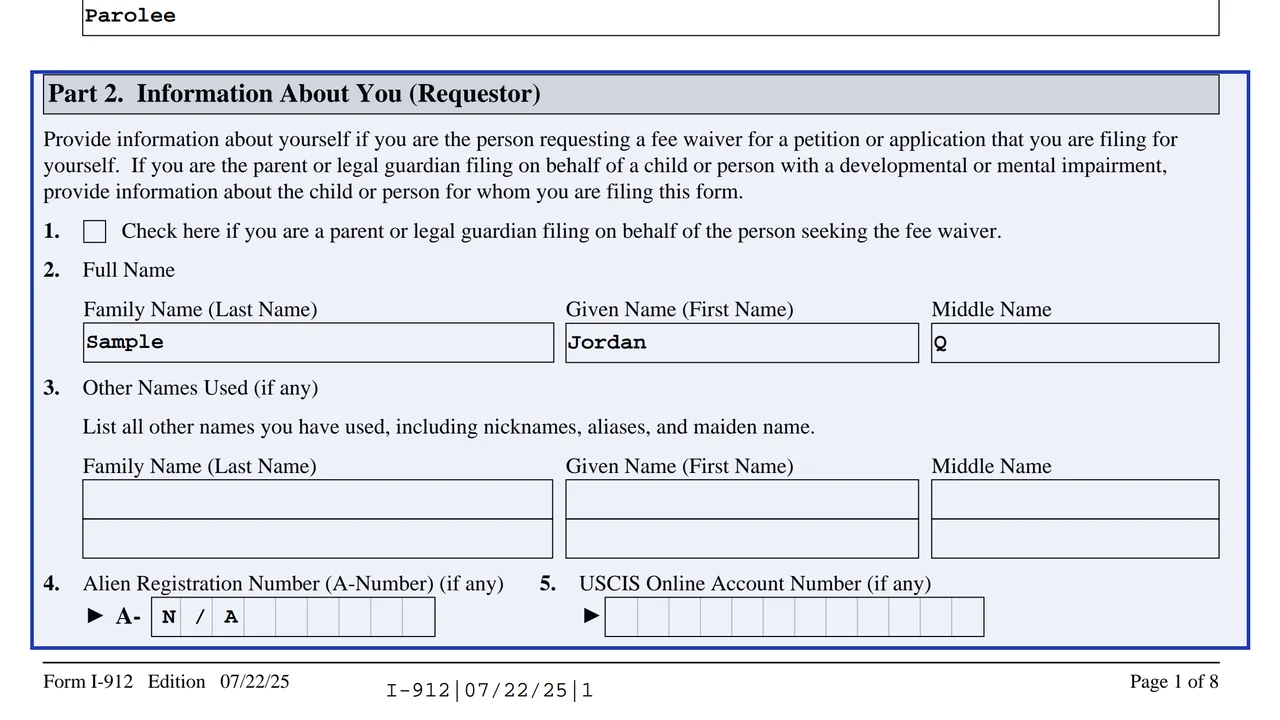
Name, other names, A-Number, online account number, date of birth, Social Security number and marital status.
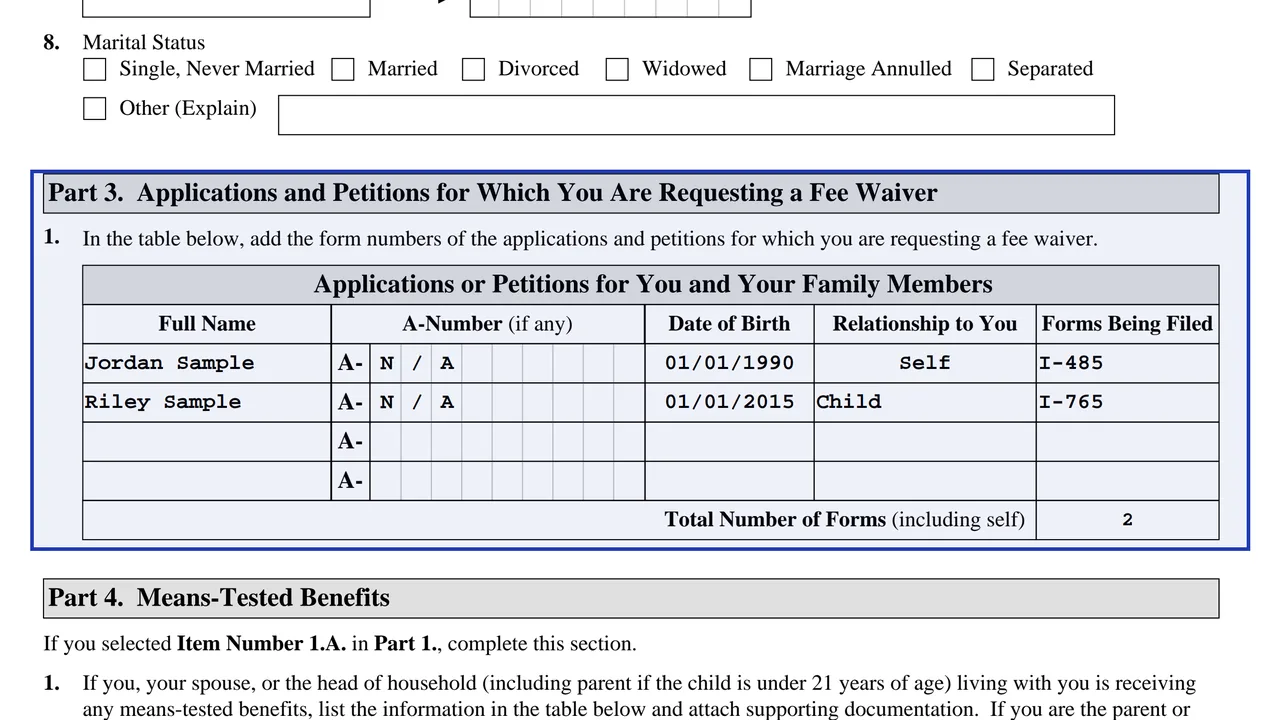
A table of the form numbers and number of filings for you and any family members.
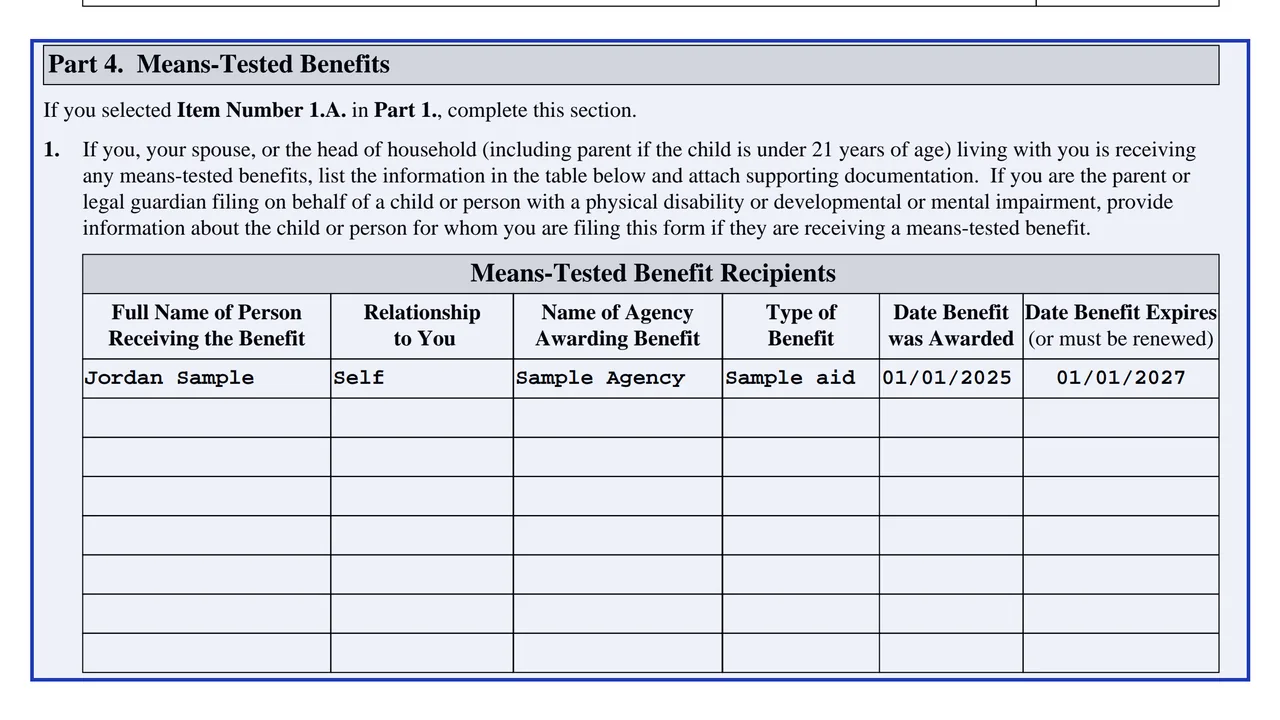
The benefit, agency and recipient, with documents showing current receipt.
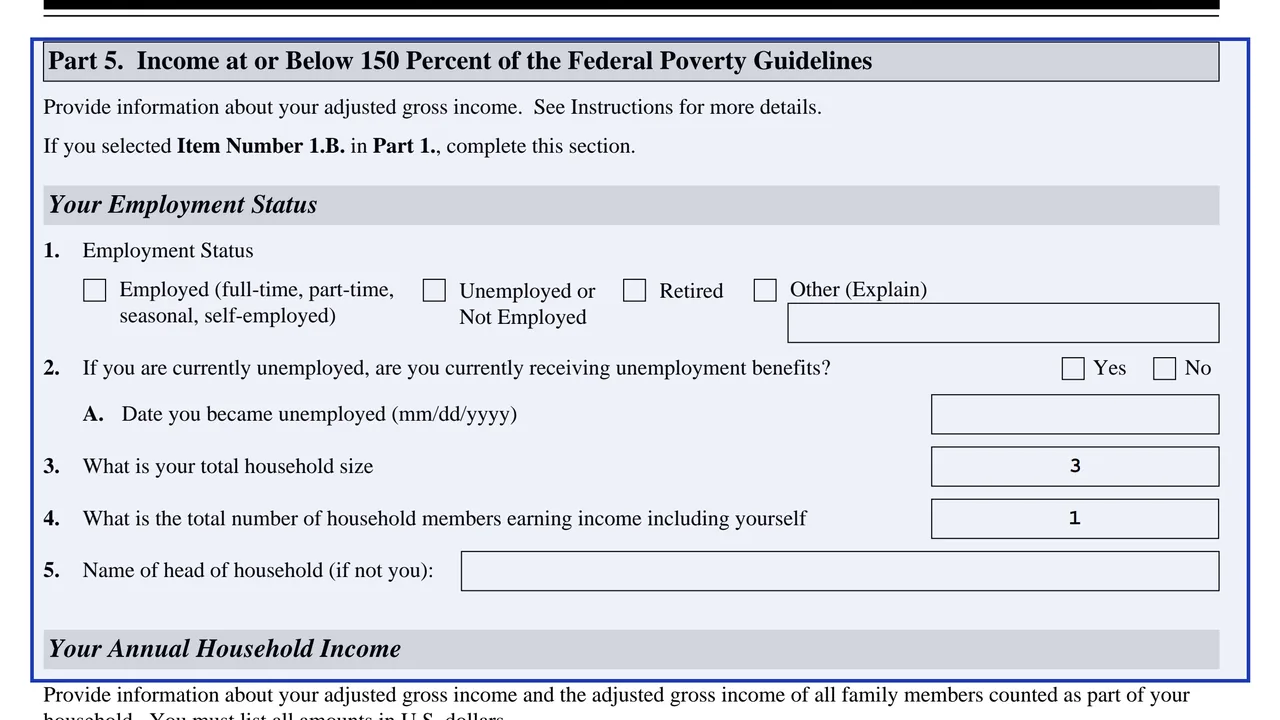
Employment status, household size, who heads the household, annual income of you and others, total household income, and explanations.
The circumstances, your assets, and monthly expenses and liabilities.
Requestor's statement and signature, interpreter's certification, and preparer's declaration.
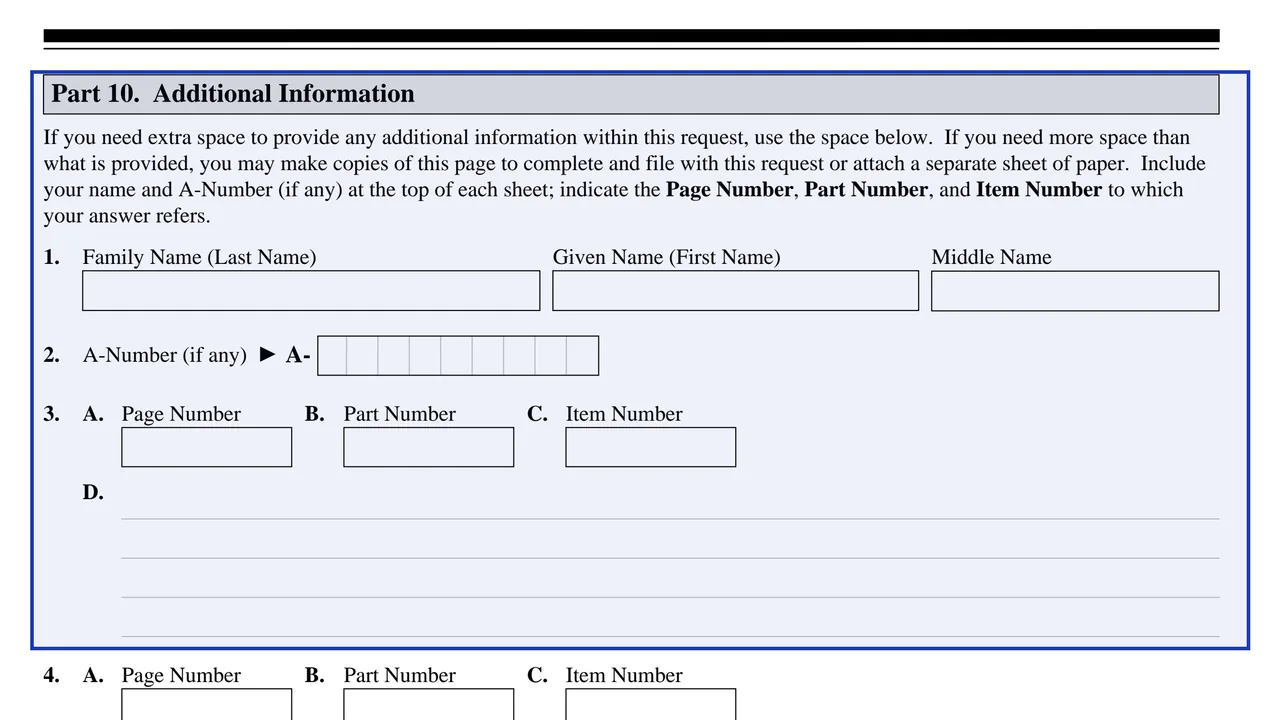
Extra space for longer answers.
Select the basis or bases you qualify under. You do not have to complete every section, only those matching your choice.
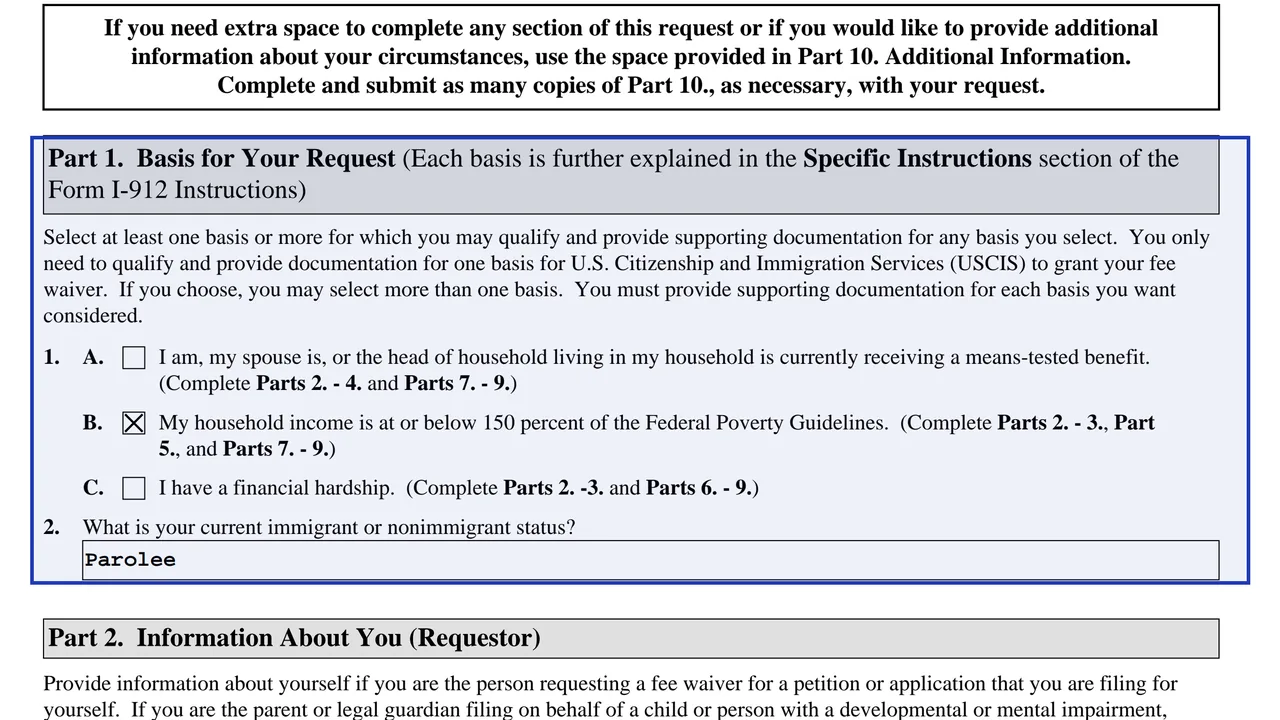
Give your full legal name. If you have two last names, put both in Family Name with a hyphen if appropriate. Write N/A if you have no middle name or no A-Number. The request must be submitted in the name of the primary applicant.
Fill the table with every form number you want waived, for you and for family members. One I-912 can cover related applications filed together, such as an I-485 and an I-765.
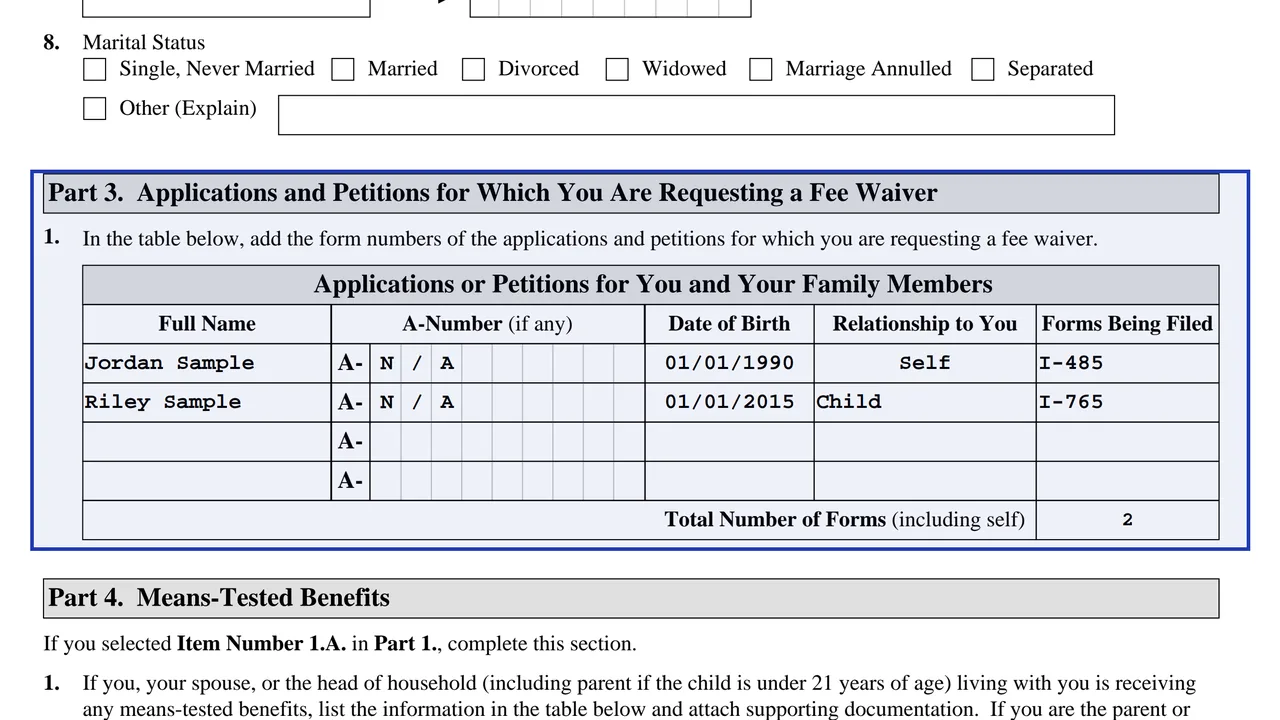
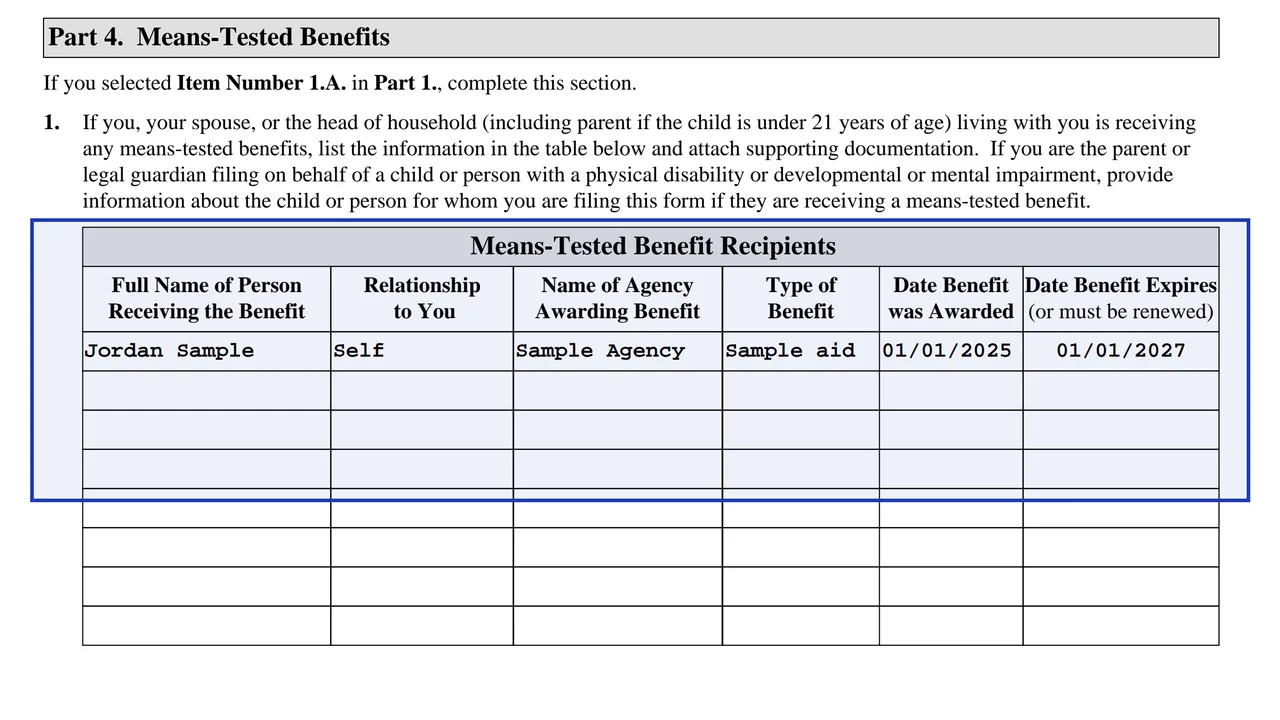
Complete the table if you, your spouse, your child living with you, or your parent (if you are under 21 or disabled) receives a benefit such as Medicaid, SNAP, TANF or SSI. Medicare, unemployment benefits, Social Security retirement and SSDI, and student aid do not count.
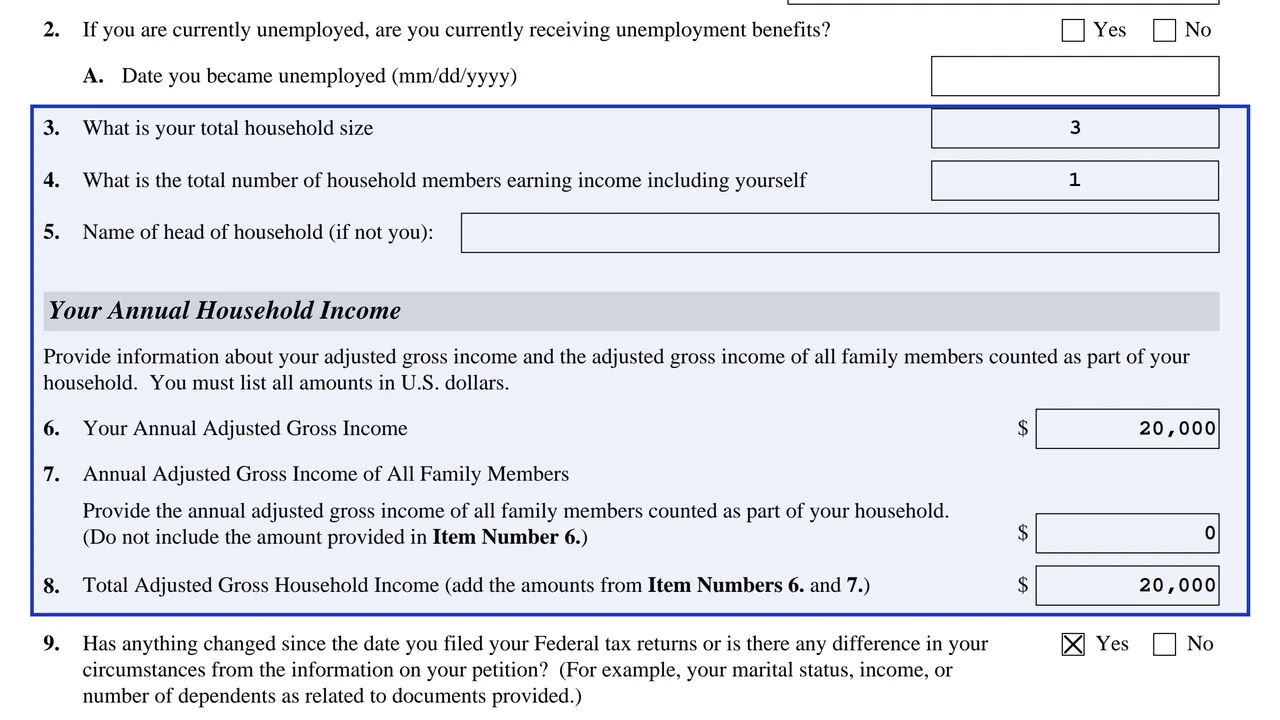
Your adjusted gross household income must be at or below 150 percent of the federal poverty guidelines for your household size when you file. Enter household size, earners and annual income from your tax return or recent pay records.
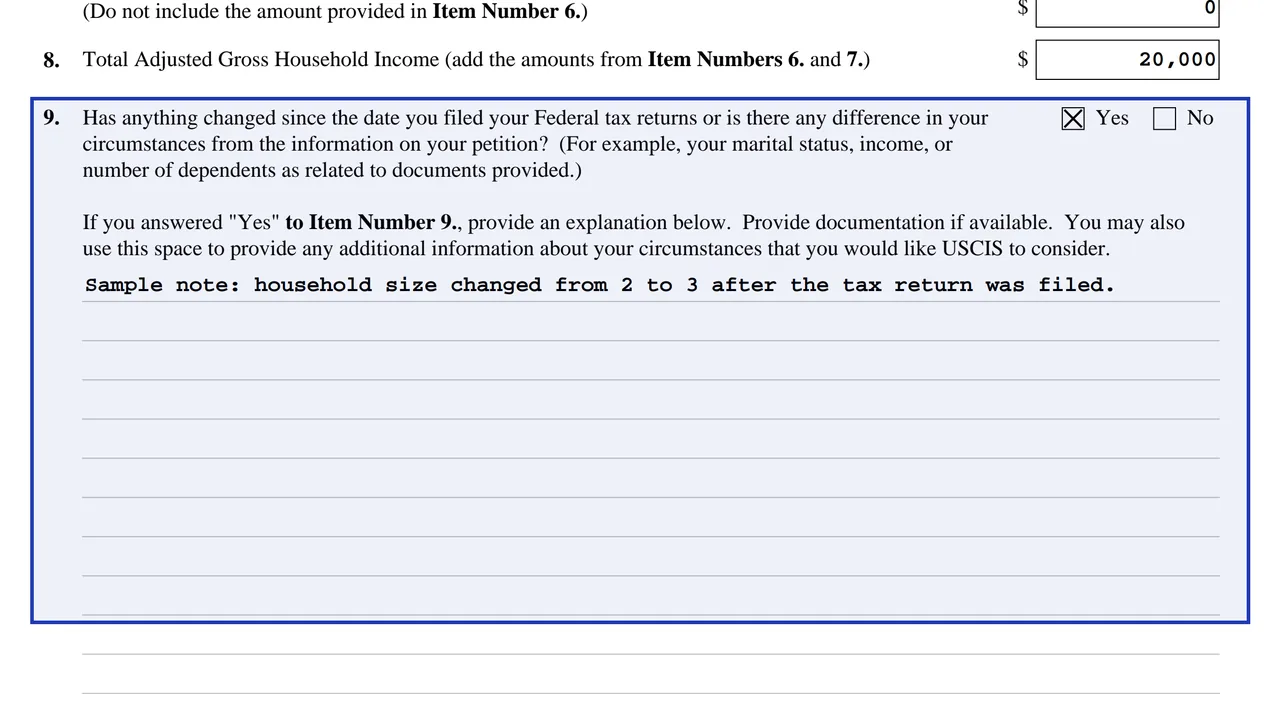
Say whether anything on your tax return differs from this form, and why. Describe special circumstances such as recent unemployment here.
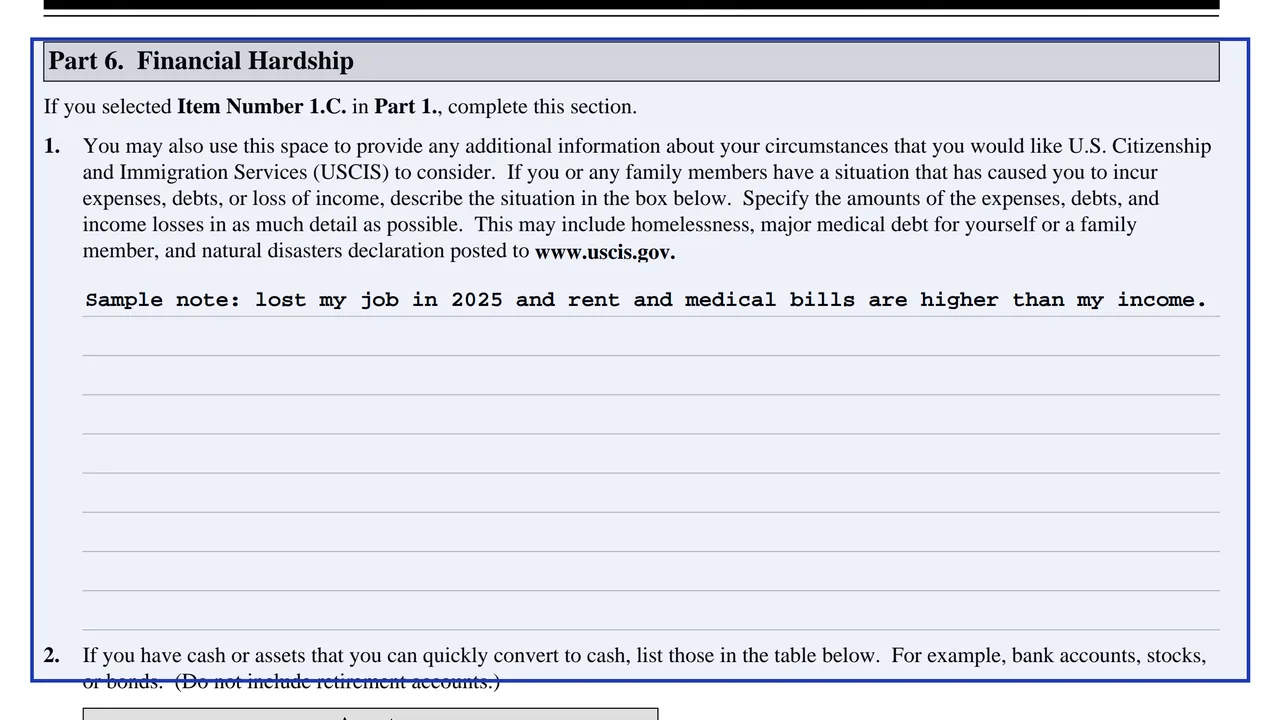
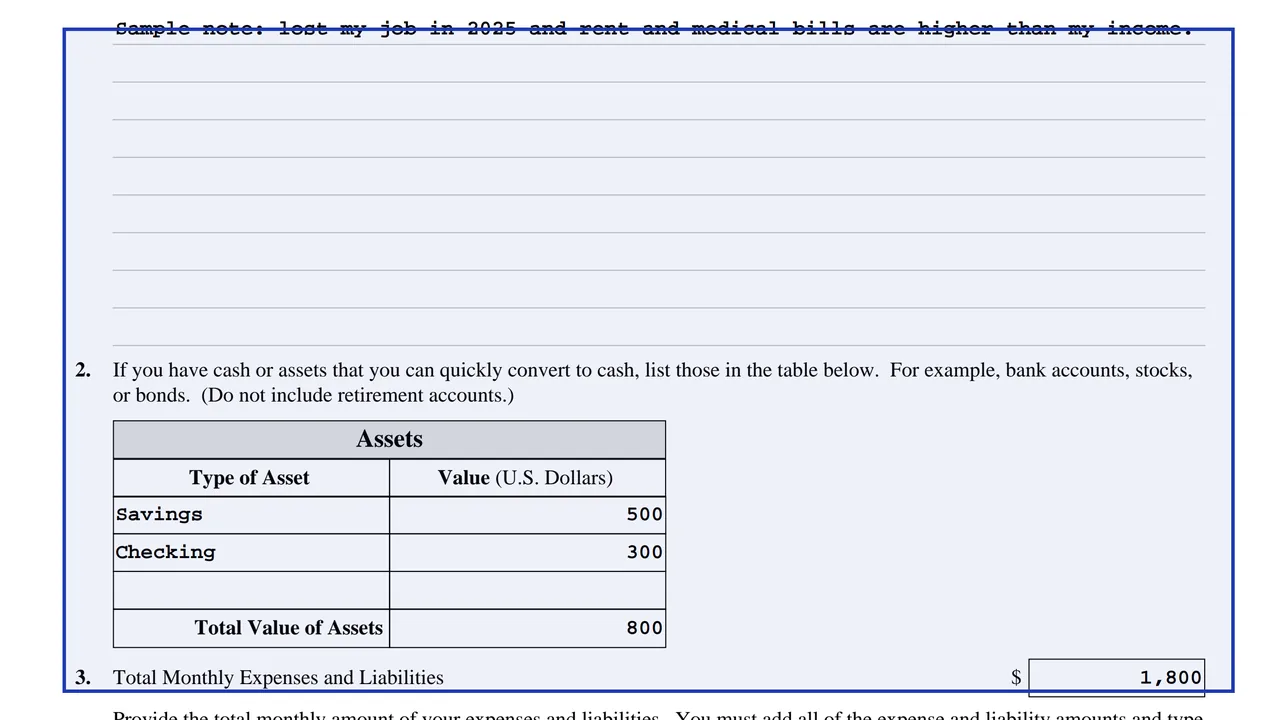
Describe the hardship, for example illness, unemployment, eviction, homelessness, natural disaster or loss of work hours. List cash and other assets easily converted to cash, and average monthly expenses. Retirement accounts are excluded unless they are your only income.
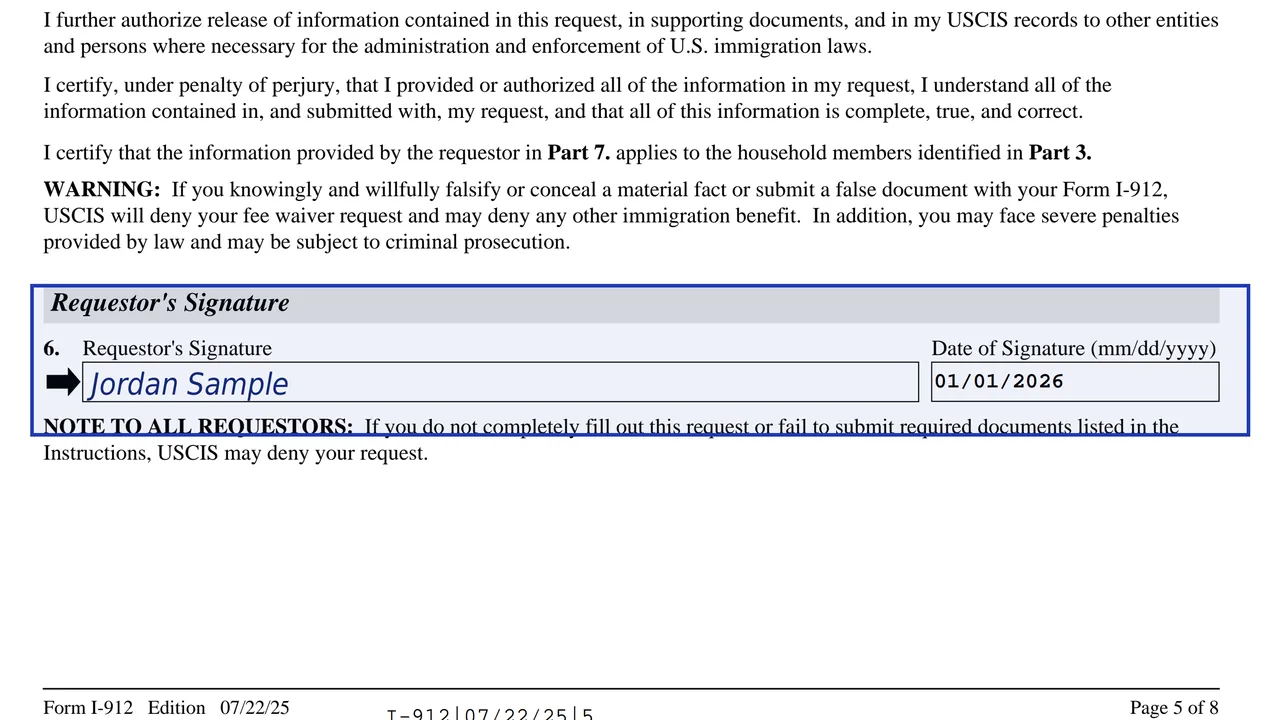
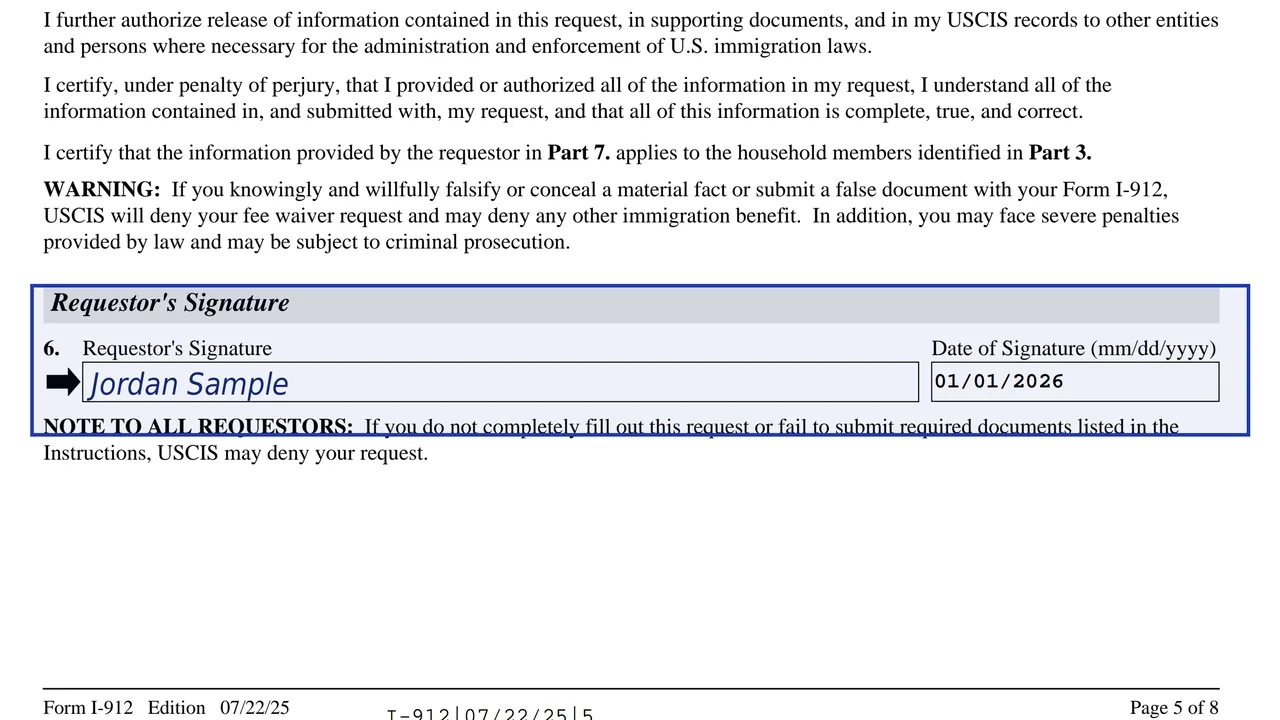
Sign and date by hand. An unsigned form is rejected. An eligible representative signs for a person under 14 or mentally incompetent.
Type or print in black ink. Use N/A where an item does not apply and None for a numeric zero.
You get the real form, filled in a browser tab, with nothing standing between you and the finished PDF.
Attach it, with your supporting documents, to the application or petition it supports and mail them to the address in that form's instructions. For certain eligible forms you may upload the completed PDF with the form through your USCIS online account.
You cannot file Form I-912 after USCIS has already received the application or petition. Do not send it without the completed application.
Fees change, so check the USCIS fee schedule page for Form I-912.
USCIS cannot waive fees required by H.R.-1. For some forms you can still request a waiver of the separate DHS fee, and you pay the H.R.-1 amount separately with your request or with a written request.
USCIS accepts the 07/22/25 edition, and also accepts prior editions or a written request.
Sending it after the application has been received, asking for a waiver on a form not on the list, missing proof of current benefit receipt, documents more than 12 months old with no newer evidence, and no signature.
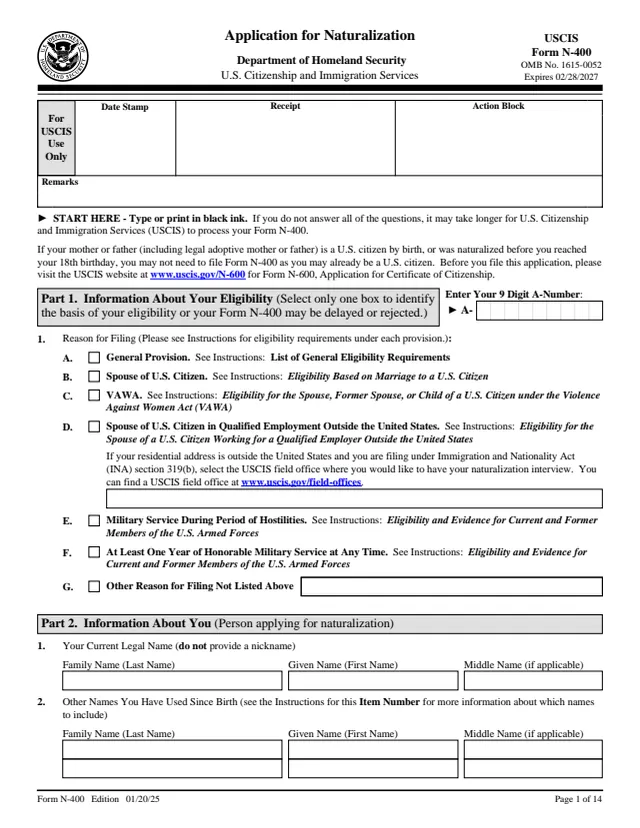
N-400
440 fields, 14 pages
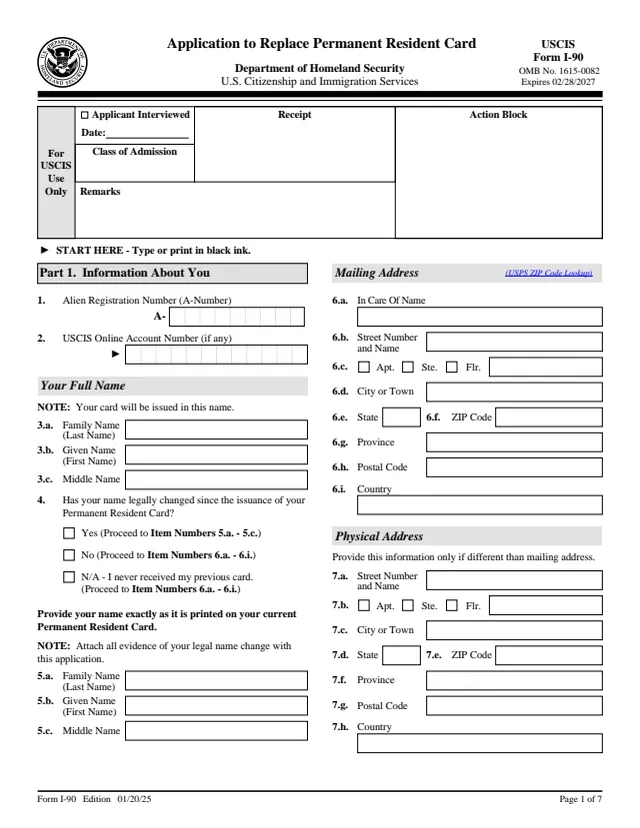
I-90
195 fields, 7 pages
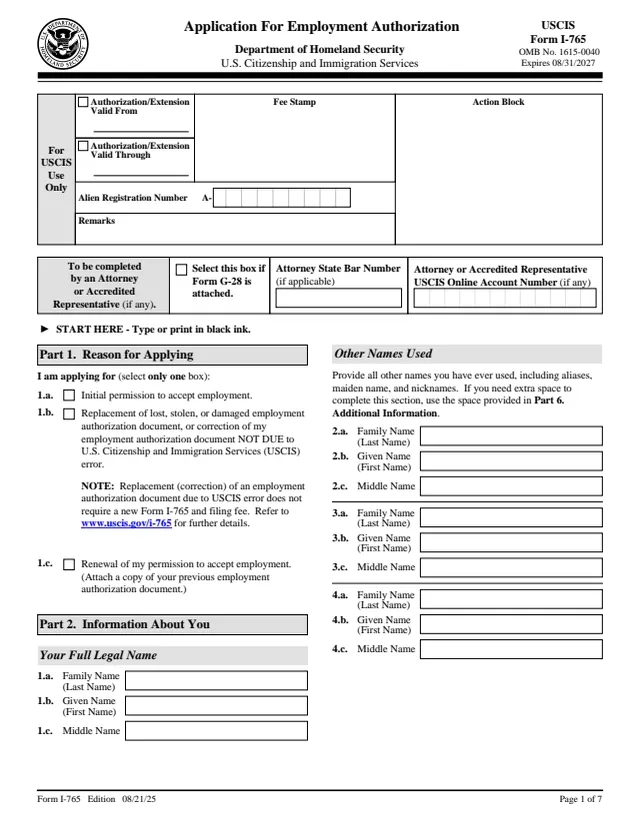
I-765
161 fields, 7 pages
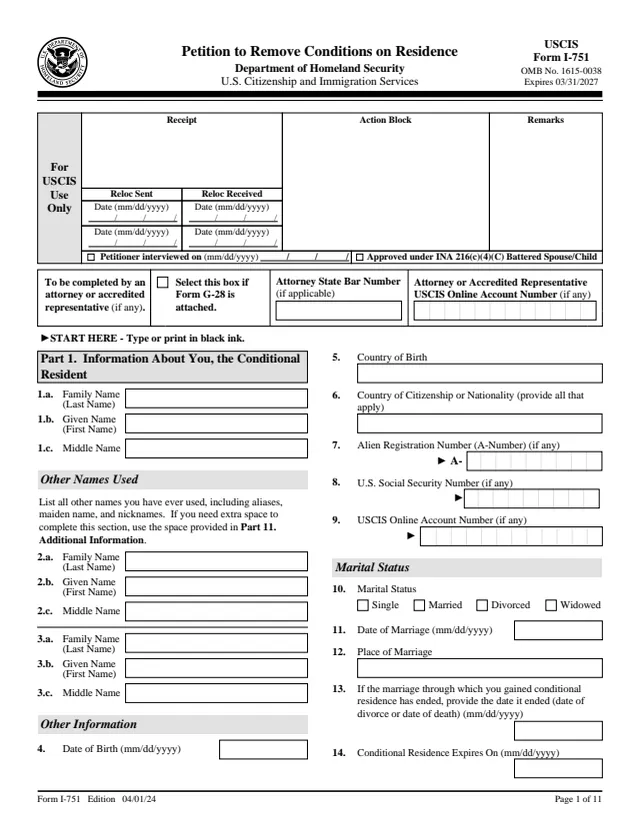
I-751
329 fields, 11 pages
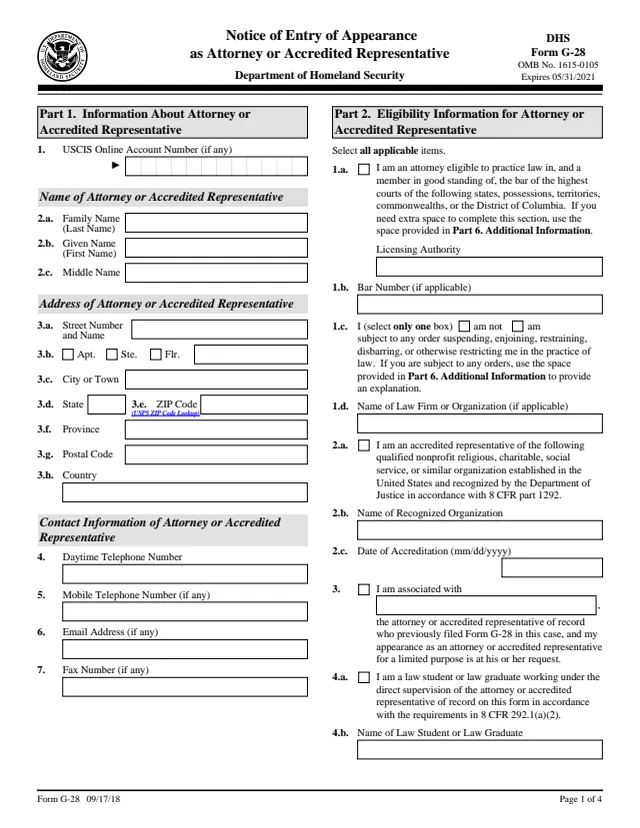
G-28
101 fields, 4 pages
The requestor is the primary applicant or petitioner who needs the waiver.
No tool matches that search.
No. USCIS can only approve waivers for forms and types of filings on its eligible list. The list is on the I-912 page and in the instructions.
By receiving a means-tested benefit, by having household income at or below 150 percent of the federal poverty guidelines, or by showing financial hardship.
No. USCIS cannot waive fees required by H.R.-1. A waiver of the separate DHS fee may still be available for some forms.
No. USCIS says you cannot submit it after it has received the application or petition you want waived.
Yes, you can file one for all family-related applications filed at the same time, as long as you send all forms together.
No. USCIS says you may not file Form I-912 for DACA. Limited fee exemptions exist.