Start here: The relationship
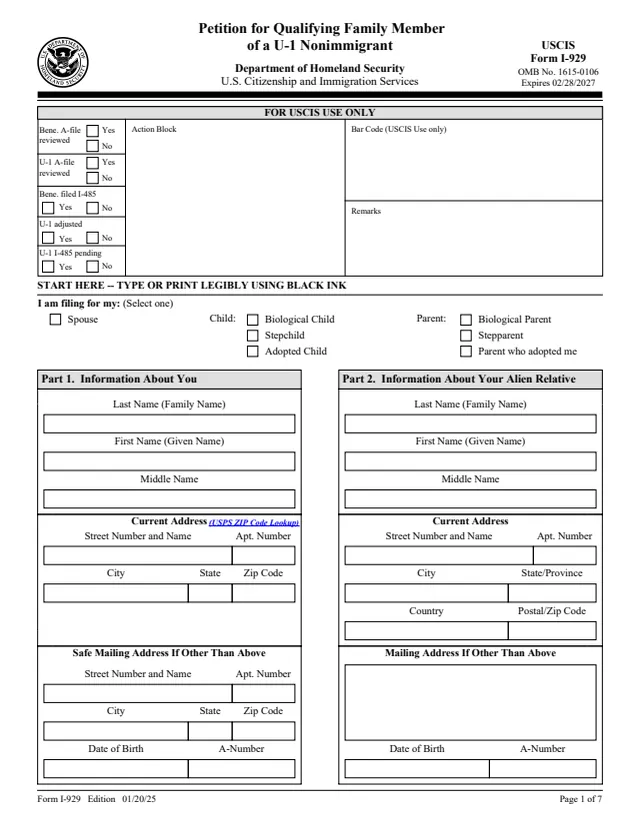
One box for the relative: spouse, child (biological child, stepchild or adopted child) or parent (biological parent, stepparent or parent who adopted me).
I-929
Petition for Qualifying Family Member of a U-1 Nonimmigrant
Form I-929, Petition for Qualifying Family Member of a U-1 Nonimmigrant, is the form USCIS uses to request immigration benefits on behalf of a family member who never held U nonimmigrant status. The petitioner is a person who became a lawful permanent resident, or has a pending Form I-485, based on U-1 nonimmigrant status (victim of criminal activity).
The instructions say the petitioner shows four things: the permanent residence or pending Form I-485 based on U-1 status, that the relative is eligible based on the relationship, that the petitioner or the relative would suffer extreme hardship if the relative is not allowed to remain in or enter the United States, and that discretion should be exercised in the relative's favor.
The instructions also say a separate petition is filed for each eligible relative, and that Form I-929 cannot be approved for the relative until the petitioner's Form I-485 based on U-1 status is approved.
One box for the relative: spouse, child (biological child, stepchild or adopted child) or parent (biological parent, stepparent or parent who adopted me).
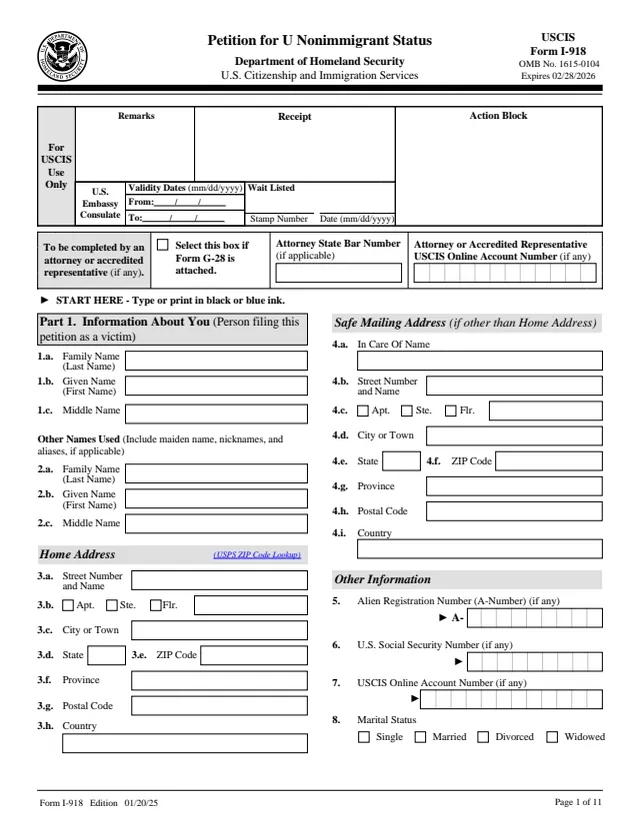
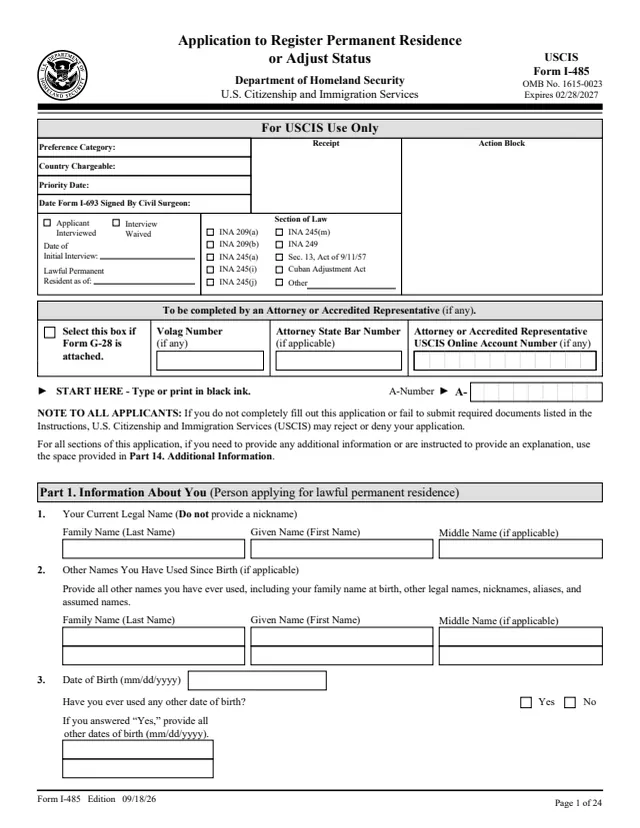
Name, current address and a safe mailing address, date of birth, A-Number, country of birth, Social Security number, citizenship, other names, marriages, and whether you are a permanent resident (with the date) or have a pending Form I-485 (with the receipt number).
The same personal, address and marriage details for the relative, plus date, place and class of admission and date authorized to stay if the relative is in the United States.
Rows for each child of the relative with name, birth date and place, relationship type, address, A-Number and parents' names, then the relative's name and address in the language of the country where they live.
Whether the relative is now in the United States or outside it, the U.S. Embassy or consulate where they will apply for a visa, and whether they have ever been in deportation or removal proceedings.
The petitioner's certification under penalty of perjury and signature, and the preparer's declaration, signature, firm and contact details if someone else prepared the petition.
Type or print in black ink. The USCIS page says a printed copy keeps the edition date and page numbers visible on every page, all from the same edition, or USCIS may reject it.
Write N/A where a question does not apply and None for a zero. For extra space, add a sheet with your name and A-Number, the page, part and item number, and sign and date it.
Select one relationship box at the start, then in Part 1 check whether you are a permanent resident, with the date, or have a pending Form I-485, with its receipt number.
Fill in Part 2 and list each of the relative's children in Part 3. The checklist asks for the address where the beneficiary lives now.
The instructions list proof of your status, proof of the relationship, a recently taken clear photograph of the relative, evidence of extreme hardship, and a signed statement from the relative with documents supporting discretion.
A stamped or typewritten name is not accepted, and USCIS rejects an unsigned petition. This page lets you fill the form online free, then print it for your signature.
You get the real form, filled in a browser tab, with nothing standing between you and the finished PDF.
The USCIS page lists one mailing address in Minneapolis, MN (ATTN: I-929) for U.S. Postal Service, FedEx, UPS and DHL deliveries. The page lists no online filing option. The instructions point to uscis.gov/i-929 for the most current filing location.
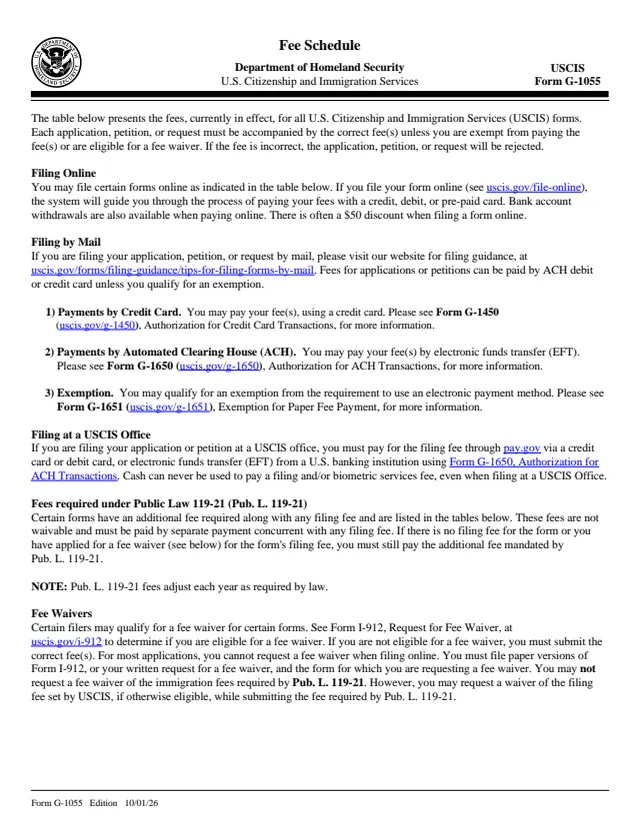
The fee is on the USCIS Fee Schedule page (Form G-1055), which can change. Check it on the day you file. The instructions describe filing with the fee or a fee waiver.
A permanent resident sends a copy of the front and back of the Permanent Resident Card, or the passport biographic page and admission page. With a pending Form I-485, the instructions list the Form I-918 approval notice and the Form I-485 receipt notice.
Documents depend on the relationship, such as a marriage certificate and proof prior marriages ended for a spouse, birth certificates for children and parents, or adoption decrees and custody evidence for an adopted child.
The instructions say extreme hardship is decided case by case and list factors such as the abuse suffered, loss of access to U.S. courts, and the home country's ability to protect the applicant. Discretion evidence includes a signed statement from the relative.
If a document is not available, the instructions list a civil authority statement plus secondary evidence such as church, school or census records or affidavits. Send copies unless an original is requested, with a certified English translation of any foreign document.
No tool matches that search.
The instructions say it requests immigration benefits on behalf of a family member who never held U nonimmigrant status, filed by a person who became a permanent resident, or has a pending Form I-485, based on U-1 status.
No. The instructions say Form I-929 cannot be approved for the relative until the petitioner's Form I-485 based on U-1 nonimmigrant status is approved.
No. The instructions say a separate petition is filed for each eligible relative.
The instructions say a petitioner under 21 may file for a spouse, unmarried children under 21 and parents, and a petitioner over 21 may file for a spouse and unmarried children under 21.
The USCIS page lists only a mailing address for Form I-929, used for U.S. Postal Service, FedEx, UPS and DHL deliveries.
USCIS fees change, so this page does not list one. The I-929 page points to the USCIS Fee Schedule, and the instructions point to Form G-1055.
The instructions say to send a statement from the civil authority that the document is not available, plus secondary evidence such as a church, school or census record, or affidavits from two people with personal knowledge of the event.