Lines 1 to 5: inventory and costs
Inventory at beginning of year, purchases, cost of labor, additional section 263A costs and other costs, with a schedule attached for lines 4 and 5.
1125-A
Cost of Goods Sold
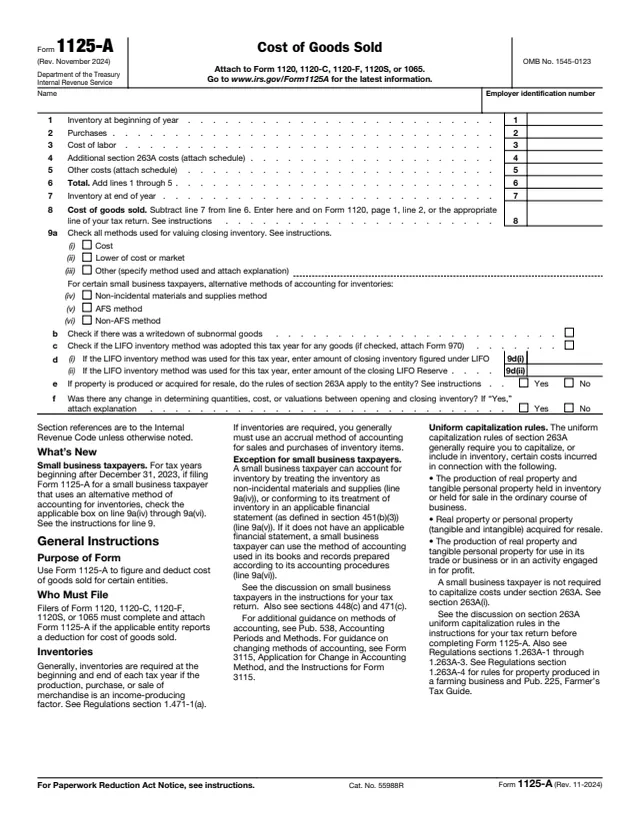
Form 1125-A is used to figure and deduct cost of goods sold for certain entities. The instructions say filers of Form 1120, 1120-C, 1120-F, 1120S, or 1065 complete and attach Form 1125-A if the applicable entity reports a deduction for cost of goods sold.
Lines 1 through 8 start with inventory at the beginning of the year, add purchases, labor, additional section 263A costs and other costs, then subtract inventory at the end of the year to reach cost of goods sold. Line 9 records the inventory valuation methods, LIFO details, section 263A and any change in how inventory was valued. The What's New section says that for tax years beginning after December 31, 2023, a small business taxpayer using an alternative method of accounting for inventories checks the applicable box on lines 9a(iv) through 9a(vi).
The form is attached to the business return. You can fill it out free in your browser on this page and download the result without an account.
Inventory at beginning of year, purchases, cost of labor, additional section 263A costs and other costs, with a schedule attached for lines 4 and 5.
Line 6 adds lines 1 through 5, line 7 is inventory at end of year, and line 8 subtracts line 7 from line 6.
Boxes for cost, lower of cost or market and other, then the small business methods: non-incidental materials and supplies, AFS and non-AFS.
A box for a writedown of subnormal goods, a box if the LIFO method was adopted this tax year, and the LIFO closing inventory and closing LIFO Reserve amounts.
Yes or No on whether the section 263A rules apply to property produced or acquired for resale, and on any change in determining quantities, cost or valuations.
Enter inventory at the beginning of the year. The instructions say that when the method of accounting changes for the current tax year, last year's closing inventory is refigured using the new method, with an explanation attached for any difference.
Enter purchases, reduced by items withdrawn for personal use, and the cost of labor.
On line 4, enter additional section 263A costs under an elected simplified method and attach a schedule. On line 5, enter other costs not on lines 2 through 4 and attach a statement listing them. Cooperatives include per-unit retain allocations on line 5.
Add lines 1 through 5, enter ending inventory on line 7, and subtract it to get line 8. Filers of Form 1120, 1120-C, 1120S and 1065 enter line 8 on page 1, line 2, and Form 1120-F filers use Section II, line 2.
Check every method used for valuing closing inventory on lines 9a(i) through 9a(iii). Certain small business taxpayers using an alternative method check a box on 9a(iv) through 9a(vi) instead.
Check 9b for a writedown of subnormal goods. If LIFO was first adopted this year, check 9c and attach Form 970 or a statement with its information, then enter LIFO amounts on 9d, with a negative LIFO Reserve in parentheses. Answer 9e and 9f, attaching an explanation if 9f is Yes.
You get the real form, filled in a browser tab, with nothing standing between you and the finished PDF.
The form says to attach it to Form 1120, 1120-C, 1120-F, 1120S, or 1065.
Page 1, line 2 of Form 1120, 1120-C, 1120S or 1065, or Section II, line 2 of Form 1120-F.
Schedules for lines 4 and 5, Form 970 when LIFO is first adopted, and explanations for a refigured line 1, an other method on line 9a(iii) and a Yes on line 9f.
The instructions say a valuation method, once established, cannot be changed in a later year without requesting a change in accounting method, and point to the Instructions for Form 3115.
The instructions note that entities using LIFO that make an S corporation election or transfer LIFO inventory to an S corporation in a nonrecognition transaction may be subject to an additional tax attributable to the LIFO recapture amount.
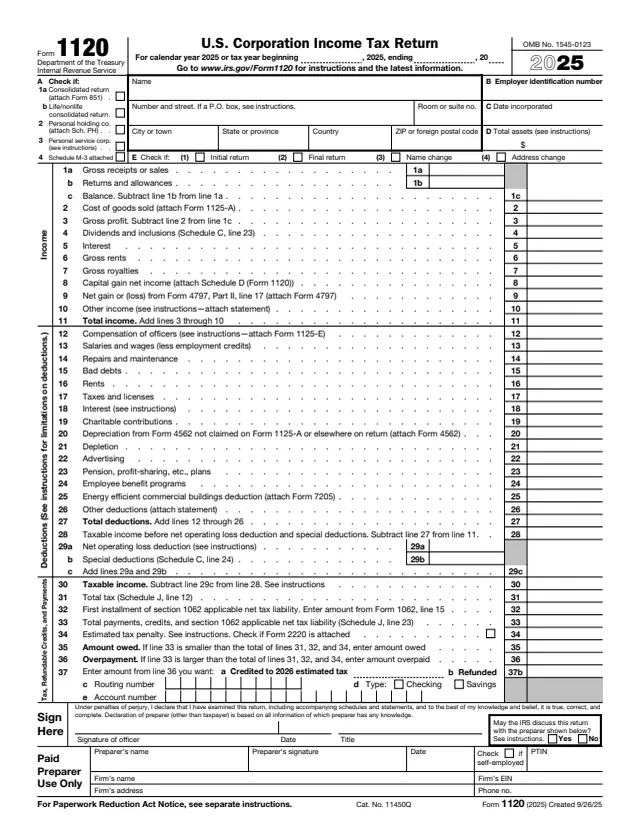
1120
481 fields, 6 pages
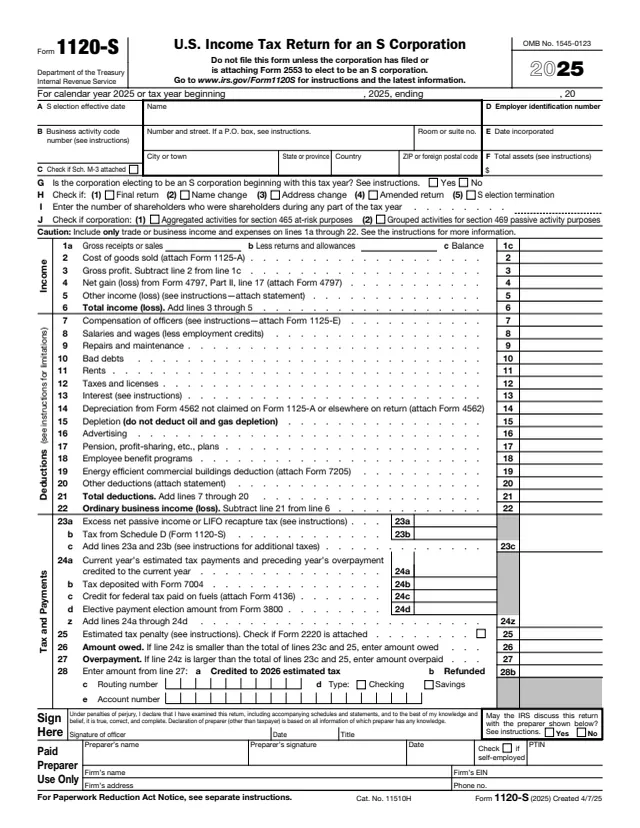
1120-S
390 fields, 5 pages
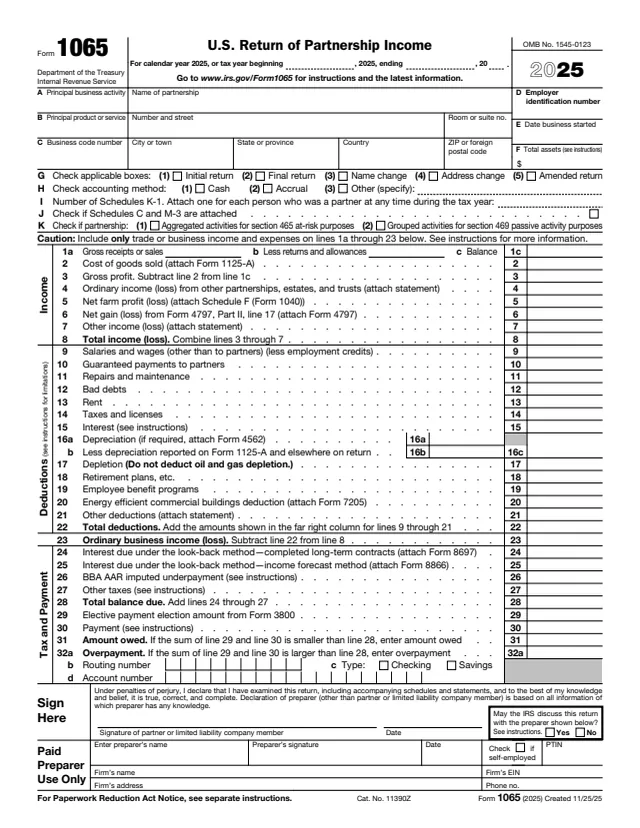
1065
440 fields, 6 pages
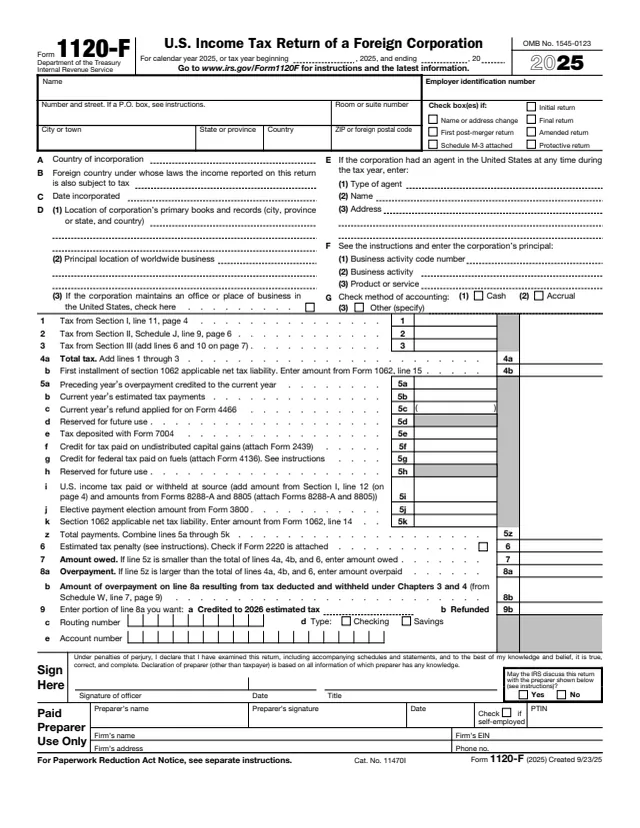
1120-F
527 fields, 9 pages
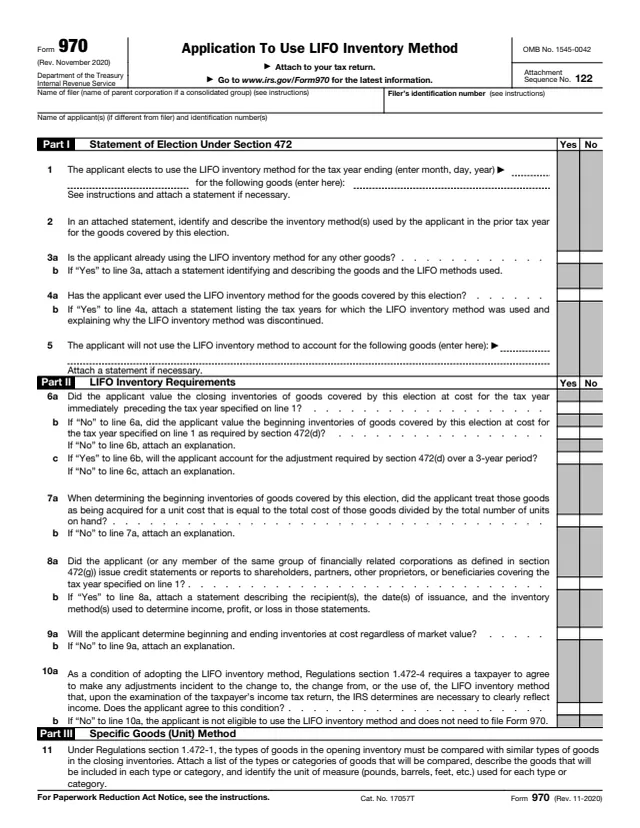
970
48 fields, 4 pages
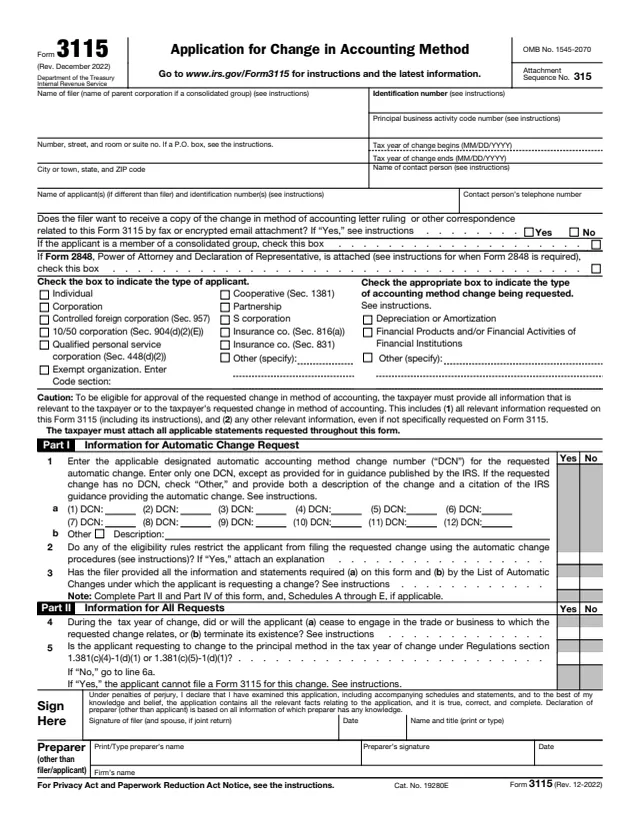
3115
294 fields, 8 pages
The form is completed by the business entity whose return reports a deduction for cost of goods sold, and attached to that return.
No tool matches that search.
The instructions say filers of Form 1120, 1120-C, 1120-F, 1120S, or 1065 complete and attach it if the applicable entity reports a deduction for cost of goods sold.
On page 1, line 2 of Form 1120, 1120-C, 1120S or 1065. Filers of Form 1120-F enter it on Section II, line 2.
The What's New section says that for tax years beginning after December 31, 2023, a small business taxpayer using an alternative method of accounting for inventories checks the applicable box on lines 9a(iv) through 9a(vi).
They say a small business taxpayer is not required to capitalize costs under section 263A, and refer to section 263A(i).
The instructions say to attach Form 970, Application To Use LIFO Inventory Method, or a statement with the information required by Form 970, and check the LIFO box on line 9c.
The instructions say a method, once established, cannot be changed in a later year without requesting a change in accounting method, and point to the Instructions for Form 3115.