Header
The corporation's name and employer identification number (EIN).
1120 Sch. G
Information on Certain Persons Owning the Corporation's Voting Stock
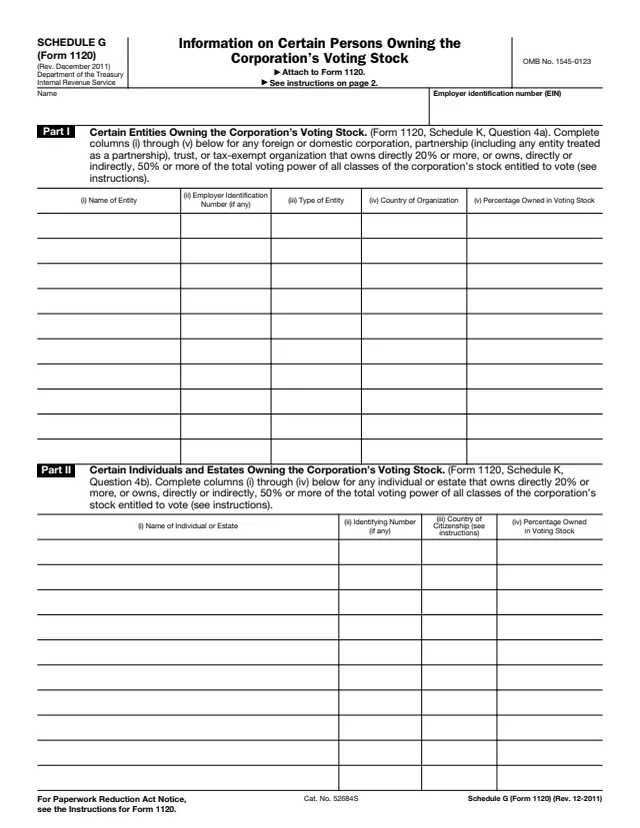
Schedule G (Form 1120) is Information on Certain Persons Owning the Corporation's Voting Stock. The IRS says it is used to provide information applicable to certain entities, individuals and estates that own, directly, 20% or more, or own, directly or indirectly, 50% or more of the total voting power of all classes of the corporation's stock entitled to vote.
The schedule is attached to Form 1120, U.S. Corporation Income Tax Return. Part I covers entity owners tied to Form 1120, Schedule K, Question 4a, and Part II covers individual and estate owners tied to Question 4b. Page 2 holds the instructions, including the constructive ownership rules of section 267(c) and three worked examples.
You can fill out Schedule G (Form 1120) free in your browser on this page and download it without an account.
The corporation's name and employer identification number (EIN).
Name of entity, employer identification number if any, type of entity, country of organization and percentage owned in voting stock.
Name of individual or estate, identifying number if any, country of citizenship and percentage owned in voting stock.
Purpose of form, who must file and the constructive ownership rules, with three examples of direct, indirect and family ownership.
What to enter in Parts I and II, including how to list consolidated groups and disregarded entities.
Complete Part I if the corporation answered Yes to Form 1120, Schedule K, Question 4a, and Part II if it answered Yes to Question 4b.
Ownership is measured at the end of the tax year. The instructions apply section 267(c), excluding section 267(c)(3), so interests owned through entities or family members can count.
For each entity, enter the name, EIN if any, type (corporation, partnership, trust or tax-exempt organization), country of organization and percentage of voting stock owned, directly or indirectly.
For each individual or estate, enter the name, taxpayer identification number if any, country of citizenship (for an estate, the citizenship of the decedent) and percentage owned.
Enter the corporation's name and EIN at the top, then attach the schedule to Form 1120 as the schedule says.
You get the real form, filled in a browser tab, with nothing standing between you and the finished PDF.
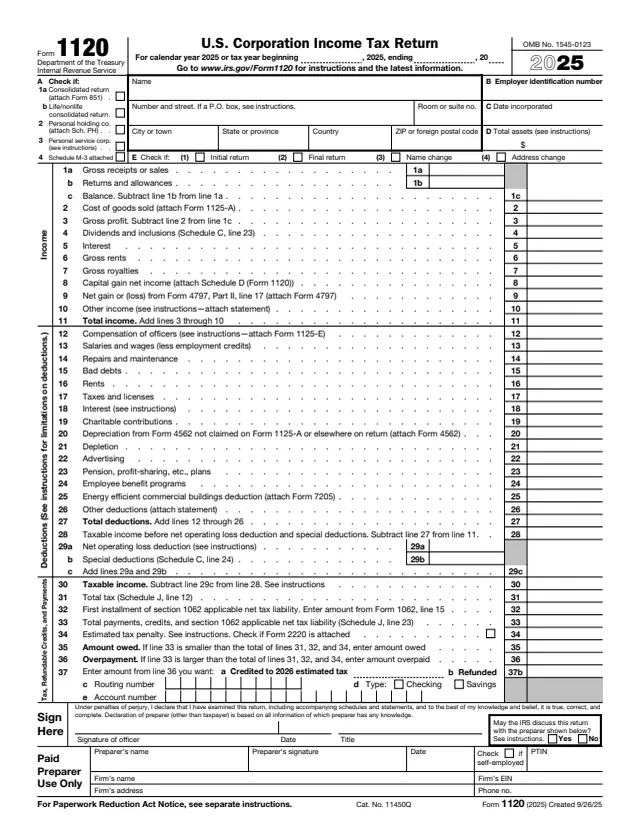
The schedule says to attach it to Form 1120, U.S. Corporation Income Tax Return.
The instructions say a family member's interest is counted for an individual only if that individual also owns an interest directly or indirectly through a corporation, partnership or trust. Family means spouse, brothers, sisters, ancestors and lineal descendants.
Three examples on page 2 show how direct, indirect and family interests add up, such as 50% owned directly plus 10% attributed from a family member giving 60%.
1120
481 fields, 6 pages
1120 Sch. B
24 fields, 2 pages
1120 Sch. M-3
380 fields, 3 pages
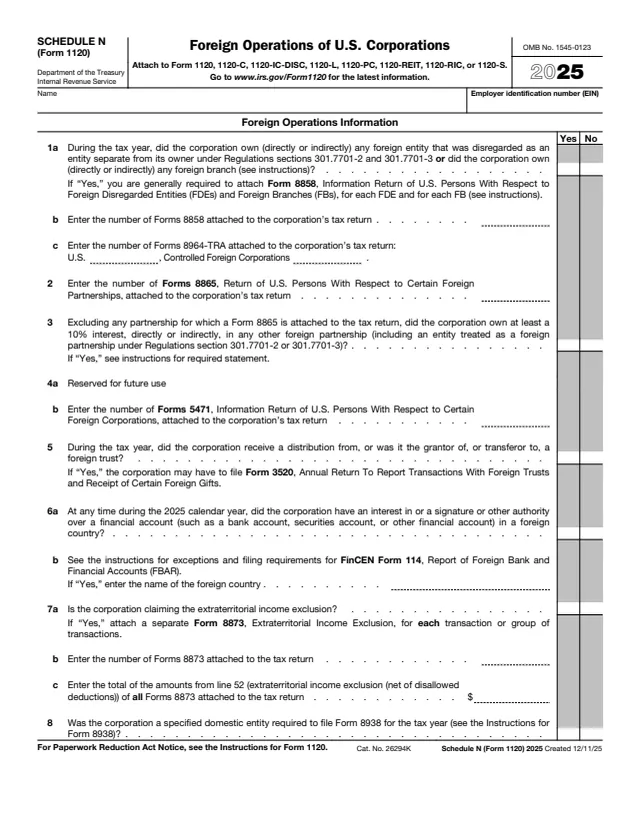
1120
24 fields, 2 pages
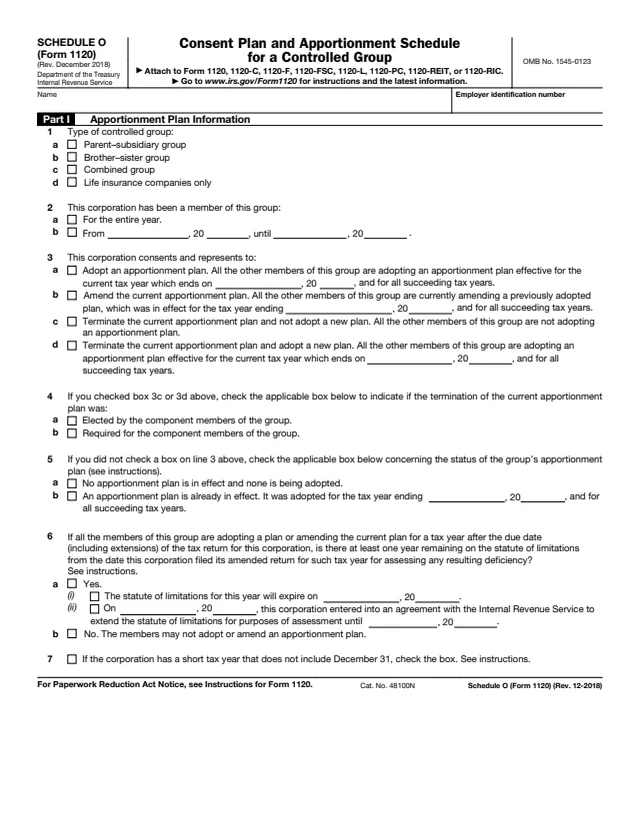
1120 Sch. O
112 fields, 2 pages
The schedule is completed by the corporation filing Form 1120 and lists certain owners of the corporation's voting stock.
No tool matches that search.
The corporation filing Form 1120. The instructions say every corporation that answers Yes to Form 1120, Schedule K, Questions 4a or 4b, files Schedule G.
Owners that own directly 20% or more, or own directly or indirectly 50% or more, of the total voting power of all classes of the corporation's stock entitled to vote.
The instructions apply section 267(c), excluding 267(c)(3). An interest owned by an entity is treated as owned proportionately by its shareholders, partners or beneficiaries.
The instructions say to enter the citizenship of the decedent.
The instructions say to list the entity owner of the disregarded entity instead. If that owner is an individual, list the individual in Part II.